

If you have ever paid for petrol or diesel with a credit card and noticed a small extra charge on your statement, you have encountered the fuel surcharge. It is one of the most common credit card charges in India, and one of the least understood.
This guide explains exactly what the fuel surcharge is, how it is calculated, how the fuel surcharge waiver works, which credit cards waive it, and how to make sure you are never paying more than necessary at the pump.
What is a fuel surcharge on a credit card?
A fuel surcharge is an additional processing fee added to the transaction amount when you pay for petrol, diesel, or CNG at a fuel station using a credit or debit card. It is charged by the petrol pump, specifically by the acquiring bank that processes the payment on behalf of the pump, because fuel transactions have higher processing costs than regular retail transactions.
The fuel industry operates on very thin margins. Unlike a restaurant or a clothing store, a fuel station cannot absorb card processing fees (also known as MDR, Merchant Discount Rate) from its margins. As a result, the cost is passed on to the customer in the form of the fuel surcharge.
In India, the fuel surcharge is currently capped at 1% of the fuel transaction amount, subject to a minimum charge of ₹10 per transaction. An 18% GST is additionally levied on the surcharge amount. This means on a ₹2,000 fuel transaction, the total surcharge is ₹20 plus ₹3.60 GST, amounting to ₹23.60 in extra charges.
Key fact: The fuel surcharge is charged by the petrol pump's acquiring bank, not by your credit card issuer. Your card issuer then waives it as a benefit, if your card includes a fuel surcharge waiver. The surcharge is first charged, then reversed in your subsequent statement.
How Fuel Surcharge Is Calculated
Fuel Surcharge Calculation Formula with Example
The formula for fuel surcharge in India is straightforward:
Fuel Surcharge = 1% of fuel transaction amount (minimum ₹10)
GST on Surcharge = 18% of the fuel surcharge amount
Total extra charge = Fuel Surcharge + GST on Surcharge
| Fuel Amount | Surcharge (1%) | GST on Surcharge (18%) | Total Extra Charged | Total Bill |
|---|---|---|---|---|
| ₹300 | ₹10 (minimum applies) | ₹1.80 | ₹11.80 | ₹311.80 |
| ₹1,000 | ₹10 | ₹1.80 | ₹11.80 | ₹1,011.80 |
| ₹2,000 | ₹20 | ₹3.60 | ₹23.60 | ₹2,023.60 |
| ₹3,000 | ₹30 | ₹5.40 | ₹35.40 | ₹3,035.40 |
| ₹5,000 | ₹50 | ₹9.00 | ₹59.00 | ₹5,059.00 |
*For transactions below ₹1,000, the minimum surcharge of ₹10 applies, making the effective rate higher than 1%. GST is not waived even when the surcharge is waived under most card programmes.
The GST component, 18% of the surcharge, is important to understand because most credit cards waive the base fuel surcharge (1%) but do not waive the GST on that surcharge. This means even with a fuel surcharge waiver, you typically still pay the GST amount. On a ₹2,000 fill, that means ₹3.60 remains on your bill even after the ₹20 surcharge is reversed.
Minimum & Maximum Transaction Limit for Surcharge
Fuel surcharge waiver on credit cards applies only within a specific transaction range. Most credit cards in India define an eligible transaction window as follows:
● Minimum transaction amount: ₹400 (transactions below this do not qualify for the waiver)
● Maximum transaction amount: ₹4,000 to ₹5,000 (transactions above this do not qualify for the waiver)
Transactions outside this range are charged the full 1% surcharge with GST, and no waiver applies. This means: filling ₹300 worth of fuel attracts the ₹10 minimum surcharge with no waiver possible. Filling ₹6,000 in a single transaction exceeds the upper limit and the full surcharge applies. The optimal transaction range for maximum waiver benefit is ₹400 to ₹4,000 per fill.
GST on Fuel Surcharge, What Extra You Pay
GST at 18% applies on the fuel surcharge amount. Under most credit card fuel surcharge waiver programmes, only the base 1% surcharge is reversed, the 18% GST on that surcharge continues to be charged. This is a small but consistent charge that appears on your statement as a separate line item.
On a ₹3,000 fuel transaction: the ₹30 surcharge is waived. The ₹5.40 GST on the surcharge remains. Your effective savings is ₹30, not the full ₹35.40. For premium cards or co-branded fuel cards with partner oil companies, some programmes waive the GST component as well, check your specific card's T&C for clarity.
From November 2025, NPCI introduced a system validation for RuPay cards that caps the fuel surcharge at 1% of the transaction amount at petrol pumps. When paying by QR scan using a UPI-linked RuPay credit card, the standard card swipe surcharge typically does not apply, making UPI payment at fuel stations potentially cheaper than a card swipe.
What Is Fuel Surcharge Waiver?
How Fuel Surcharge Waiver Works on Credit Cards
A fuel surcharge waiver is a benefit offered by many credit cards in India where the 1% surcharge charged at the petrol pump is reversed and credited back to your account. It is not a discount at the pump, the full amount including the surcharge is charged at the time of payment. The reversal appears in your next monthly statement, typically as a line item labelled 'Fuel Surcharge Reversal' or 'Fuel Transaction Fee Reversal.'
The process: you pay ₹2,023.60 at the pump for ₹2,000 worth of fuel. Your statement shows the ₹2,023.60 charge. In the same or next statement cycle, a credit of ₹20 (the surcharge, not the GST) appears as 'Fuel Surcharge Reversal.' Your net fuel cost is ₹2,003.60, you paid the GST (₹3.60) but not the surcharge (₹20).
Conditions to Avail Fuel Surcharge Waiver
Most credit card fuel surcharge waiver programmes have the following conditions:
● Transaction range: Fuel purchase must be between ₹400 and ₹4,000 per transaction (varies by card, some go up to ₹5,000)
● Eligible fuel stations: Some cards offer the waiver at all fuel stations across India. Others restrict it to specific oil company outlets (only HPCL, only BPCL, or only Indian Oil)
● Network eligibility: The waiver is tied to your card's network, Visa, Mastercard, or RuPay. Paying at a pump terminal not linked to your card's network may not trigger the waiver
● No reward points on fuel: Most credit cards explicitly exclude fuel transactions from reward point earning. The fuel surcharge waiver is the only benefit on fuel spend for most cards
● GST not waived: The 18% GST on the surcharge is typically not reversed, only the base surcharge is
Monthly Cap on Surcharge Waiver Benefit
Every credit card that offers a fuel surcharge waiver sets a monthly or per-statement-cycle cap on the total amount of surcharge that can be waived. Common caps in India:
| Card Tier | Typical Monthly Waiver Cap | Equivalent Monthly Fuel Spend |
|---|---|---|
| Entry-level cards | ₹100/month | ~₹10,000/month at petrol pump |
| Mid-range cards | ₹250/month | ~₹25,000/month at petrol pump |
| Premium cards | ₹250–₹500/month | ₹25,000–₹50,000/month |
| Co-branded fuel cards | ₹100 (surcharge) + bonus rewards | Variable by card |
Once the monthly cap is reached, additional fuel transactions are charged the full 1% surcharge with GST, no further reversal applies for that billing cycle. The cap resets at the start of each new billing cycle.
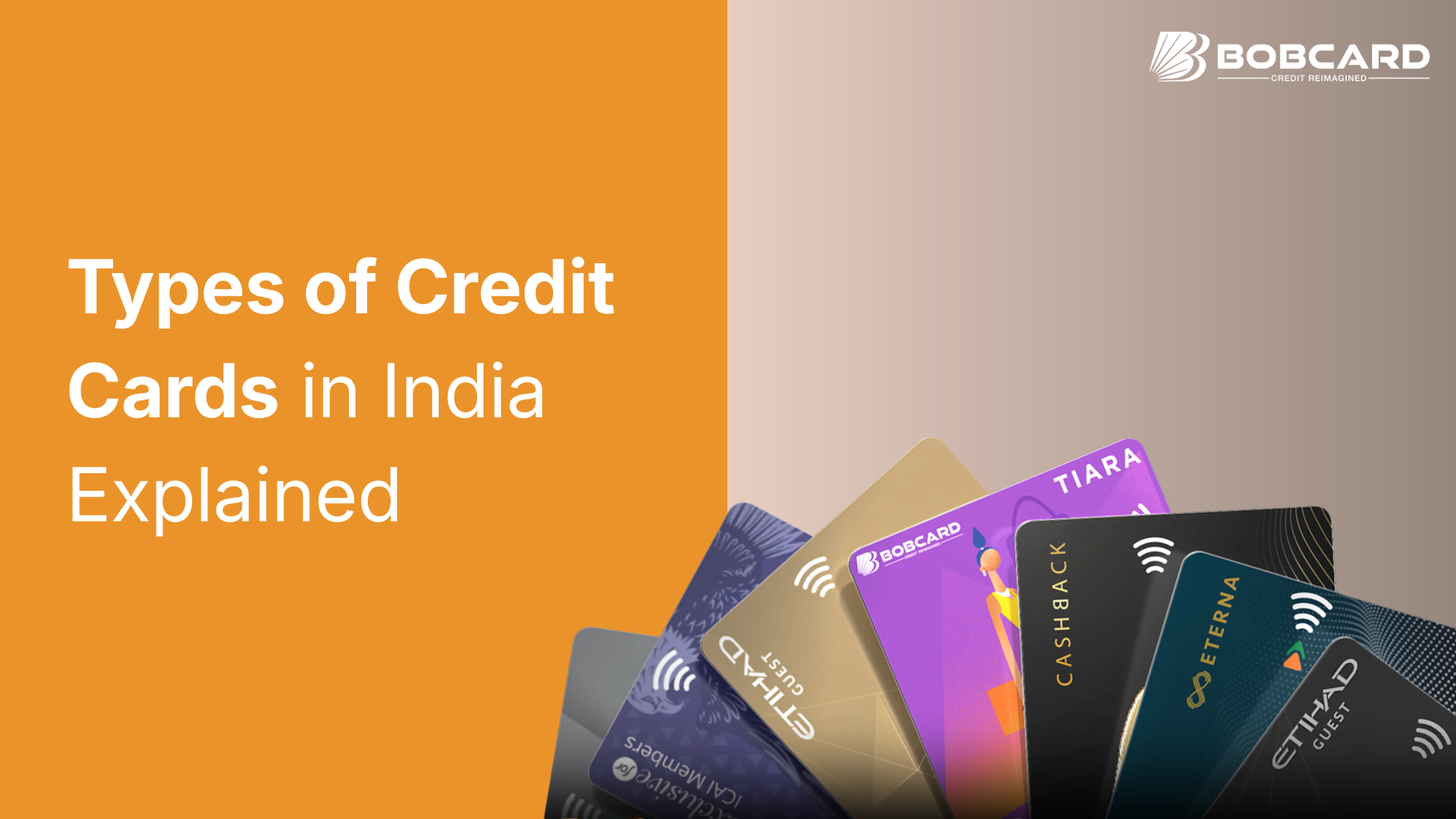
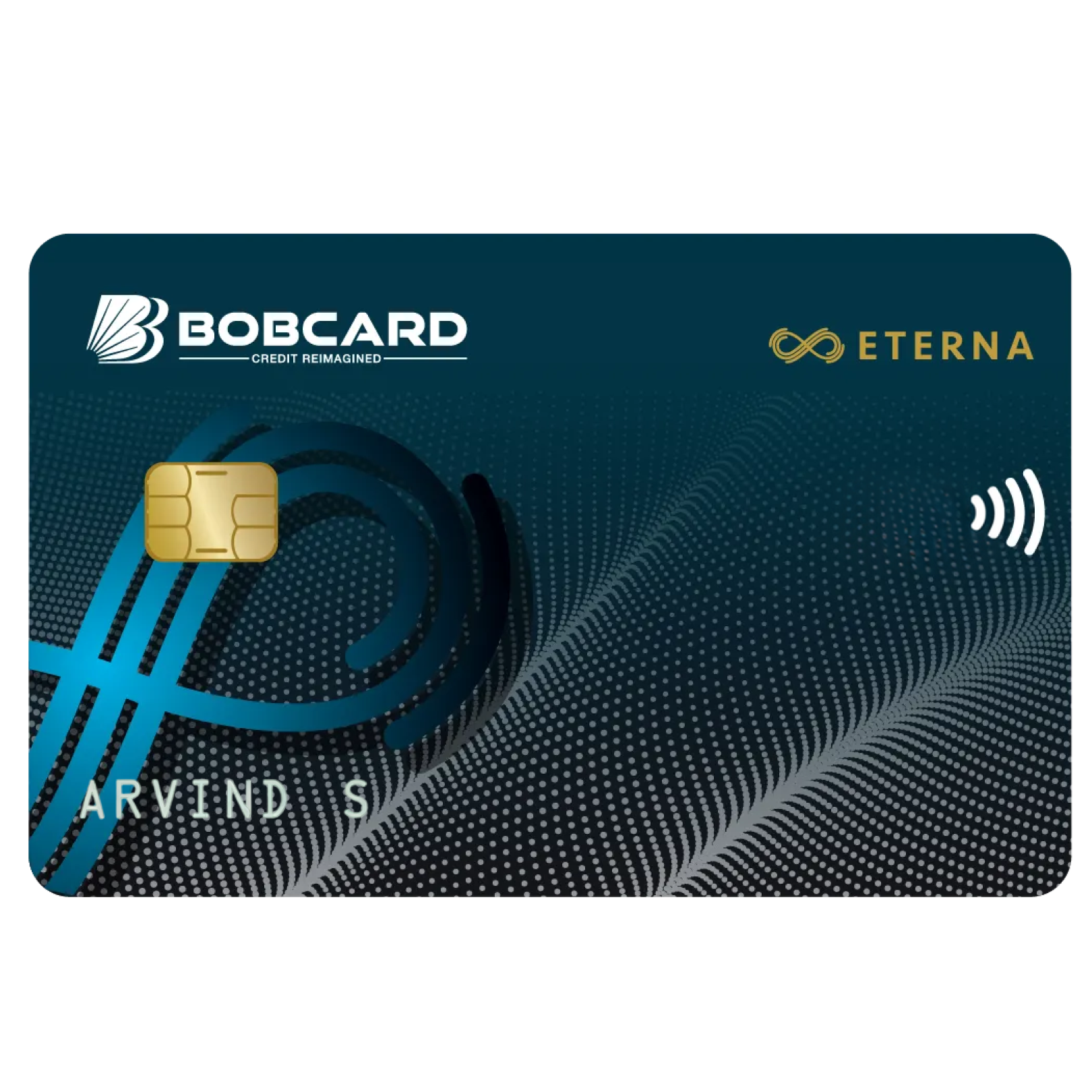
BOBCARD credit cards in the ETERNA, TIARA, PREMIER and SELECT range all include a 1% fuel surcharge waiver on transactions between ₹400 and ₹5,000, capped at ₹250 per statement cycle.
Best Petrol Credit Cards with Fuel Surcharge Waiver
The following cards combine fuel surcharge waiver with the strongest fuel-specific reward rates:
| Card | Fuel Benefit | Waiver Cap | Best For |
|---|---|---|---|
| BOBCARD ETERNA | 1% waiver at all pumps (₹400–₹5,000) | ₹250/cycle | Everyday commuters |
| BOBCARD TIARA | 1% waiver at all pumps (₹400–₹5,000) | ₹250/cycle | Everyday commuters |
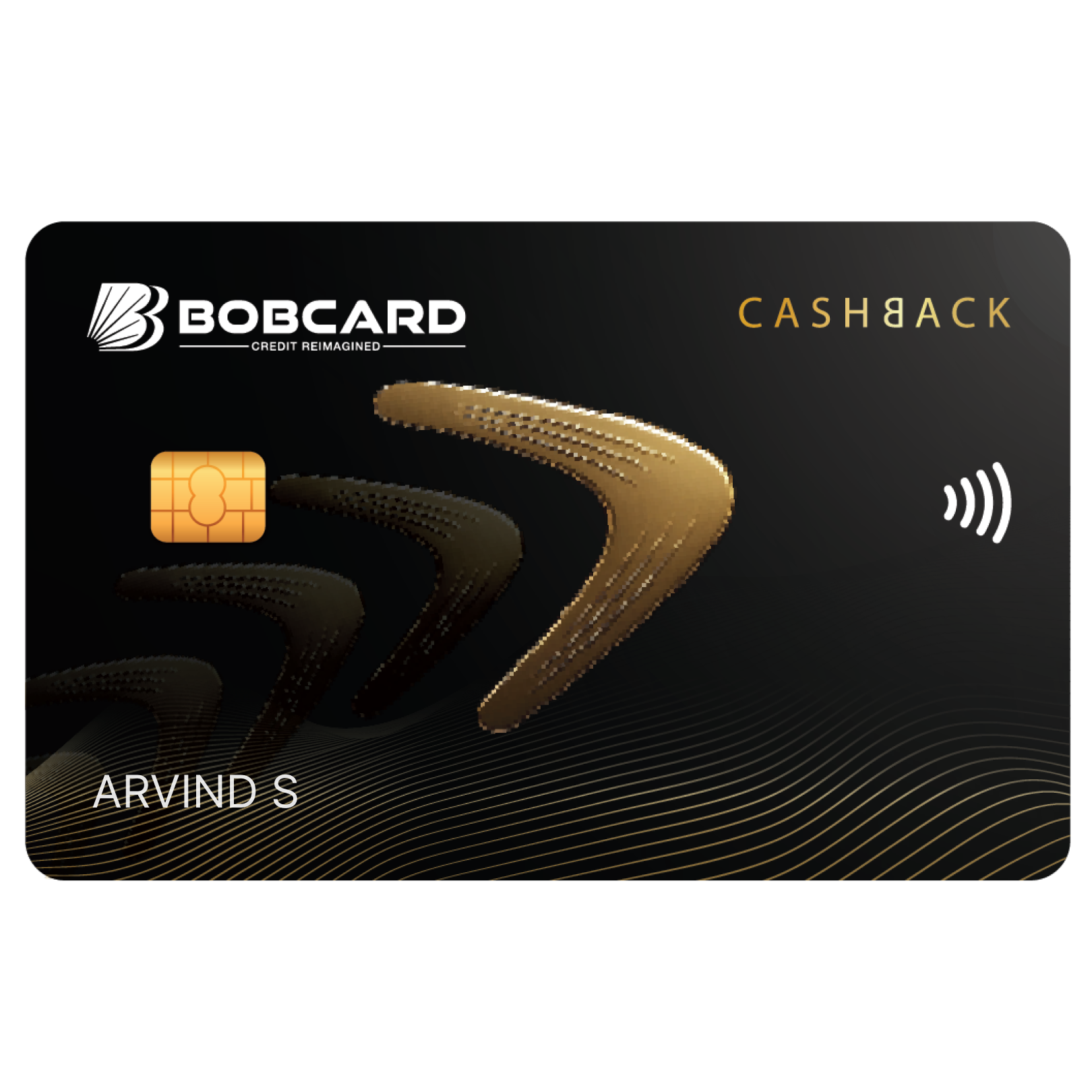
| BOBCARD Cashback | 1% waiver at all pumps (₹400–₹5,000) | ₹250/cycle | Everyday commuters |
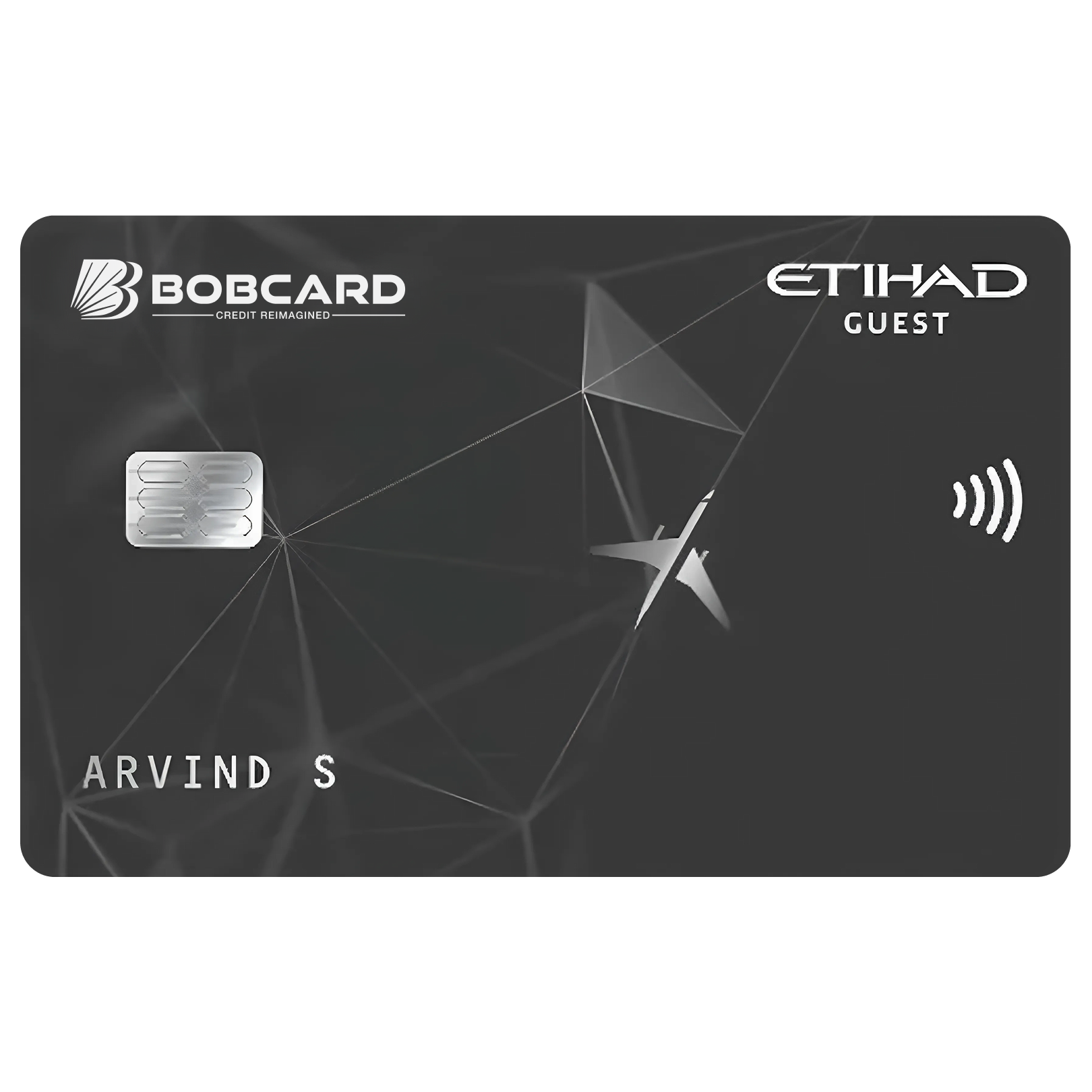
| BOBCARD Etihad Guest Premium | 1% waiver at all pumps (₹400–₹5,000) | ₹250/cycle | Everyday commuters |
*Fuel benefits verified from bank websites as of March 2026. Reward rates and caps are subject to change. Verify current terms on respective bank websites before applying.
For daily commuters who use any fuel station across India: a card with a universal 1% waiver (not restricted to one oil company) with a ₹250 cap is the most practical choice. For drivers loyal to one oil company: a co-branded fuel card at that specific company's outlets will deliver 5–8% effective savings, significantly higher than a general fuel waiver card.
How to Avoid Fuel Surcharge on Credit Card
Use a Credit Card with Fuel Surcharge Waiver
The simplest strategy: use a credit card that includes a 1% fuel surcharge waiver. Most mid-range and premium credit cards in India include this benefit. Check your card's Most Important Terms and Conditions (MITC) document or the card's benefits page on the bank's website to confirm whether the waiver applies to your card and the transaction range it covers.
If your current card does not include a fuel surcharge waiver, and you spend ₹3,000 or more per month on fuel, the savings from switching to a card with the waiver can be ₹30–₹50 per month, ₹360–₹600 per year, plus any fuel reward points, before accounting for the card's other benefits.
Stick to the Eligible Transaction Amount Range
The fuel surcharge waiver applies only within the eligible transaction range, typically ₹400 to ₹4,000 or ₹5,000 per transaction. Fuelling more than the upper limit in a single transaction means the entire transaction loses the waiver. The practical implication: if you are filling a large tank and the amount is likely to exceed ₹5,000, consider splitting into two transactions to keep each within the eligible range.
Example: a ₹6,000 fuel fill in one transaction, no waiver. Two ₹3,000 fills, both within the eligible range, both attract the waiver. Splitting also helps if your monthly cap is close to being reached: spreading larger fills across the start of one billing cycle and the start of the next allows you to access the waiver cap twice.
Pay at HPCL, BPCL or IOCL for Maximum Benefit
If you hold a co-branded fuel credit card tied to a specific oil company, HPCL, BPCL, or Indian Oil, always fuel at that company's outlets to access the higher earn rate. Fuelling at a competitor's pump means you receive only the base reward rate, not the accelerated fuel-specific rate.
Check Monthly Cap Before Fuelling Up
If you fuel regularly throughout the month, track how much surcharge has already been waived in the current billing cycle. Once the monthly cap is reached, ₹100, ₹250, or ₹500 depending on your card, further fuel transactions are charged the full surcharge with no reversal.
Most bank mobile apps allow you to see your statement charges in real time. Some apps even categorise transactions by merchant type. Checking before a fill whether the cap is already reached can save you from charging a large fill on a card that has already exhausted its waiver, and switch to your second card instead.
Practical tip: If you hold two cards with fuel surcharge waivers, use Card 1 for the first half of the month and Card 2 for the second half. This effectively doubles your monthly waiver benefit, ₹250 from each card = ₹500 per month in surcharge savings, equivalent to ₹6,000 per year on fuel costs alone.
Apply for a BOBCARD Credit Card
BOBCARD is the credit card division of Bank of Baroda, one of India's largest public sector banks. Apply 100% online in 3 steps: online form → Aadhaar eSign → Video KYC. No branch visit needed.
BOBCARD offers credit cards across every major category covered in this guide, from cashback and rewards cards for everyday spending to premium cards with unlimited domestic lounge access and fitness benefits. Cards are available from ₹4.8 lakh annual income upward, with Lifetime Free options available on select variants.
Explore BOBCARD credit cards and apply
Frequently Asked Questions
Disclaimer: This article is for general informational and educational purposes only. All fuel surcharge rates, waiver caps, and card-specific terms are based on publicly available information from bank websites and verified sources as of March 2026. Card features, fees and eligibility criteria are subject to change. Always verify current terms with the respective card issuer before applying. Features, eligibility and offers subject to terms on bobcard.co.in. Verify current details before applying.