
A credit card is one of the most powerful financial tools available to you, but only if you know how to use it correctly. Used poorly, it can silently accumulate interest, damage your CIBIL score, and pull you into a cycle of revolving debt. Used smartly, it earns you rewards on every rupee you spend, builds your credit score month by month, and costs you absolutely nothing in interest.
The difference between these two outcomes comes down to understanding a handful of core rules, when to pay, how much to pay, how much to spend, and how to align your card usage with your actual budget. This guide covers every foundational principle of smart credit card use, written specifically for beginners in India.
How to Use a Credit Card Without Paying Interest
The most important secret of smart credit card usage is also the simplest: you will never pay a single rupee of interest if you pay your full outstanding balance before the due date, every billing cycle without exception. Credit cards charge interest only on balances carried forward past the payment due date. Pay in full, and the card is completely free to use.
Always Pay Full Outstanding Before Due Date
Every credit card has a billing cycle, typically 30 days, at the end of which a statement is generated. This statement shows your total outstanding balance, the minimum amount due, and a payment due date. Your goal is simple: pay the entire outstanding balance shown on the statement before that due date. This keeps you completely outside the interest trap and preserves your interest-free grace period for the next cycle.
Paying in full also ensures you continue to receive the interest-free benefit on new purchases in the upcoming cycle. If you pay anything less than the full amount, that benefit is forfeited.
Rule to remember: The interest-free period of up to 50 days only applies to cardholders who clear the full outstanding each billing cycle. It does not apply to those carrying forward any unpaid balance.
Minimum Due vs Full Payment, What Is the Difference?
Every credit card statement shows two payment figures: the total outstanding amount and the minimum amount due. These are critically different:
- Total Outstanding Amount: The complete balance owed for the billing cycle, this is what you should always aim to pay.
- Minimum Amount Due: The smallest payment the bank will accept to keep your account in good standing. Most Indian banks calculate this as approximately 5% of the total outstanding, with a minimum flat amount (often ₹200) if the balance is small.
Paying the minimum due keeps your account active and prevents a late payment penalty, but it does not prevent interest from accruing on the unpaid balance. Every rupee you leave unpaid begins attracting finance charges immediately.
How Interest Is Calculated If You Pay Only the Minimum Due
If you carry a balance forward, credit card interest in India is calculated using the Average Daily Balance method and is charged at rates typically ranging from 30% to 48% per annum, among the highest borrowing rates in the consumer lending market. Crucially, when you fail to pay the full outstanding amount, you lose the interest-free period for new purchases as well. Any new transaction made in the following billing cycle also starts accruing interest from the date of the purchase, not just from the next due date.
Example: If your outstanding is ₹30,000, you pay only the minimum due of ₹1,500 (5%), and your card charges 42% per annum (3.5% per month), the interest on the remaining ₹28,500 for that month alone is approximately ₹997. Over 12 months of only paying the minimum, you could end up paying over ₹11,000 in interest while barely reducing your principal.
How to Use a Credit Card Smartly for Maximum Benefits
Use the Right Card for the Right Spend Category
Different credit cards offer higher reward rates on different spending categories. A card that gives 5% cashback on dining may offer only 1% on groceries. A travel card may offer 5x reward points on airline bookings but standard rates elsewhere. The smartest approach is to understand your primary spending categories and choose a card, or a combination of cards, that maximises rewards on your most frequent transactions. Review the reward structure of your card and allocate spend accordingly.
How to Earn Maximum Reward Points on Credit Card
To earn the highest possible reward points on your credit card, follow these practices. First, use your card for all planned and fixed expenditures, utility bills, groceries, fuel, and subscriptions, rather than paying these in cash or via debit card. Second, look for accelerated reward categories on your card: many cards offer 2x–10x points on specific merchants or transaction types. Third, use your card for large purchases that you plan to repay immediately, to maximise points without incurring interest. Finally, always check for limited-period bonus reward offers communicated by your bank via SMS, email, or the app.
How to Avail Cashback and Offers Effectively
Cashback and discount offers tied to credit cards are typically time-bound and linked to specific merchant categories. To make the most of them: activate offers in your bank's app before transacting (many cashback offers require pre-activation), use the correct card for the merchant that is in the offer, and check minimum spend thresholds. Most cashback offers cap the maximum benefit per month, knowing the cap helps you plan which transactions to route through the card for maximum return without exceeding the limit.
Keep Credit Utilisation Below 30%
Your credit utilisation ratio, the percentage of your total credit limit that you are using at any given time, is one of the most significant factors in your CIBIL score, contributing approximately 25%–30% of your total score. Keeping this ratio below 30% signals responsible usage to credit bureaus. On a card with a ₹1,00,000 limit, this means keeping your outstanding balance below ₹30,000 at any point. If you have multiple cards, the 30% guideline applies to your aggregate utilisation across all cards.
Smart Credit Card Tips for Monthly Expenses
Use Credit Card for Fixed Monthly Bills
Electricity, water, gas, internet, phone, and OTT subscriptions are expenses you will pay regardless. Routing these through your credit card earns you reward points or cashback on money you would spend anyway, at zero additional cost, provided you pay the bill in full each month. This is one of the simplest ways to convert mandatory spending into meaningful rewards over time.
Link Utility Payments to Credit Card for Auto Rewards
Most utility providers in India now accept credit card payments through online portals, payment apps (BHIM, PhonePe, Google Pay), and BBPS (Bharat Bill Payment System). Set up recurring payment mandates for your fixed bills wherever possible. This ensures you earn rewards automatically without any manual effort every month, and it reduces the risk of missing a payment on your utility bills.
Track Spend via App to Stay Within Budget
Every major bank's credit card app offers real-time transaction tracking, category-wise spend summaries, and customisable spending alerts. Use these tools actively. Set a personal monthly spend limit, below your actual credit limit, and configure an alert at 70%–80% of that threshold. This simple habit prevents you from unknowingly approaching your credit limit, keeps your utilisation ratio healthy, and ensures you never spend more than you can comfortably repay by the due date.
How to Pay Your Credit Card Bill
How to Pay Credit Card Bill Online, All Methods
There are multiple ways to pay your credit card bill online in India, and you are not limited to using your issuing bank's platform:
- Net Banking: Log in to your bank's internet banking portal, navigate to 'Credit Card Bill Payment' and transfer from your linked savings account. This is typically the fastest method, with same-day credit.
- Mobile Banking App: Use your bank's official app to make the payment. Most apps show your total outstanding and minimum due on the credit card dashboard.
- NEFT/RTGS: Transfer payment from any bank account using your credit card account number and the bank's IFSC code. Allow 1–2 working days for credit.
- UPI: Several banks now allow credit card bill payments via UPI. Select 'Credit Card Bill Payment' on your UPI app, enter your card number, and complete the transaction.
- BHIM/BBPS: The Bharat Bill Payment System allows credit card bill payments from any bank account, a useful option if your credit and debit accounts are with different banks.
- Auto-Debit Mandate: Register a standing instruction with your bank to auto-debit the minimum due or full outstanding amount from your savings account on the due date.
Set Up Auto-Pay to Never Miss a Due Date
The single most consequential habit in credit card management is never missing a payment due date. A missed payment triggers a late fee, immediately begins accruing interest, and, crucially, is reported to credit bureaus, potentially reducing your CIBIL score by 50–100 points. Auto-pay eliminates this risk entirely. Set it up for the full outstanding amount if your cash flow allows; if not, set it for at least the minimum due as a safety net and manually top up the payment to the full amount.
What Happens If You Miss a Credit Card Payment?
Missing your credit card payment due date triggers several consequences in sequence. First, a late payment fee is levied, this varies by bank and the outstanding amount but typically ranges from ₹100 to ₹1,300. Second, interest begins accruing on the full outstanding balance at the card's finance charge rate, typically 30%–48% per annum. Third, any new transactions made after the missed due date also lose the interest-free period and begin attracting charges. Fourth, if the payment remains overdue, the bank reports this to CIBIL and other credit bureaus, impacting your credit score. One or two missed payments, if recovered quickly, cause temporary and repairable damage. A consistent pattern of missed payments can cause lasting score deterioration.
How Credit Card Usage Affects Your CIBIL Score
On-Time Payments Build Credit Score
Payment history is the single largest contributor to your CIBIL score, accounting for approximately 35% of the calculation. Every on-time credit card payment is a positive data point that incrementally strengthens your score. The effect compounds over time, a 12-month unbroken record of full, on-time payments can add significant points to your score, opening doors to higher credit limits, better loan rates, and premium card approvals.
High Utilisation Hurts Credit Score
Your credit utilisation ratio accounts for approximately 25%–30% of your CIBIL score. Maintaining a utilisation ratio consistently above 30%–40% signals financial over-reliance on credit to bureau algorithms and pulls your score down, even if you pay every bill on time. If you find your utilisation regularly exceeding 30%, consider requesting a credit limit increase (without increasing spending) or spreading expenses across two cards to keep individual card utilisation lower.
How Long Credit History Impacts Score
The length of your credit history, how long your oldest credit account has been active, contributes approximately 15% of your CIBIL score. This is why closing an old credit card, even one you rarely use, can reduce your score: it shortens your average account age. Keep your oldest credit card account active with minimal usage (a small recurring bill, paid in full monthly) to preserve the length of credit history.
Common Credit Card Mistakes Beginners Make
Paying Only the Minimum Amount Due
This is the most expensive mistake a credit cardholder can make. Paying only the minimum due gives you the illusion of managing your balance while interest silently compounds on the unpaid amount. At a typical rate of 36%–42% per annum, a ₹50,000 balance on which you pay only the minimum each month will cost you thousands in interest and take years to clear. The minimum due is a last resort, not a repayment strategy.
Maxing Out the Credit Card Limit
Spending up to or near your credit limit raises your credit utilisation to 100% or close to it, which severely damages your CIBIL score. Beyond the score impact, it leaves you with no financial buffer for emergencies and creates pressure to carry a balance forward. Treat your credit limit as a ceiling, not a target. A healthy self-imposed spending cap is 30%–50% of your approved limit.
Applying for Too Many Cards at Once
Every credit card application triggers a hard inquiry on your credit report, which temporarily reduces your CIBIL score by a few points. Multiple applications within a short period signal financial stress or credit-hungry behaviour to lenders, and several consecutive hard inquiries can meaningfully impact your score. Space out credit card applications by at least 3–6 months, and apply only for products for which your profile is a strong match.
Ignoring Credit Card Statement Every Month
Your monthly credit card statement is one of the most important financial documents you receive. It contains your complete transaction history, applied charges, and the breakdown of your outstanding. Not reading it means you may miss unauthorised transactions, incorrectly applied fees, or interest charges you did not expect. Set aside 10 minutes each month to review your statement line by line. Report any discrepancy to your bank immediately, credit card disputes must typically be raised within a defined window.
Using Credit Card for Cash Withdrawal
Withdrawing cash from an ATM using a credit card is one of the most expensive financial transactions available to a consumer. There is no interest-free period on cash advances, interest begins accruing from the moment of withdrawal, at rates typically ranging from 2.5%–3.5% per month. In addition, a one-time cash advance fee (usually 2.5%–3% of the amount, subject to a minimum) is charged. A ₹10,000 cash advance can cost ₹250–₹350 upfront, plus approximately ₹300–₹350 per month in interest until repaid. Use a credit card cash advance only in a genuine emergency when no alternative exists.
Start Smart with BOBCARD.
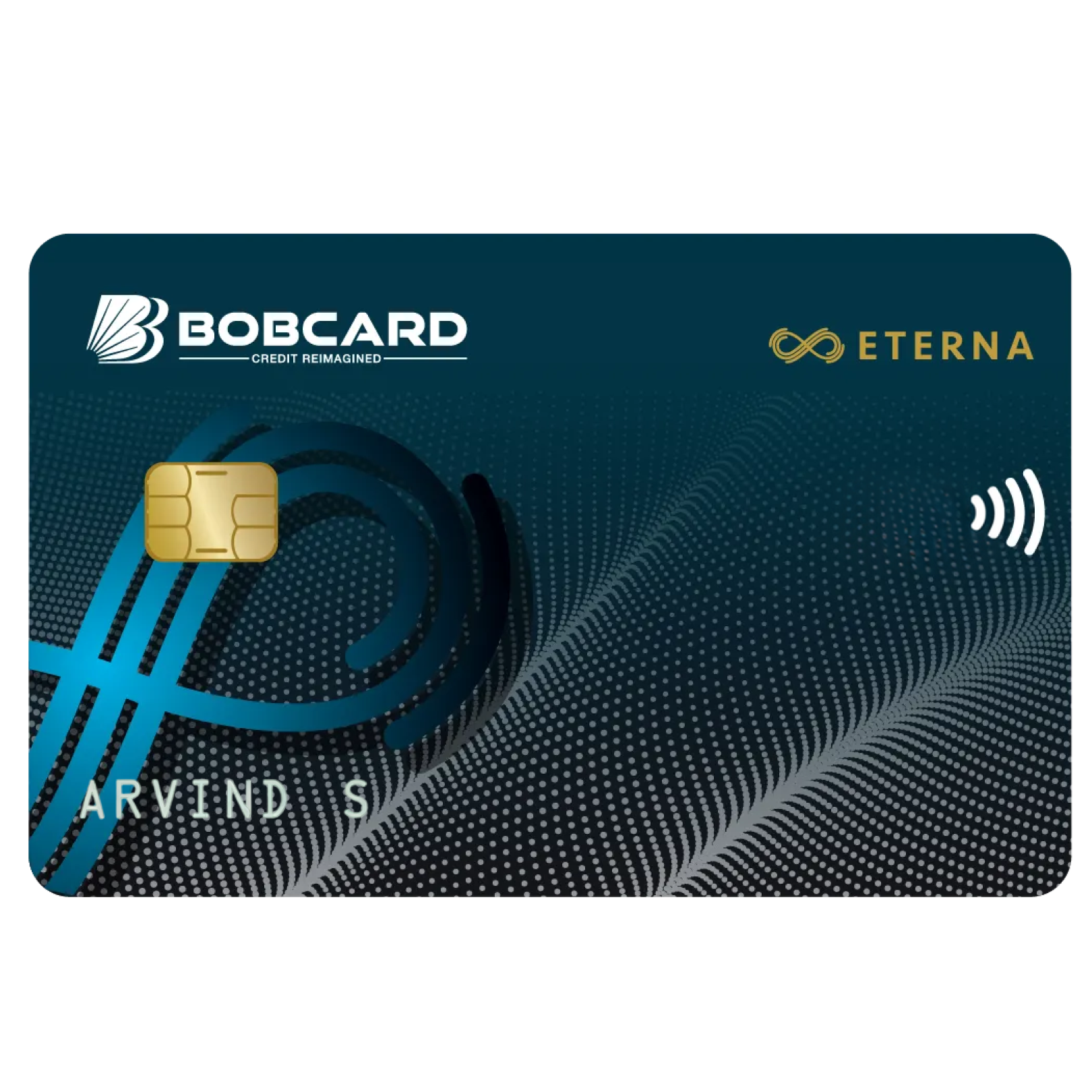
If you are looking for a credit card that rewards disciplined usage from day one, BOBCARD offers a range of options designed for smart spenders at every income level. Whether you are applying for your first card or looking for a card that maximises your monthly spending benefits, BOBCARD has a variant built for you.
Frequently Asked Questions
Disclaimer
This blog is for general educational and informational purposes only and does not constitute financial advice. Interest rate ranges, minimum payment calculations, and CIBIL score impact percentages referenced in this article are based on publicly available industry data and standard banking practices in India as of the date of publication. Actual terms, rates, and calculations vary by card issuer and individual product. Readers are advised to refer to their specific card's Most Important Terms and Conditions (MITC) document for exact details. BOBCARD is a product of Bank of Baroda, an RBI-regulated entity.