
For millions of Indians, students with no income, self-employed professionals without salary slips, individuals recovering from a low CIBIL score, or first-time credit applicants, the standard unsecured credit card remains out of reach. The usual gatekeepers: a minimum income requirement, a CIBIL score check, and employment documentation. An FD credit card removes all three barriers in a single stroke.
An FD credit card, also called a secured credit card against a Fixed Deposit, is issued by your bank against the security of an FD you hold with them. The deposit acts as collateral, the bank faces minimal risk, and you gain access to a fully functional credit card that behaves exactly like a regular card for all practical purposes. More importantly, every responsible usage, every on-time payment, builds your CIBIL score from scratch, creating a pathway to unsecured credit in the future.
This guide explains exactly how FD credit cards work, who they are best suited for, how to apply, what the limits and charges look like, and how to use one strategically to build the credit profile you need.
How a Secured Credit Card Against FD Works
The mechanics are straightforward. You open a Fixed Deposit with a bank, either an existing FD or a new one created specifically for this purpose. The bank places a lien on the FD, meaning you cannot prematurely break or withdraw the deposit while the credit card is active. In exchange, the bank issues you a credit card with a limit linked to the value of that FD, typically between 75% and 90% of the deposit amount (some banks, such as IDFC FIRST Bank on the WOW! card, offer up to 100%).
You then use the card exactly as you would a regular credit card, for purchases online and offline, bill payments, and transactions on the Visa, Mastercard, or RuPay network. At the end of each billing cycle, you receive a statement and make repayments. Your FD continues to earn interest at the contracted rate throughout the card's tenure, unaffected by your card usage. The bank only accesses the FD if you default and leave an unpaid balance unresolved.
Key distinction: An FD credit card is credit, not a debit against your deposit. You spend first and repay later, just like a regular credit card. The FD is only a safety net for the bank, not the source of your spending funds.
FD Credit Card vs Regular Credit Card, Key Differences
| Parameter | FD Credit Card (Secured) | Regular Credit Card (Unsecured) |
|---|---|---|
| Collateral required | Yes, Fixed Deposit with the bank | No |
| CIBIL score required | Not mandatory | Usually 700–750+ |
| Income proof required | Usually not required | Yes, salary slips / ITR |
| Approval process | Straightforward and fast | Subject to credit assessment |
| Credit limit | 75%–100% of FD amount | Based on income and CIBIL score |
| Interest on FD | Continues to earn at contracted rate | Not applicable |
| Annual fee | Usually nil or low | Varies by card category |
| Reward points / cashback | Available on most cards | Available, often more generous |
| Impact on CIBIL score | Yes, builds credit history | Yes, builds or damages based on usage |
Who Should Get an FD Credit Card?
People with Low or No CIBIL Score
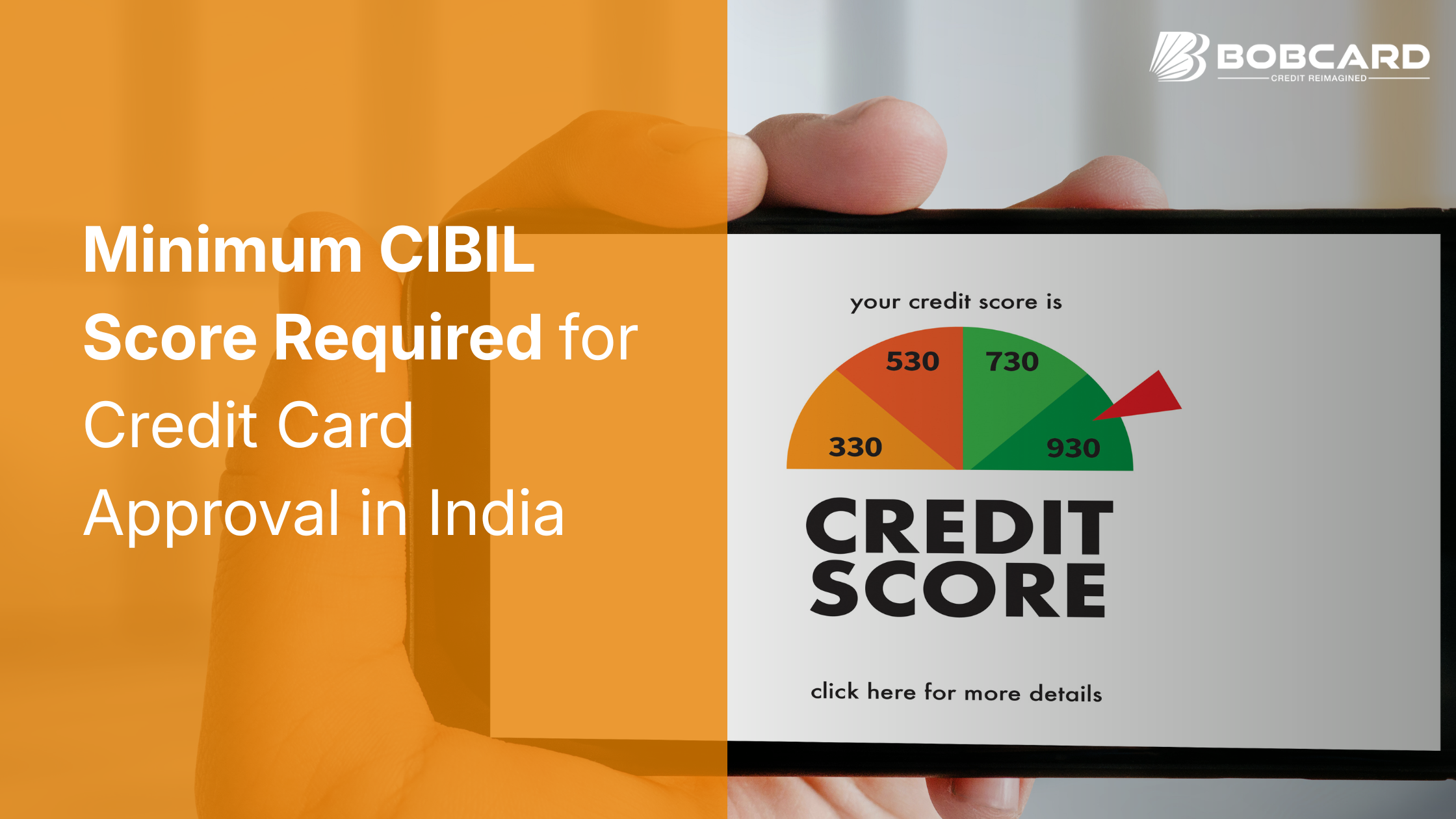
If your CIBIL score is below 700, or you have no credit history at all (recorded as -1 or NH), most banks will decline a standard unsecured credit card application. An FD credit card bypasses this requirement entirely. The bank has the security of your deposit, so your creditworthiness as assessed by a bureau score is irrelevant to the approval decision. After 6–12 months of on-time payments, your CIBIL score will begin to strengthen, opening the door to unsecured products.
Students & First-Time Credit Card Applicants
Students in full-time education typically have no income, no credit history, and no CIBIL score. An FD-backed secured card is the most accessible and structured entry point into the credit system. Parents can create an FD in the student's name, or the student can use their own savings. The key outcome is the same: the student begins building a credit profile from college, ensuring a strong CIBIL score is already in place when they enter the workforce.
Self-Employed Without Income Proof
Freelancers, small business owners, and homemakers often have stable financial situations but lack the formal documentation, salary slips, Form 16, that banks require for unsecured card applications. An FD credit card resolves this immediately: since the approval is based on the deposit rather than income documentation, anyone with an FD qualifies, regardless of employment type or income documentation availability.
Individuals Recovering from Bad Credit History
If you have a history of missed payments, defaulted loans, or other negative entries on your CIBIL report, your score may be too low for unsecured card approval. An FD credit card lets you start rebuilding your credit profile methodically, each on-time payment is a new positive data point that begins offsetting past negative entries. Over 12–18 months of responsible usage, a measurable recovery in CIBIL score is typically achievable.
How to Get a Credit Card Against Fixed Deposit
Step-by-Step Process to Apply for FD Credit Card
- Step 1: Choose a bank that offers an FD-backed credit card. Most major public and private sector banks in India offer this product, SBI, HDFC, ICICI, Axis Bank, IDFC FIRST, Kotak, and Bank of Baroda, among others.
- Step 2: Open a Fixed Deposit with the bank if you do not already have one, or identify an existing FD that is free of any other lien. The FD must typically have a minimum remaining tenure of 6 months.
- Step 3: Apply for the secured credit card, either online through the bank's website or app, or at a branch. Provide your FD account number and submit the required KYC documents.
- Step 4: The bank places a lien on the FD. This means the deposit remains active and earns interest, but cannot be prematurely broken while the card is active.
- Step 5: The card is issued and delivered within 7–10 working days. Activate it through the bank's app or net banking, set your PIN, and begin using it.
Minimum FD Amount Required
The minimum Fixed Deposit amount required to obtain an FD credit card varies by bank. As a general range across major Indian banks, it is typically between ₹10,000 and ₹25,000. Some fintech-backed options allow FDs as small as ₹5,000. The FD amount you deposit determines your credit limit, a higher FD means a higher credit ceiling. Most banks require the FD to have a minimum tenure of at least 6 months at the time of application.
Documents Required to Apply
- PAN Card, mandatory for any credit product in India
- Aadhaar Card or other government-issued photo identity proof
- Address proof (Aadhaar, passport, or utility bill)
- FD certificate or account details (existing FD holders)
- Passport-size photographs
Income proof, salary slips, and employment letters are generally not required for FD-backed secured credit cards.
FD Credit Card Limit, How It Is Decided
What Percentage of FD Is Given as Credit Limit?
Across the Indian banking system, the standard credit limit on an FD-backed secured card is set at 75%–90% of the Fixed Deposit value. This means if your FD is ₹50,000, your credit limit will typically be in the range of ₹37,500 to ₹45,000. The exact percentage depends on the bank's policy and the specific card product.
Can You Increase Credit Limit on FD Credit Card?
Yes. The most direct way to increase your credit limit on an FD-backed card is to add more funds to the existing Fixed Deposit or create a new FD linked to the card account. Some banks process the limit increase automatically when the linked FD amount is topped up; others require a formal request. As your CIBIL score improves through responsible card usage, you may also become eligible to upgrade to an unsecured card with a higher limit and better features, at which point the FD lien can be released.
Features of FD Credit Card
No Income Proof Required
Because the bank's risk is covered by the FD collateral, income documentation is not part of the eligibility assessment for most FD credit cards. This makes the product accessible to students, homemakers, retirees, and self-employed individuals who cannot furnish salary slips or ITRs.
Guaranteed Approval Against FD
Approval for an FD credit card is virtually guaranteed for anyone who holds an eligible Fixed Deposit with the issuing bank. There is no credit score hurdle, no employment status requirement, and no complex underwriting process. This predictability makes it the most reliable entry point into the credit card ecosystem for first-time applicants.
Interest Earned on FD Continues
One of the most appealing features of an FD credit card is that the Fixed Deposit, though under a lien, continues to earn interest at the rate contracted at the time of creation. Your savings are not frozen or forfeited; they grow at the FD rate while simultaneously backing your credit card account. You benefit from both the credit access the card provides and the financial return on your deposit.
Reward Points & Cashback on Spends
FD-backed credit cards are not stripped-down products, most offer reward points or cashback on eligible transactions, similar to entry-level unsecured cards. Rewards can be earned on online shopping, dining, fuel, utility payments, and other categories depending on the card. While the reward rates may not match premium unsecured products, they provide genuine value on regular spending for a cardholder with no prior card.
Helps Build CIBIL Score from Scratch
This is the most strategically important feature of an FD credit card. Every transaction, and every on-time payment, is reported to CIBIL, Equifax, and Experian, exactly as with a regular credit card. A disciplined cardholder who uses the card for small purchases and pays the full outstanding each month can expect a measurable improvement in CIBIL score within 6–12 months, transitioning from a no-history (NH/-1) profile to a 700+ score that qualifies for unsecured card products.
Charges on FD Credit Card
Annual Fee on Secured Credit Card
Many FD-backed credit cards are offered on a lifetime-free basis, no joining fee and no annual fee. This is a significant advantage for first-time applicants who want to test responsible card usage without a recurring cost commitment. Some banks do charge a nominal fee (typically ₹200–₹500 per year) on certain secured card variants; verify this before applying. Cards with a fee sometimes offer a fee waiver on meeting a minimum annual spend target.
Interest Rate on Outstanding Balance
If you do not pay your full outstanding balance by the due date, interest is charged on the unpaid amount at the card's finance charge rate. FD credit cards in India typically carry interest rates in the range of 24%–42% per annum, similar to unsecured cards for some issuers, and marginally lower for others due to the reduced risk to the bank. The interest calculation follows the same Average Daily Balance method as regular credit cards. To avoid all interest, pay the full outstanding every billing cycle.
Foreclosure or FD Breaking Charges
While the credit card is active, the linked FD cannot be prematurely broken. If you wish to close the card and withdraw the FD before its contracted maturity date, the bank will apply standard premature withdrawal penalties on the deposit, typically a reduction of 0.5%–1% on the applicable interest rate. To avoid this penalty, close the credit card account first (ensure the outstanding balance is fully cleared and the card is formally closed), after which the bank will release the lien and you can manage the FD as usual.
Build Your Credit Profile with BOBCARD.
BOBCARD offers secured and entry-level credit card options for applicants at every stage of their credit journey, including those building from scratch. If you have an FD with Bank of Baroda or are looking to start your credit card journey responsibly, BOBCARD offers a structured pathway from secured to unsecured credit.
Frequently Asked Questions
Disclaimer
This blog is for general educational and informational purposes only and does not constitute financial advice. FD minimum amounts, credit limit percentages, interest rates, and card features referenced in this article are indicative and based on publicly available information from Indian banking institutions as of the date of publication. Actual product terms vary by issuer and are subject to change. Readers are advised to verify current terms directly with BOBCARD and their chosen bank before applying. BOBCARD is a product of Bank of Baroda, an RBI-regulated entity.