
Table of Contents
- 1. What Is a Credit Card Cash Advance and Why It Is Expensive
- 2. How to Withdraw Money from Credit Card to Bank Account (Online Methods)
- 3. How to Withdraw Money from Credit Card at ATM
- 4. How to Withdraw Money from Credit Card Without Charges or Interest
- 5. Credit Card Cash Withdrawal Charges You Must Know
- 6. Bank-Wise Credit Card Cash Withdrawal Charges in India
- 7. Risks of Withdrawing Cash from a Credit Card
- 8. Tips to Avoid Charges When Using a Credit Card for Cash
- 9. A Credit Card Built for Transparency- Apply for BOBCARD Today
- 10. Frequently Asked Questions
Need liquid cash but only have credit card funds available? You are not alone. Credit card cash access is one of the most searched personal finance topics in India, and understandably so. A credit card gives you purchasing power, but converting that purchasing power into cash without paying a heavy fee or interest is a different challenge entirely.
The short answer is: a fully free credit card cash withdrawal does not exist through traditional methods. But with the right approach, you can significantly reduce, or in some cases completely eliminate, the cost of accessing cash through your credit card. This guide explains every method available in India in 2026, with their real costs, limitations, and the situations where each one makes sense.
What Is a Credit Card Cash Advance and Why It Is Expensive
A credit card cash advance is a direct withdrawal of cash against your credit card limit, at an ATM, bank counter, or via a bank transfer feature. It is the most straightforward way to access cash through a credit card, but it is also the most expensive. Two costs apply simultaneously: a cash advance fee (typically 2.5% of the amount, minimum ₹250-₹500 depending on the bank) charged upfront, and interest at the revolving credit rate (36%-45% per annum) starting from the day of withdrawal, with no interest-free grace period.
On a ₹20,000 cash advance, you would pay approximately ₹500 upfront plus roughly ₹600-₹750 per month in interest if you carry the balance, making it one of the most expensive forms of short-term borrowing available to retail consumers.
The Difference Between Cash Withdrawal and Bank Transfer from Credit Card
Not all credit card money access is treated equally. A direct ATM cash withdrawal is unambiguously a cash advance and is charged accordingly. However, some methods of moving money from a credit card to a bank account, particularly through certain digital wallets or fintech platforms, may be processed as a purchase transaction rather than a cash advance, attracting purchase rates (which carry the interest-free period benefit) rather than the cash advance fee and immediate interest. Whether a specific method is classified as a cash advance or a purchase depends entirely on how the transaction is coded by the platform and interpreted by your bank.
Why 'Without Charges' Depends on the Method You Use
The phrase 'withdraw without charges' is accurate in some narrow scenarios and misleading in others. Some methods genuinely carry zero fee, but require you to pay the full outstanding by the due date to avoid interest. Others carry a processing fee but no interest if repaid quickly. True zero-cost cash from a credit card requires using specific workarounds, loading a wallet, paying a bill for someone else, or using a bank's own cash-on-credit feature, and only if repaid within the interest-free period. Understanding which method applies to your situation is the core of this guide.
How to Withdraw Money from Credit Card to Bank Account (Online Methods)
Transfer Credit Card Balance to Bank Account via NEFT or IMPS
Some banks offer a direct 'credit card to bank account transfer' or 'Insta Transfer' feature within their mobile banking app or net banking portal. HDFC Bank's SmartEMI, ICICI Bank's Balance Transfer, and similar features allow you to move a portion of your credit limit directly to your linked savings account via NEFT or IMPS. This is treated as a cash advance by most banks, attracting the standard cash advance fee (2.5% minimum ₹500) plus interest from the transaction date.
However, some banks offer promotional no-fee or low-fee cash transfer schemes on specific cards or for limited periods. Always check your bank's current offers in the mobile app before using this feature, a promotional rate can make bank transfer significantly cheaper than an ATM withdrawal.
How to Use Paytm to Withdraw Money from Credit Card to Bank Account
Paytm previously allowed users to load their Paytm wallet using a credit card and then transfer the wallet balance to a bank account. However, following RBI's directive restricting credit card loading of prepaid payment instruments (PPIs) in June 2022, Paytm and most other UPI-linked wallets no longer support credit card-to-wallet loading for subsequent bank transfer. Attempting to load a Paytm wallet with a credit card is blocked on most platforms in 2026.
Where Paytm can still be used is for direct bill payments and merchant payments using a credit card, which are purchase transactions rather than cash advances and therefore carry the interest-free period benefit.
Using PhonePe, GPay or Other UPI Apps for Credit Card to Bank Transfer
Standard UPI apps, PhonePe, Google Pay, Paytm UPI, BHIM, do not support credit card-to-bank transfers in India. UPI transactions are linked to bank accounts or RuPay credit cards (specifically those from the RuPay network linked to a UPI ID), not to Visa or Mastercard credit card balances. RuPay credit card holders can link their card to UPI and make UPI payments, which are treated as credit card purchase transactions, but a direct peer-to-peer bank transfer using a non-RuPay credit card is not supported.
Google Pay does allow payments from linked RuPay credit cards for merchant transactions in India, subject to the credit card issuer's terms.
How to Withdraw Money from Credit Card at ATM
Withdrawing cash from an ATM using a credit card follows the same process as a debit card withdrawal:
- Insert your credit card into the ATM and enter your 4-digit credit card PIN (set via your bank's app or net banking)
- Select 'Credit' when prompted for account type (if the ATM asks)
- Choose 'Cash Withdrawal' from the transaction menu
- Enter the amount you wish to withdraw (subject to your cash credit limit)
- Confirm the transaction and collect your cash and receipt
If you have not set a credit card PIN, do so through your bank's mobile app or net banking before attempting an ATM withdrawal. The cash credit limit (typically 20%-40% of your total credit limit) determines the maximum you can withdraw.
ATM Cash Withdrawal Limit on Credit Card (Cash Limit vs Credit Limit)
Your credit card has two relevant limits for cash withdrawals: the total credit limit (available for purchases) and the cash credit limit (the sub-limit available for ATM withdrawals and cash advances). The cash credit limit is typically 20% to 40% of the total credit limit, depending on your bank and card type. For example, if your total credit limit is ₹1,00,000, your cash credit limit might be ₹20,000-₹40,000.
Any cash advance you take reduces both your cash credit limit and your overall available credit limit by the corresponding amount until repayment. Using your full cash limit leaves your card with reduced purchase headroom as well.
Charges Applied on Credit Card ATM Withdrawal in India
Every ATM cash withdrawal charges includes:: a cash advance fee (typically 2.5% of the withdrawal amount, minimum ₹250 to ₹500 + 18% GST) applied upfront, and interest starting from the date of withdrawal at the revolving credit rate (36%–45% per annum) with no interest-free period. There is no grace period, interest accrues from day one even if you repay the amount before your next due date.
Which Banks Have the Lowest ATM Cash Advance Fee?
The cash advance fee is fairly standardised across Indian banks at 2.5% with a minimum floor. The minimum floor is where differences emerge. ICICI Bank has a minimum floor of ₹250 + GST on some cards, which is lower than the ₹500 + GST minimum at HDFC, SBI, and Axis Bank. Bank of Baroda's BOBCARD charges 2.5% with a minimum of ₹300 + GST on its standard cards. For small cash withdrawals, the minimum floor matters more than the percentage rate, a ₹2,000 withdrawal incurs the full minimum fee regardless of the 2.5% calculation.
How to Withdraw Money from Credit Card Without Charges or Interest
Method 1 - Use a Card That Offers Zero Cash Advance Fee
A small number of credit cards in India offer zero or waived cash advance fees as a card benefit, typically premium or super-premium cards where this is listed as an explicit feature. If you anticipate needing occasional cash access via your credit card, choosing a card that waives the cash advance fee eliminates the upfront cost. However, interest still accrues from day one on cash advances even on these cards, unless the card explicitly offers a cash advance interest-free period (which is extremely rare). Always read the specific card benefit terms.
Method - Liquidate via Wallet Load or Bill Payment (Zero-Fee Trick)
In some scenarios, you can effectively 'free up' cash by using your credit card to pay a bill on behalf of a trusted friend or family member, who then reimburses you in cash. For example, paying someone's electricity bill, insurance premium, or subscription via your credit card and receiving cash back. This is a purchase transaction on your card, benefiting from the interest-free period if paid in full by the due date. No cash advance fee applies. This method requires trust and coordination but carries the lowest effective cost of any cash-access method.
Method 3 - Use Credit Card to Pay Someone Who Pays You Back in Cash
Similar to the bill payment method, you can make a purchase payment for someone else using your credit card, at a shop, for a service, or via a payment link, and receive cash from them in return. As a purchase transaction on your card, this is interest-free if cleared by the due date, and no cash advance fee applies. This method has no transaction cost at all when managed within the billing cycle's interest-free window.
Method 4 - Convert Credit Card Spend to Bank Transfer via Fintech Apps
Certain fintech platforms and payment apps periodically offer credit-card-funded transfers to bank accounts at zero fee or reduced fee as a promotional offer, particularly around platform launches or festive seasons. These work by processing the transaction as a purchase (merchant payment to the platform) and then crediting the amount to the linked bank account. Whether this is truly free depends on the specific platform, the timing of the offer, and your bank's merchant category classification for that platform. Exercise caution, some of these are classified as cash advances by banks and charged accordingly.
Method 5 - Use Flexi Cash or Insta Loan Feature Offered by Banks
Many major banks offer a pre-approved cash-on-credit feature within their mobile apps, HDFC's SmartEMI, SBI Card's Encash, ICICI's iLend, Axis Bank's Easy Transfer. These allow you to withdraw a specific lump sum to your savings account at a pre-set interest rate (typically 12%–20% per annum) repayable in equated monthly instalments. The interest rate is lower than the revolving credit rate, the repayment is structured and predictable, and there is no ATM cash advance fee. For planned cash requirements above ₹5,000, this is often the most cost-effective formal method.
Credit Card Cash Withdrawal Charges You Must Know
Cash Advance Fee (Flat or Percentage)
The cash advance fee is charged as a percentage of the withdrawal amount, typically 2.5% to 3%, subject to a minimum flat charge (₹250 to ₹500 depending on the bank). This fee is levied regardless of how quickly you repay the amount. It is applied on the day of the transaction and appears on your next credit card statement as a separate charge line item, subject to 18% GST.
Interest Rate on Cash Withdrawal from Day One
Unlike purchase transactions, cash advances carry no interest-free period. Interest begins accruing from the date of the withdrawal at the card's revolving credit rate, typically 36% to 45% per annum. This means even if you repay the cash advance the very next day, you will be charged one day's interest on the withdrawn amount. The longer the balance remains unpaid, the more costly the withdrawal becomes.
No Interest-Free Period on Cash Advances
The interest-free grace period, which allows you to use your credit card for purchases interest-free if you pay in full by the due date, does not apply to cash advances. This is one of the most critical distinctions in credit card usage. Every day you hold a cash advance balance, interest accrues at the full revolving credit rate with no offset.
GST Applied on All Credit Card Fees and Charges
All fees associated with credit card cash withdrawals, the cash advance fee, any processing fee, and the interest charges, attract 18% GST. A ₹500 cash advance fee becomes ₹590 after GST. Monthly finance charges are also subject to 18% GST. The effective cost of a cash advance is therefore always 18% higher than the stated fee and interest rate would suggest.
Bank-Wise Credit Card Cash Withdrawal Charges in India
| Bank | Cash Advance Fee | Minimum Fee | Interest Rate (p.a.) | Cash Limit (% of Credit Limit) |
|---|---|---|---|---|
| HDFC Bank | 2.5% | ₹500 + GST | Up to 45% | Up to 40% |
| SBI Card | 2.5% | ₹500 + GST | Up to 42% | Up to 30% |
| ICICI Bank | 2.5% | ₹250 + GST | Up to 42% | Up to 30% |
| Axis Bank | 2.5% | ₹500 + GST | Up to 45% | Up to 30% |
| BOBCARD | 2.5% | ₹300 + GST | Up to 36% | Up to 30% |
HDFC Credit Card Cash Withdrawal Charges
HDFC Bank charges a cash advance fee of 2.5% of the withdrawn amount, subject to a minimum of ₹500 + 18% GST. Interest accrues from the date of withdrawal at up to 3.75% per month (45% per annum). The cash credit limit on HDFC cards is typically up to 40% of the total credit limit. HDFC does not offer an interest-free period on cash advances, and the cash advance fee is non-refundable even if the amount is repaid immediately.
SBI Credit Card Cash Withdrawal Charges
SBI Card charges a cash advance fee of 2.5% of the withdrawn amount, minimum ₹500 + 18% GST. Interest on the cash advance is charged at up to 3.50% per month (42% per annum) from the date of withdrawal, with no grace period. The cash credit limit on SBI cards is typically up to 30% of the total credit limit. SBI Card publishes a detailed fee schedule in its MITC document, available on the SBI Card website.
ICICI Credit Card Cash Withdrawal Charges
ICICI Bank charges 2.5% as a cash advance fee with one of the lower minimum floors in the industry at ₹250 + 18% GST. Interest accrues at up to 3.50% per month from the transaction date. The cash credit limit is up to 30% of the total credit limit. For ICICI Amazon Pay or other co-branded cards, the cash advance fee and limit structure is the same as standard ICICI credit cards.
Axis Bank Credit Card Cash Withdrawal Charges
Axis Bank levies a 2.5% cash advance fee, minimum ₹500 + GST, on all cash withdrawals using credit cards. Interest accrues at up to 3.75% per month from the date of withdrawal. The cash credit limit is typically up to 30% of the overall credit limit. For premium Axis Bank cards such as Magnus, the same cash advance fee structure applies unless the card's specific MITC document states otherwise.
BOBCARD Credit Card Cash Withdrawal Charges
- Cash Advance Fee: BOBCARD charges a cash advance fee of 2.50% of the withdrawn amount, subject to a minimum of ₹500 per transaction (domestic).
- Finance Charges: Interest is levied from the date of withdrawal until full repayment, with no interest-free period.
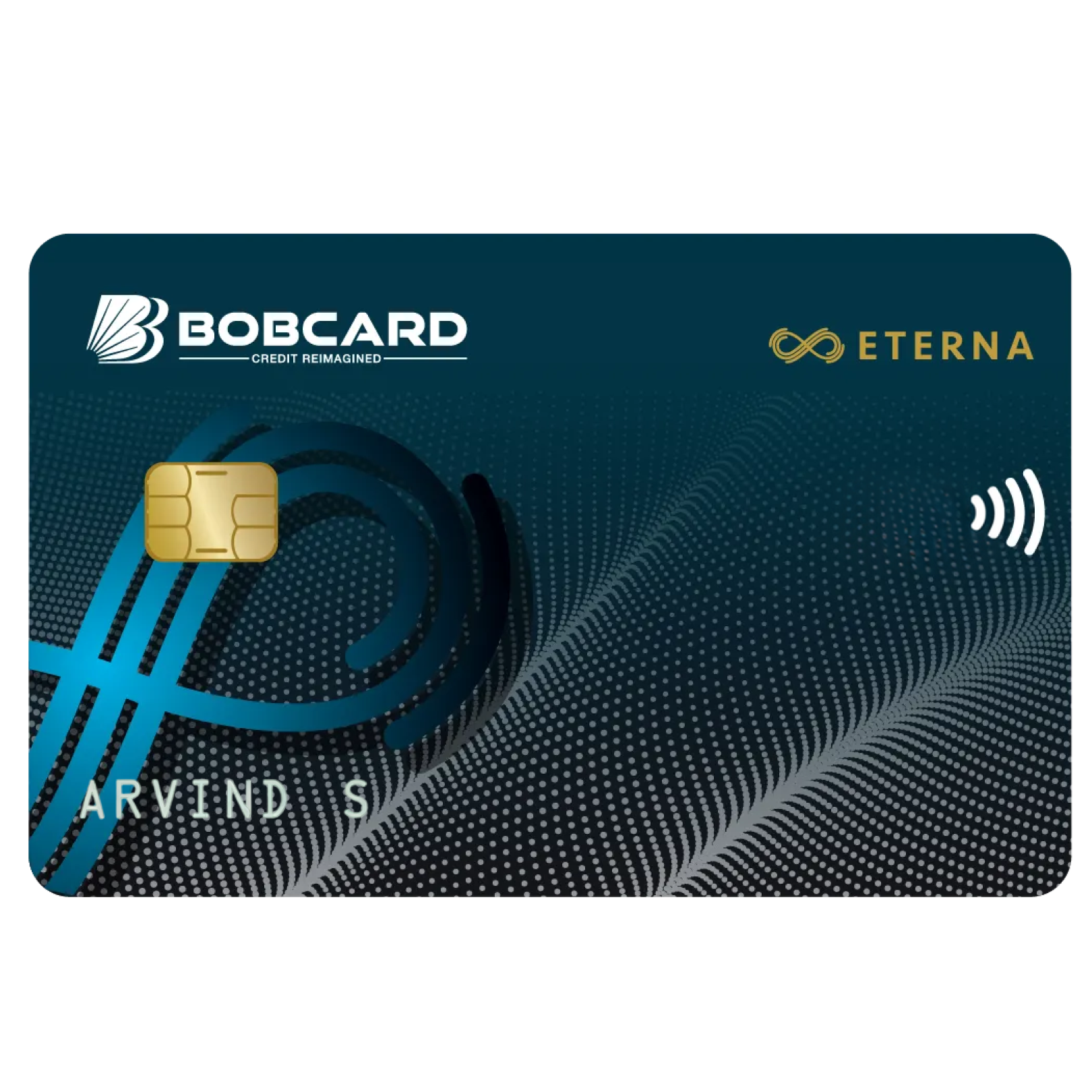
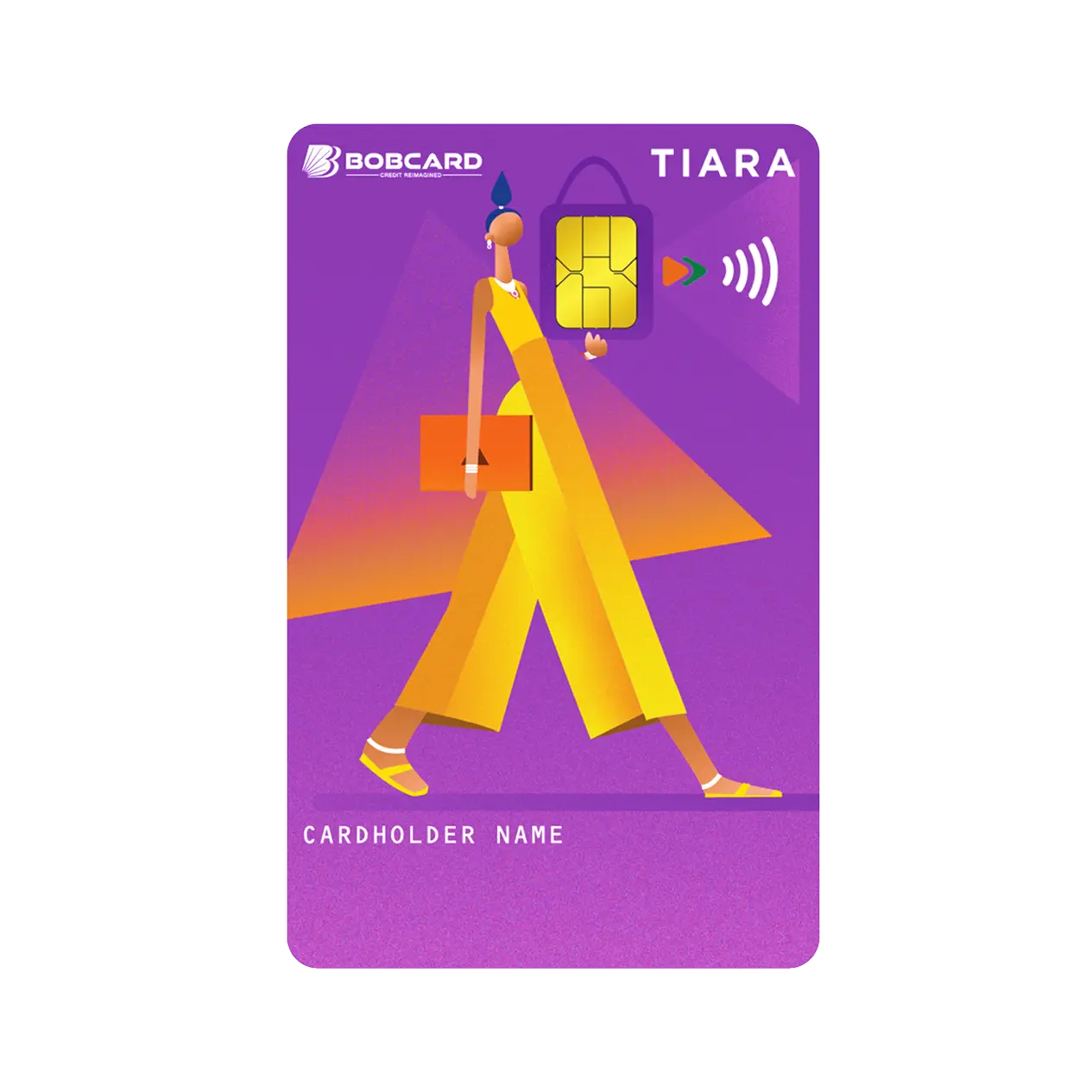
- For premium cards like Eterna and Tiara, the interest rate is 3.25% per month (39% per annum).
- For most other card variants, the rate is 3.75% per month (45% per annum).
- Cash Limit: The cash withdrawal limit typically ranges between 20% to 40% of the total credit limit, depending on the card variant and individual eligibility.
Risks of Withdrawing Cash from a Credit Card
The most significant risk of credit card cash withdrawals is the absence of an interest-free period. From the moment you withdraw cash, the interest clock starts at 36%-45% per annum. Combined with the upfront cash advance fee, the effective annualised cost of a credit card cash advance, if the balance is held for a full month, can exceed 50% when all charges are factored in. This makes credit card cash advances one of the most expensive forms of short-term borrowing available in the consumer market.
Can Hurt Your Credit Score If Not Managed Properly
Frequent credit card cash advances can signal financial stress to credit bureaus and lenders. High cash utilisation relative to your cash credit limit, combined with a consistently elevated overall credit utilisation ratio, can compress your CIBIL score over time. Lenders reviewing your credit report for a loan application may view a pattern of repeated cash advances as a negative indicator of financial stability.
Easy Debt Trap If Repayment Is Delayed
If a cash advance balance is not repaid before the next due date, it begins compounding at the revolving credit rate. Paying only the minimum due on a balance that includes a cash advance means the remainder continues to accrue interest, and any new purchases in the next cycle also lose their interest-free period. Within two to three billing cycles of an unrepaid cash advance, the cumulative interest and fees can significantly exceed the original amount withdrawn.
Tips to Avoid Charges When Using a Credit Card for Cash
Always Repay Cash Advance Before the Next Billing Cycle
If you must use a credit card cash advance, prioritise repaying the full amount, including the cash advance fee, before your next billing cycle ends. While you cannot retroactively eliminate the cash advance fee, repaying quickly minimises the interest charges that would otherwise compound. Even a few days' difference in repayment can meaningfully reduce the total interest paid on a cash advance.
Use Bank Transfer Features Instead of Direct ATM Withdrawal
If your bank offers a cash-on-credit or Flexi Cash feature (HDFC SmartEMI, SBI Encash, ICICI iLend, Axis Easy Transfer), use it instead of an ATM cash withdrawal for larger amounts. These bank-sanctioned transfer features typically offer lower interest rates (12%–20% per annum), structured repayment, and sometimes waive the cash advance fee entirely, making them significantly cheaper than the standard ATM cash advance route.
Pick a Card with Low or Zero Cash Advance Fee for Emergencies
If you anticipate ever needing emergency cash access via your credit card, factor cash advance fees into your card selection. Cards with a lower minimum floor fee (such as ICICI's ₹250 minimum) are cheaper for small withdrawals. A handful of cards explicitly waive the cash advance fee as a benefit. Choosing the right card before an emergency arises means you are not paying an unnecessary premium when you genuinely need it.
Avoid Repeat Cash Withdrawals to Prevent Interest Compounding
Each additional cash withdrawal on an already-unpaid cash advance balance adds to the total amount accruing interest from day one. The compounding effect accelerates quickly. If you find yourself making repeated credit card cash withdrawals, treat it as a strong signal to reassess your cash flow, or to consider a more structured option like a personal loan or overdraft facility, which are cheaper and more predictable.
A Credit Card Built for Transparency- Apply for BOBCARD Today
Understanding cash advance costs before you need them is smart financial planning. BOBCARD, powered by Bank of Baroda, gives you upfront clarity on every fee and charge, no buried surprises in the fine print, no unexpected charges on your statement.
With competitive cash advance rates, clear fee disclosures, and built-in bank features for structured cash access when you genuinely need it, BOBCARD is designed for cardholders who want to stay in control of their finances, at every stage of their credit journey.
Apply for BOBCARD today and choose a credit card that's as clear as it is rewarding.
Frequently Asked Questions
Disclaimer
The information in this blog is for general educational and informational purposes only. Cash advance fee structures, interest rates, cash credit limits, and bank-specific policies are indicative and based on publicly available information as of the date of publication. Actual charges applicable to your credit card are specified in your card agreement and the Most Important Terms and Conditions (MITC) document issued by your bank. RBI policies referenced, including restrictions on credit card loading of prepaid payment instruments, are based on circulars as of the date of writing and are subject to revision. Methods described for indirect cash access via credit cards involve third-party platforms and are subject to the terms, conditions, and merchant classification policies of those platforms and your card issuer. Readers are advised to verify current terms with their bank before using any cash access method. This content does not constitute financial advice.