

Table of Contents
- 1.Can You Transfer Money from Credit Card to Bank Account?
- 2.Methods to Transfer Money from Credit Card to Bank Account
- 3.Charges on Credit Card to Bank Transfer
- 4.Credit Card to Bank Transfer Limits
- 5.Step-by-Step Process to Send Money from Credit Card
- 6.Things to Know Before Transferring
- 7.Alternatives to Credit Card to Bank Transfer
There are situations where you need cash urgently but your bank account is low. If you have a credit card, it is possible to transfer funds to your bank account, but it comes with costs you should understand before proceeding. Here is a clear breakdown of how to send money from a credit card to a bank account, what it costs, and when it makes sense.
Can You Transfer Money from Credit Card to Bank Account?
Is It Allowed by RBI and Banks?
Transferring money from a credit card to a bank account is permitted in India. Banks offer this facility in various forms, including cash advances at ATMs, fund transfers via mobile banking, and through certain third-party apps. However, this is treated as a borrowing transaction and carries a higher cost than standard credit card purchases.
When Should You Consider This Transfer?
A credit card to bank transfer is best suited for genuine short-term emergencies where no other option is available, such as an urgent medical expense at a facility that only accepts cash or bank transfers. It is not suitable for routine expenses given the high costs involved.
Methods to Transfer Money from Credit Card to Bank Account
Using Net Banking or Mobile Banking App
Several banks allow you to transfer funds from your credit card to a linked savings account directly through the bank's net banking portal or mobile app. Log in, select your credit card, choose the fund transfer or cash advance option, enter the amount, and confirm.
Using UPI Apps (PhonePe, GPay, Paytm)
Some UPI apps allow transactions using a RuPay credit card on UPI. GPay and PhonePe support RuPay credit cards on UPI for certain transactions. Note that adding money to a wallet from a Visa or Mastercard credit card and then transferring to a bank account is generally treated as a cash advance and will attract applicable charges.
Using Third-Party Apps (Slice, Uni, Kiwi)
Certain fintech apps previously allowed credit card to bank transfers with lower fees. However, RBI has tightened regulations around such facilities. Check the current terms of any third-party app before using it, as policies change frequently.
Using Cash Advance at ATM
You can withdraw cash from an ATM using your credit card PIN and deposit it into your bank account. This is the most expensive method as it attracts a cash advance fee of 2.5% to 3.5% of the amount (subject to a minimum of Rs 300 to Rs 500) plus interest from the day of withdrawal.
Using NEFT or RTGS via Credit Card
A small number of banks allow NEFT or RTGS transfers funded directly from a credit card account. This is typically available only to select cardholders through the bank's own system. Check with your issuer whether this facility is available on your specific card.
Charges on Credit Card to Bank Transfer
Cash Advance Fee and Interest Rate
Cash advance fees range from 2.5% to 3.5% of the amount withdrawn, subject to a minimum of Rs 300 to Rs 500. Interest starts accruing from the day of the transaction at a monthly rate of 2.5% to 3.5%, which translates to 30% to 42% per annum. Unlike regular purchases, there is no interest-free period on cash advances.
Cost example: withdrawing Rs 20,000 via cash advance
- Cash advance fee: 2.5% of Rs 20,000 = Rs 500 (or minimum Rs 500, whichever is higher)
- Interest for 30 days at 3.5% per month: Rs 700
- GST at 18% on fees and interest: approximately Rs 216
Total effective cost on Rs 20,000 for 30 days: approximately Rs 1,416
Processing Fee on Third-Party App Transfers
Third-party apps that facilitate credit card to bank transfers typically charge a processing fee of 1% to 2% of the transaction amount. If the transaction is classified as a cash advance by your card issuer, the cash advance fee applies regardless of what the app charges.
GST Applicable on Transfer Charges
GST at 18% is levied on all credit card fees and charges, including cash advance fees, processing fees, and interest charges. This is in addition to the base fee, not included in it.
Hidden Costs to Watch Out For
- Loss of interest-free period: If you have an outstanding balance on your card, making a cash advance may negate the interest-free period on your other purchases too.
- ATM fees: Using a non-home-bank ATM may attract an additional ATM usage fee.
- Wallet-to-bank fees: Some wallets charge a fee for transferring funds to a bank account.
Credit Card to Bank Transfer Limits
Daily and Monthly Transfer Limits
Banks typically set the cash advance limit at 20% to 40% of your total credit card limit. For example, if your credit limit is Rs 1,00,000, your cash advance limit may be Rs 20,000 to Rs 40,000. Check your card's MITC or call your bank's customer care to confirm your specific limits.
Bank-Wise Transfer Limit Comparison
| Bank | Cash Advance Limit | Cash Advance Fee | Monthly Interest Rate |
|---|---|---|---|
| HDFC Bank | Typically 40% of credit limit | 2.5% or Rs 500 (higher) | 3.75% per month |
| ICICI Bank | Typically 30% of credit limit | 2.5% or Rs 500 (higher) | 3.50% per month |
| SBI Card | Typically 30% of credit limit | 2.5% or Rs 500 (higher) | 3.50% per month |
| Axis Bank | Typically 30% of credit limit | 2.5% or Rs 500 (higher) | 3.50% per month |
| BOBCARD | As per card MITC | As per card MITC | As per card MITC |
Note: Figures are indicative as of March 2026. Verify exact rates on your card's MITC or the bank's official website. T&C apply.
Step-by-Step Process to Send Money from Credit Card
How to Transfer via Net Banking
- Log in to your bank's net banking or mobile app.
- Navigate to the credit card section and select your card.
- Choose the fund transfer or cash advance option.
- Enter the amount and the destination account details.
- Confirm with OTP. Funds are credited to your savings account.
How to Transfer via PhonePe or GPay
- Open the app and navigate to the credit card payment or add money section.
- Select your RuPay credit card as the funding source.
- Enter the amount and the destination bank account UPI ID.
- Confirm the transaction with your UPI PIN.
How to Transfer via Cash Advance
- Set a cash advance PIN for your credit card if not already done via net banking or customer care.
- Visit any ATM and insert your credit card.
- Select the cash withdrawal or cash advance option.
- Enter the amount within your cash advance limit and collect the cash.
Things to Know Before Transferring
No Interest-Free Period on Cash Advances
Regular credit card purchases come with an interest-free period of 20 to 50 days. Cash advances have no such grace period. Interest begins accumulating from the moment you withdraw the cash, at rates of 2.5% to 3.5% per month.
Impact on Credit Utilization and CIBIL Score
A cash advance or large transfer increases your credit utilization ratio. If your utilization crosses 30%, it may negatively impact your CIBIL score. Consistent cash advance usage can also signal financial stress to lenders and affect future credit applications.
When Transfer Gets Declined or Blocked
Your transfer may be declined if your cash advance limit is exhausted, your card is overdue, the transaction is flagged by the fraud detection system, or the merchant category code (MCC) is blocked by your issuer. Contact your card's customer care for assistance.
Alternatives to Credit Card to Bank Transfer
Personal Loan for Immediate Fund Needs
A personal loan typically offers interest rates starting at 10% to 12% per annum, compared to 30% to 42% per annum on a cash advance. If you need more than a few days to repay, a personal loan is significantly cheaper.
Credit Card EMI or Buy Now Pay Later
If the underlying need is a purchase, converting the transaction to a credit card EMI may be a better option. EMI interest rates are typically 12% to 18% per annum, far lower than cash advance rates.
Overdraft Facility on Savings Account
If your bank offers an overdraft (OD) facility linked to your savings account, this is usually the cheapest emergency borrowing option. OD interest rates are typically 10% to 15% per annum and interest is charged only on the amount used for the days it is outstanding.
Make Your Money Work Harder with a BOBCARD
Your savings account keeps your money safe. A BOBCARD credit card makes every rupee you spend earn rewards, cashback, or travel miles.
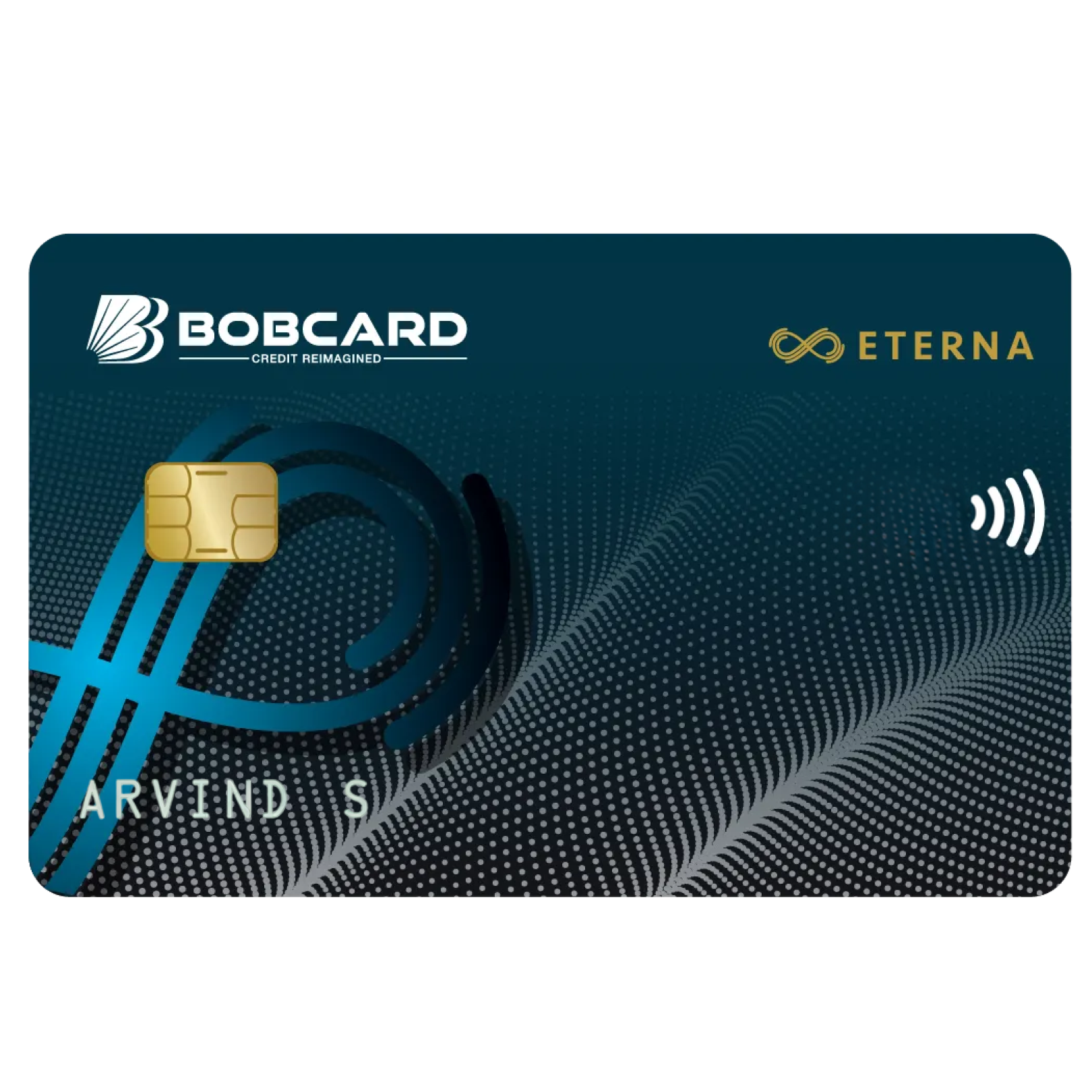
• Eterna 15x rewards on dining and travel, unlimited domestic lounge access
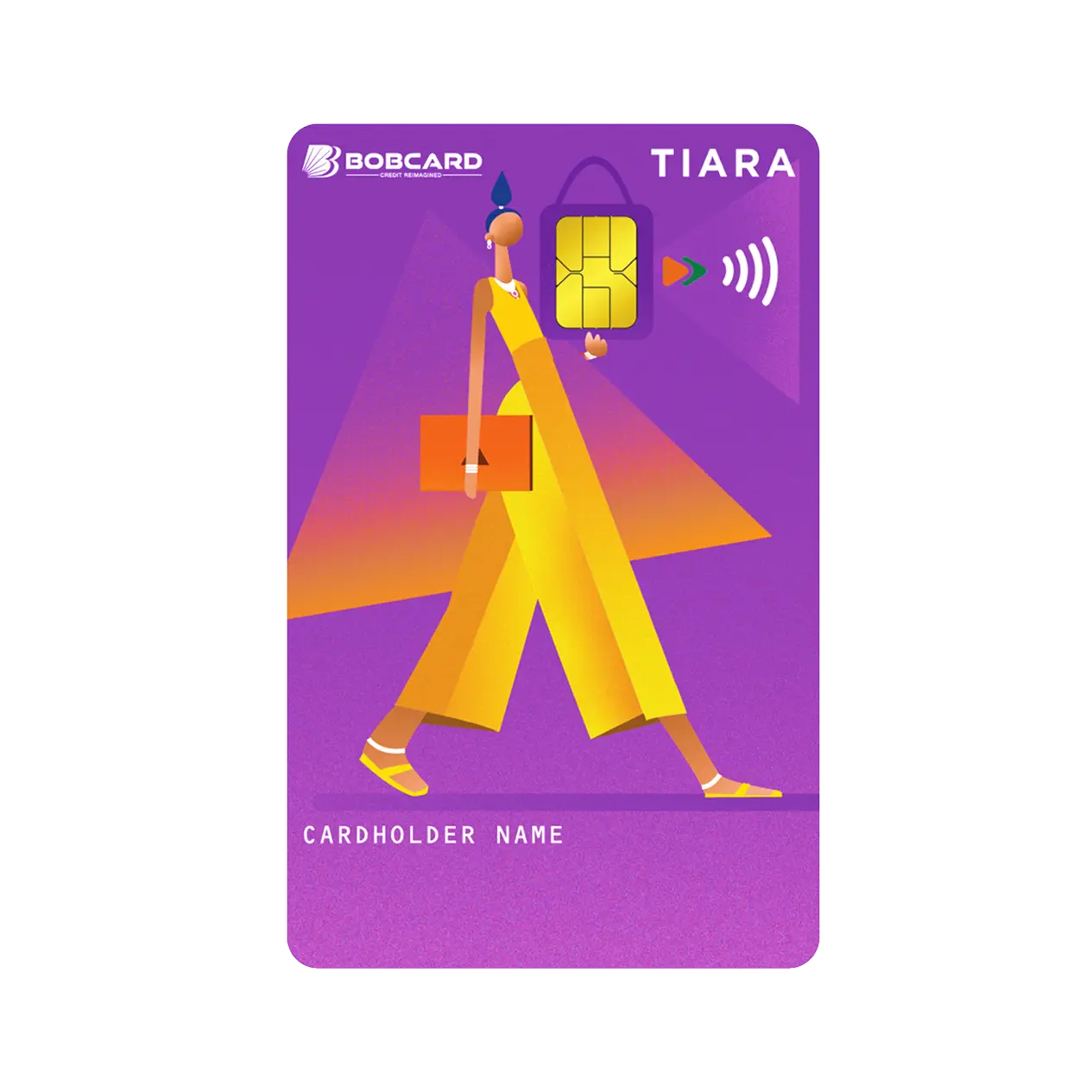
• Tiara Women-first card with wellness perks and 15x rewards
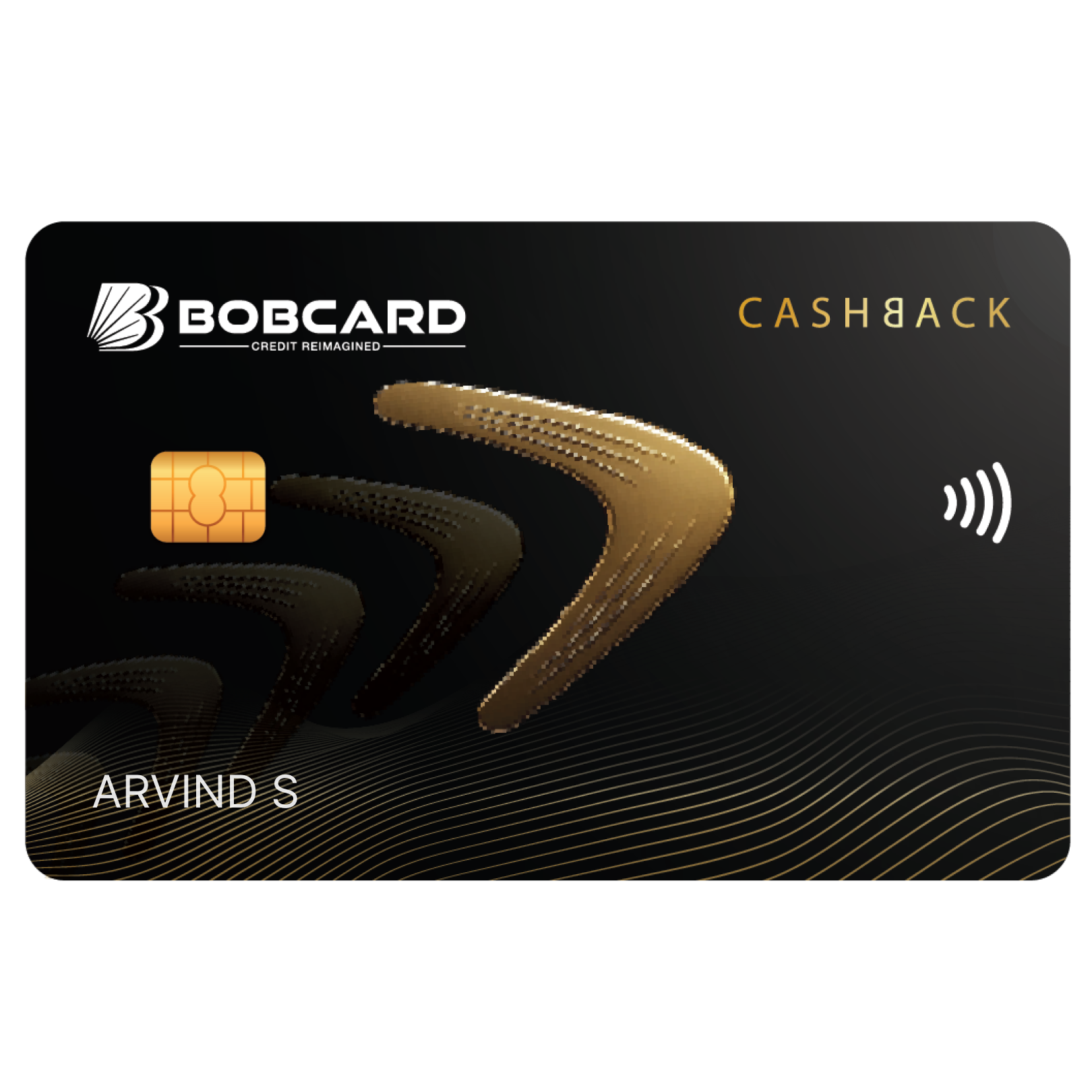
• Cashback 5% cashback on online spends, auto-credited every month
• Etihad Guest Earn Etihad miles with 1% forex markup and 12 lounge visits per year
Explore all cards at www.bobcard.life
Frequently Asked Questions
Disclaimer
General Disclaimer This article is published for general informational and educational purposes only. It does not constitute financial advice, investment advice, or any regulated financial service. All figures are based on publicly available data as of March 2026 and are subject to change without notice. Verify current details directly with your bank, a Chartered Accountant, or a qualified financial advisor before making any financial decision.
MITC and T&C All credit card and banking products referenced in this article are subject to the respective issuer's Most Important Terms and Conditions (MITC), Key Fact Statement (KFS), and Schedule of Charges. Product features, reward rates, fee structures, and eligibility criteria are at the sole discretion of the respective bank or NBFC and may be revised at any time. T&C apply.
RBI Note Cash advance fees, interest rates, and transfer limits vary by card and bank. The rates mentioned are indicative as of March 2026 based on publicly available MITC documents. Always read your credit card's MITC and Schedule of Charges for the exact applicable fees. RBI's Credit Cards and Debit Cards Directions, 2025 require card issuers to disclose all charges clearly at the time of onboarding.
BOBCARD Disclosure BOBCARD Limited is a Non-Banking Financial Company (NBFC) and a wholly owned subsidiary of Bank of Baroda, regulated by the Reserve Bank of India (RBI). Credit card issuance is at the sole discretion of BOBCARD Limited, subject to applicable eligibility criteria, credit assessment, and KYC documentation. All reward rates, cashback percentages, and benefit terms are indicative and subject to the applicable card's MITC. T&C apply.