
Table of Contents
Got a surprise deduction on your bank statement labelled "AMB charges"? You're not the first. Here's everything you need to know about AMB meaning in banking, how to calculate it, and how to avoid penalty charges.
What Is AMB in Banking?
AMB stands for Average Monthly Balance. It is the average of your savings account's closing balance across all days of a month. Banks use this to check whether you are meeting their minimum balance requirement.
Instead of checking your balance on one fixed day, the bank looks at your daily closing balance every day and takes an average. So even if your balance dips on a few days, a higher balance on other days can compensate.
AMB vs MAB: Are They the Same?
Yes. AMB (Average Monthly Balance) and MAB (Monthly Average Balance) mean exactly the same thing. Different banks use different terms but the calculation is identical.
How to Calculate Average Monthly Balance
Formula: AMB = Total of all daily closing balances ÷ Number of days in the month
Step-by-Step MAB Calculation Formula
Example: June (30 days)
Days 1 to 10: Balance = ₹15,000 → Contribution: ₹1,50,000
Days 11 to 20: Balance = ₹5,000 → Contribution: ₹50,000
Days 21 to 30: Balance = ₹12,000 → Contribution: ₹1,20,000
Total ₹3,20,000 ÷ 30 days = AMB of ₹10,667
Required AMB is ₹10,000. This account is compliant.
How Daily Closing Balance Affects Your AMB
Notice how the balance dropped to ₹5,000 for 10 days, below the required limit. But higher balances on other days pulled the average back up. This is the key advantage of AMB over a fixed daily minimum balance. Early-month withdrawals carry more weight because the low balance persists over more remaining days.
Minimum Average Balance Rules & Requirements
What Is the Minimum Balance Requirement in Banks?
There is no single rule across all Indian banks. The Reserve Bank of India (RBI) has clarified that setting AMB requirements is a commercial decision made by each bank individually, not a regulatory mandate. Requirements typically vary by:
- Location: Metro and urban branches require higher AMB than semi-urban or rural branches.
- Account type: Salary, student, BSBDA, Jan Dhan, and pension accounts are usually zero-balance with no AMB required.
- Bank policy: Most major public sector banks have removed AMB requirements. Several private banks still maintain them, especially for new accounts.
Bank-Wise Minimum AMB Comparison
| Bank | Metro / Urban AMB | Rural AMB | Penalty if Short |
|---|---|---|---|
| SBI | No requirement | No requirement | None |
| Bank of Baroda | No requirement (from Jul 2025)* | No requirement | None |
| Canara Bank | No requirement (from Jun 2025) | No requirement | None |
| PNB | No requirement (from Jul 2025) | No requirement | None |
| HDFC Bank (new a/c post Aug 2025) | ₹25,000 | ₹10,000 | 6% of shortfall, max ₹600 |
| ICICI Bank (new a/c post Aug 2025) | ₹50,000 | Not published | 6% of shortfall or ₹500 |
| Axis Bank | ₹10,000 | Not published | Up to ₹600 (urban) |
Bank of Baroda waived AMB for regular savings accounts from July 2025. Premium account holders may still have specific requirements. Verify directly with your branch.*
AMB Penalty Charges
What Happens If You Don't Maintain Minimum AMB?
If your monthly average falls below the required threshold, your bank will automatically deduct a non-maintenance charge, usually in the first few days of the following month. GST at 18% applies on top of the penalty amount. No prior notice is given in most cases.
Watch out for the compounding effect: the penalty reduces your balance, which can cause another shortfall the following month, triggering another penalty.
How Penalty Is Calculated on Shortfall Amount
Most banks charge a percentage of the shortfall, typically 5% to 6%, subject to a maximum cap per cycle.
Penalty Calculation Example: HDFC Urban Account
Required AMB: ₹10,000 | Your AMB: ₹7,000 | Shortfall: ₹3,000
Penalty = 6% of ₹3,000 = ₹180 + GST (18%) = approx. ₹212 deducted
If your bank caps penalties at ₹600, the lower figure applies.
Bank-Wise Penalty Charges Comparison
| Bank | Penalty Method | Urban Cap | Rural Cap |
|---|---|---|---|
| SBI | No penalty | ₹0 | ₹0 |
| Bank of Baroda | No penalty | ₹0 | ₹0 |
| HDFC Bank | 6% of shortfall | ₹600 per cycle | ₹150 per cycle |
| ICICI Bank | 6% of shortfall or ₹500 (lower) | ₹500 | ₹500 |
| Axis Bank | Up to ₹600 (urban) | ₹600 | ₹300 |
GST at 18% is levied on top of all penalty amounts above. Figures are pre-GST. Verify current charges on your bank's official website.
Benefits of Maintaining a Good AMB
- No penalty charges. Your account stays cost-free.
- More free ATM withdrawals and waived online transfer fees.
- Eligibility for relationship banking tiers with better service.
- Stronger financial profile when applying for loans or credit cards. Lenders typically review 6 to 12 months of bank statements as part of their assessment.
Tips to Maintain Required AMB
Avoid Large Withdrawals at Month Start
Early-month withdrawals carry more weight in the AMB calculation because the lower balance persists over more remaining days. Plan large expenses such as rent, EMIs, and insurance premiums to align with your salary credit date.
Set Up Automatic Transfers for Monthly Deposits
A standing instruction that moves a fixed amount into your savings account on a set date each month removes the guesswork. Set it up in minutes through your bank's net banking portal.
Track Daily Balance via Mobile Banking App
Most bank apps let you set a balance alert via SMS or push notification. Set your threshold slightly above your required AMB, say ₹12,000 if the requirement is ₹10,000, so you get a nudge before a shortfall happens.
Make Your Money Work Harder with a BOBCARD
Your savings account keeps your money safe. A BOBCARD credit card makes every rupee you spend earn rewards, cashback, or travel miles.
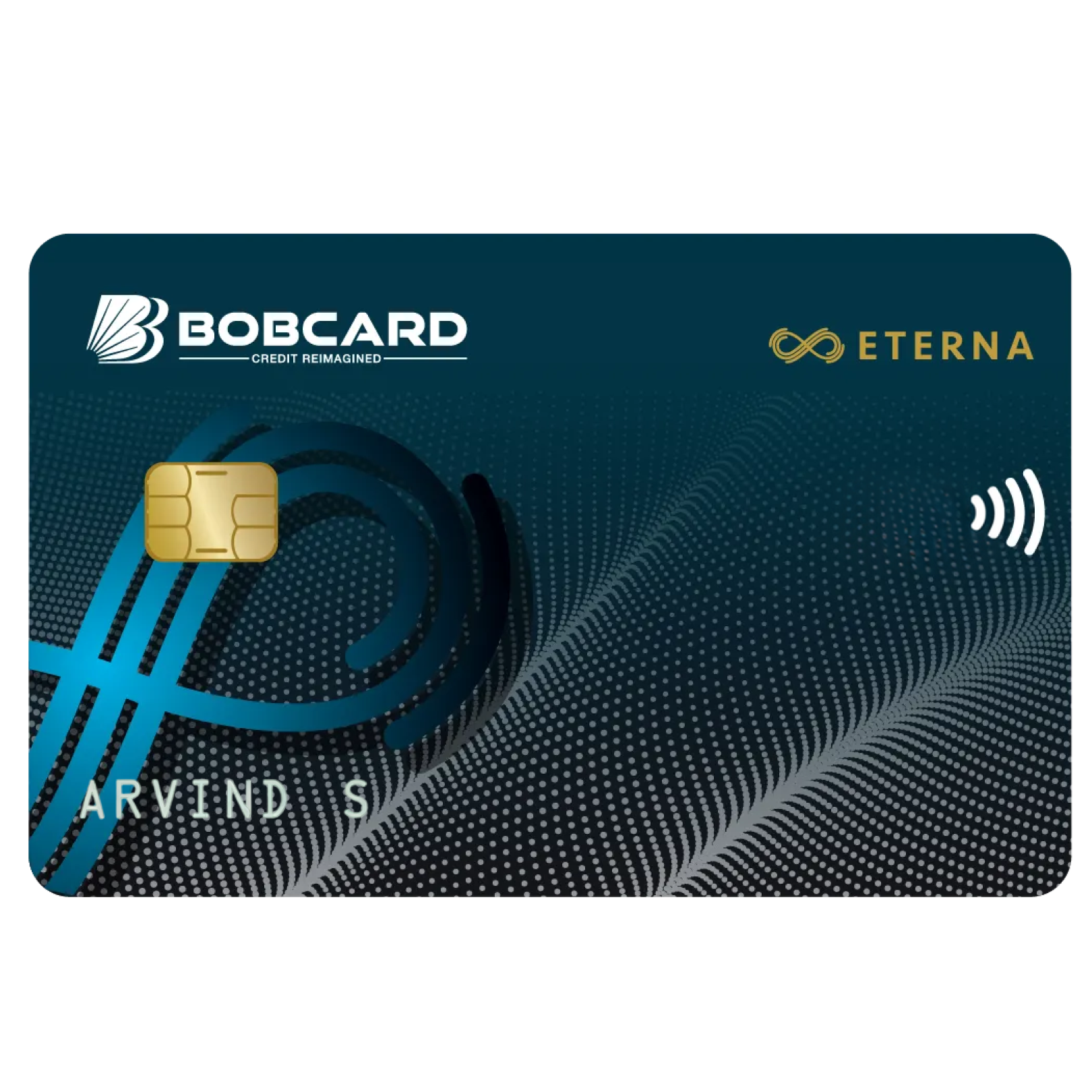
• Eterna 15x rewards on dining and travel, unlimited domestic lounge access
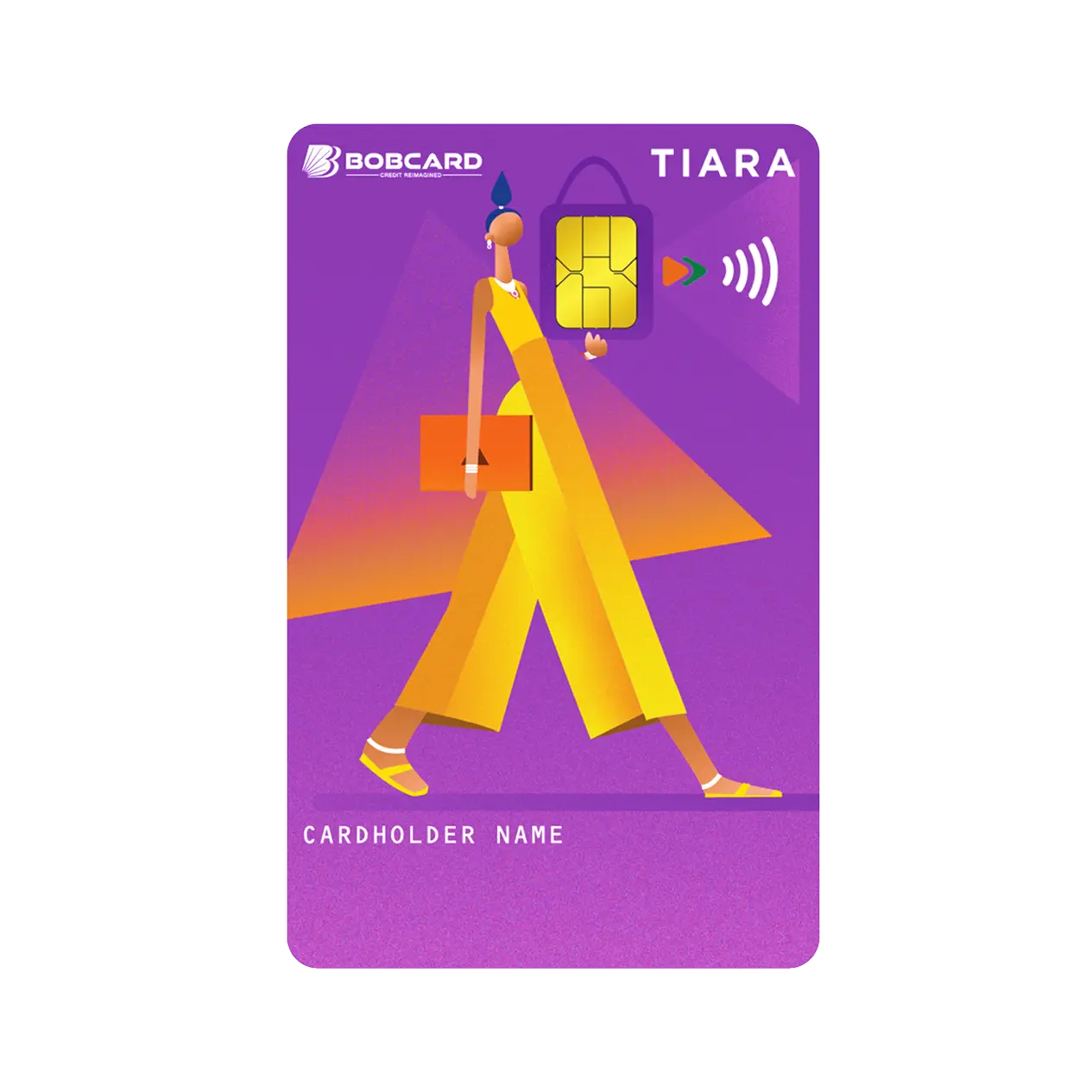
• Tiara Women-first card with wellness perks and 15x rewards
• Cashback 5% cashback on online spends, auto-credited every month
• Etihad Guest Earn Etihad miles with 1% forex markup and 12 lounge visits per year
Explore all cards at www.bobcard.life
Frequently Asked Questions
Disclaimer
General Disclaimer This article is published for general informational and educational purposes only. It does not constitute financial advice, investment advice, or any regulated financial service. All figures are based on publicly available data as of March 2026 and are subject to change without notice. Verify current details directly with your bank, a Chartered Accountant, or a qualified financial advisor before making any financial decision.
MITC and T&C All credit card and banking products referenced in this article are subject to the respective issuer's Most Important Terms and Conditions (MITC), Key Fact Statement (KFS), and Schedule of Charges. Product features, reward rates, fee structures, and eligibility criteria are at the sole discretion of the respective bank or NBFC and may be revised at any time. T&C apply.
Regulatory Compliance This content complies with the RBI's Fair Practices Code and guidelines on digital lending and credit card communications. The comparative bank data is sourced from publicly available information and official bank websites. BOBCARD does not guarantee the accuracy or completeness of third-party bank data. This article does not constitute a recommendation to open, close, or switch bank accounts.
BOBCARD Disclosure BOBCARD Limited is a Non-Banking Financial Company (NBFC) and a wholly owned subsidiary of Bank of Baroda, regulated by the Reserve Bank of India (RBI). Credit card issuance is at the sole discretion of BOBCARD Limited, subject to applicable eligibility criteria, credit assessment, and KYC documentation. All reward rates, cashback percentages, and benefit terms are indicative and subject to the applicable card's MITC. T&C apply.