

Table of Contents
Moved abroad or planning to? One of the first things you need to sort out is whether you need an NRE account, an NRO account, or both. Using the wrong account or skipping the conversion of your existing savings account is a FEMA violation and can attract serious penalties. Here is what every NRI needs to know about NRE and NRO accounts.
What Is an NRE Account?
An NRE account (Non-Resident External account) is designed for NRIs who earn income outside India and want to bring it to India. Funds are deposited in foreign currency and converted to Indian rupees at the bank's prevailing exchange rate.
Who Can Open an NRE Account?
Any Indian citizen who qualifies as an NRI under FEMA can open one. You are classified as an NRI once you have been outside India for more than 182 days in a financial year for employment, business, or any other purpose.
Key Features of NRE Account
- Interest is fully exempt from Indian income tax. Source: Income Tax Act, 1961.
- Principal and interest are freely and fully repatriable abroad with no annual limit.
- Only foreign income or inward remittances can be credited. Indian income such as rent or dividends cannot be deposited here.
- Joint holding is allowed only with another NRI or Person of Indian Origin (PIO).
What Is an NRO Account?
An NRO account (Non-Resident Ordinary account) is used to manage income that originates in India. If you receive rent, dividends, pension, or any other India-sourced income while living abroad, it must go into your NRO account.
Who Needs an NRO Account?
Any NRI earning income in India needs one. If you had a resident savings account before becoming an NRI, FEMA requires you to convert it to an NRO account as soon as your residential status changes.
Key Features of NRO Account
- Interest is taxable in India. Banks deduct TDS at 30% (plus surcharge and cess) on the interest earned.
- Repatriation is permitted up to USD 1 million per financial year (April to March), after taxes are paid and documentation is submitted.
- Both foreign remittances and Indian income can be credited.
- A resident Indian can be a joint holder, which is not possible in an NRE account.
NRE vs NRO Account: Key Differences
| Feature | NRE Account | NRO Account |
|---|---|---|
| Purpose | Foreign income parked in India | Indian income management |
| Tax on interest | Fully exempt from Indian tax | Taxable at 30% TDS plus surcharge |
| Repatriation | Fully repatriable, no limit | Up to USD 1 million per year (post-tax) |
| Funds accepted | Foreign remittances only | Foreign and Indian income both |
| Joint holding | Only with NRI or PIO | Resident Indian can be joint holder |
| Interest rate (FD) | 2.70% to 7.00% p.a. (March 2026) | 2.70% to 7.00% p.a. (March 2026) |
Source: RBI FEMA guidelines and State Bank of India official website, March 2026. Verify current rates with your bank before making any financial decision.
Taxation: NRE vs NRO
The biggest practical difference is tax. NRE interest is completely tax-free in India. NRO interest is taxed at 30% (plus surcharge and cess) via TDS before it reaches you. If your country of residence has a Double Taxation Avoidance Agreement (DTAA) with India, you may claim a reduced TDS rate by submitting a Tax Residency Certificate (TRC) to your bank.
Repatriation Rules: NRE vs NRO
NRE funds can be moved abroad at any time, in any amount, without RBI approval. For NRO funds, repatriation is capped at USD 1 million per financial year. You will need Form 15CA (self-declaration on the Income Tax portal) and Form 15CB (certified by a Chartered Accountant confirming taxes have been paid).
Penalty for Not Converting to NRO Account
When Must a Resident Account Be Converted to NRO?
The conversion obligation begins the day your NRI status takes effect under FEMA. FEMA does not provide a grace period. Banks are required to reclassify accounts once they become aware of a customer's NRI status, and most banks now run periodic KYC reviews that flag resident accounts held by NRIs.
RBI Rule on Conversion Timeline
As soon as you have spent more than 182 days outside India in a financial year, your resident savings account must be redesignated as NRO. Continuing to operate it as a resident account after that point is a FEMA violation, even if unintentional.
Consequences and Penalty for Non-Compliance
Under FEMA, the penalty for not converting a resident savings account to NRO is up to three times the amount involved. If the amount is not quantifiable, the penalty can be up to Rs 2 lakh. A continuing penalty of Rs 5,000 per day applies from the date of violation until the account is converted.
Penalty example
Account balance at time of violation: Rs 5,00,000
Maximum FEMA penalty: 3x the amount = Rs 15,00,000
Continuing penalty: Rs 5,000 per day until conversion is completed
Banks may also freeze the account, block outward remittances, or forcibly transfer the balance to an NRO account if they discover the non-compliance during an audit.
How to Convert Savings Account to NRO Account
- Inform your bank in writing of your change in residential status and submit overseas employment proof, visa, or residence permit.
- Complete the bank's account redesignation form along with updated KYC documents. Your account number stays the same; only the classification changes.
- Existing fixed and recurring deposits must also be redesignated as NRO deposits at the same time.
How to Transfer Money from NRO to NRE Account
Many NRIs prefer to move funds from NRO to NRE once taxes are paid, because NRE funds are tax-free and fully repatriable. This transfer is permitted by RBI under FEMA regulations, effective from May 7, 2012.
RBI Limit on Transfer (USD 1 Million Per Year)
You can transfer up to USD 1 million from your NRO account to your NRE account per financial year. This limit is cumulative across all your NRO accounts in India and does not carry forward if unused. Transfers above this limit require prior RBI approval.
Step-by-Step Process to Transfer NRO to NRE
- Pay all applicable Indian taxes on the NRO funds you wish to transfer.
- Obtain Form 15CB from a Chartered Accountant (with a valid UDIN), certifying taxes have been paid.
- File Form 15CA online through the Income Tax e-filing portal.
- Submit Form A2, Form 15CA acknowledgment, Form 15CB, and source documents to your bank. Your bank, acting as an Authorised Dealer under RBI, will verify and process the transfer.
Documents Required for the Transfer
You will need Form 15CA, Form 15CB from a CA, Form A2, proof of source of funds (such as a property sale deed or rental agreement), proof of tax payment, and a written request to your bank.
TDS Deduction Before Transfer
Confirm with your bank that all outstanding TDS on NRO interest has been settled and that your PAN is correctly linked to your NRO account before initiating any transfer.
Which Account Should NRIs Choose?
Choose NRE If Foreign Income, Full Repatriation Needed
If your primary income is earned outside India and you want to invest in India while keeping funds tax-free and freely moveable, the NRE account is the right choice.
Choose NRO If Indian Income, Rent, Pension, Dividends
If you earn rent, receive a pension from an Indian employer, or hold dividend-paying investments in India, an NRO account is essential to receive and manage that income in compliance with Indian tax law.
Can You Hold Both NRE and NRO Accounts?
Yes. Most NRIs hold both. Use your NRE account for foreign salary and repatriable investments, and your NRO account for India-sourced earnings. Both can be held at the same bank.
Make Your Money Work Harder with a BOBCARD
Your savings account keeps your money safe. A BOBCARD credit card makes every rupee you spend earn rewards, cashback, or travel miles.
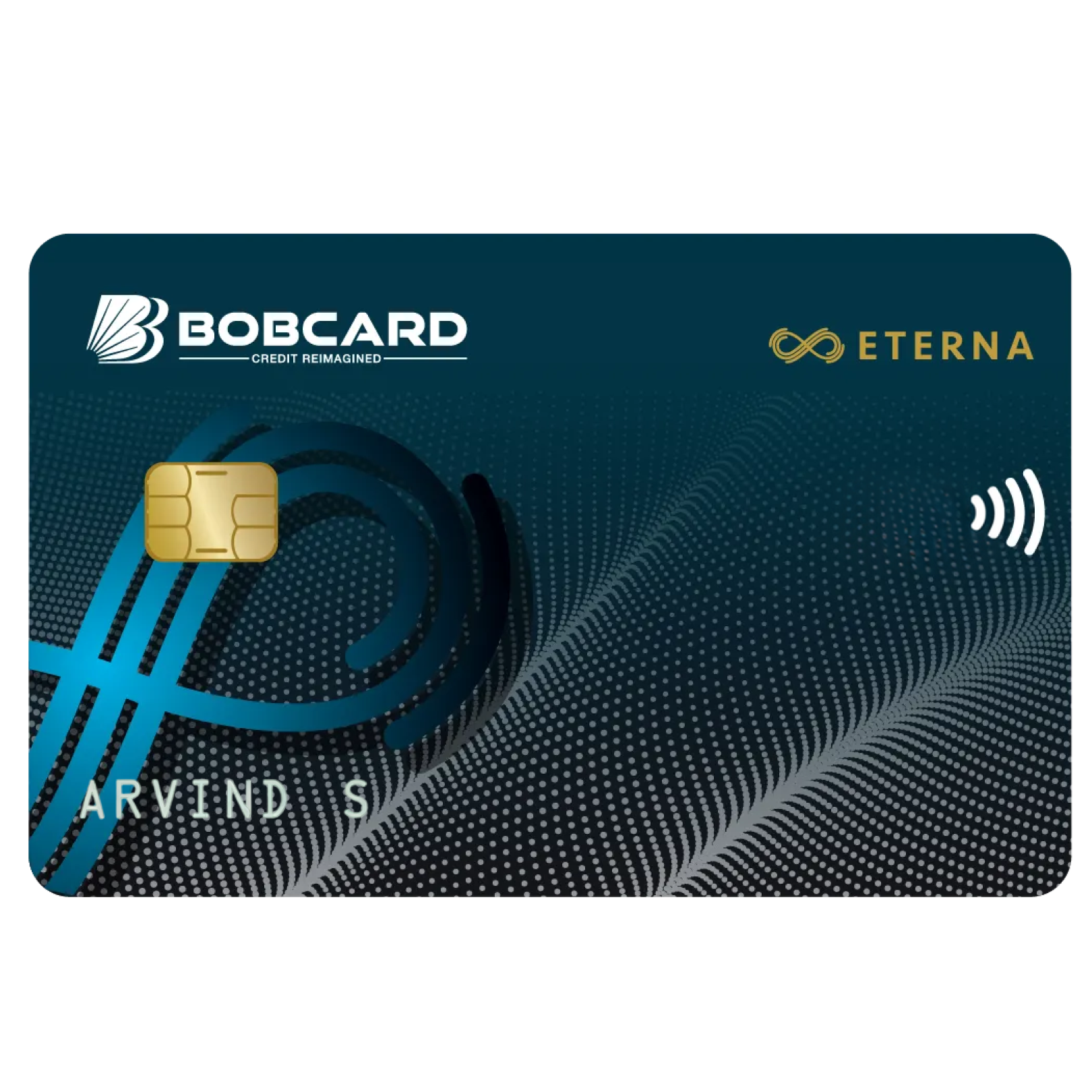
• Eterna 15x rewards on dining and travel, unlimited domestic lounge access
• Tiara Women-first card with wellness perks and 15x rewards
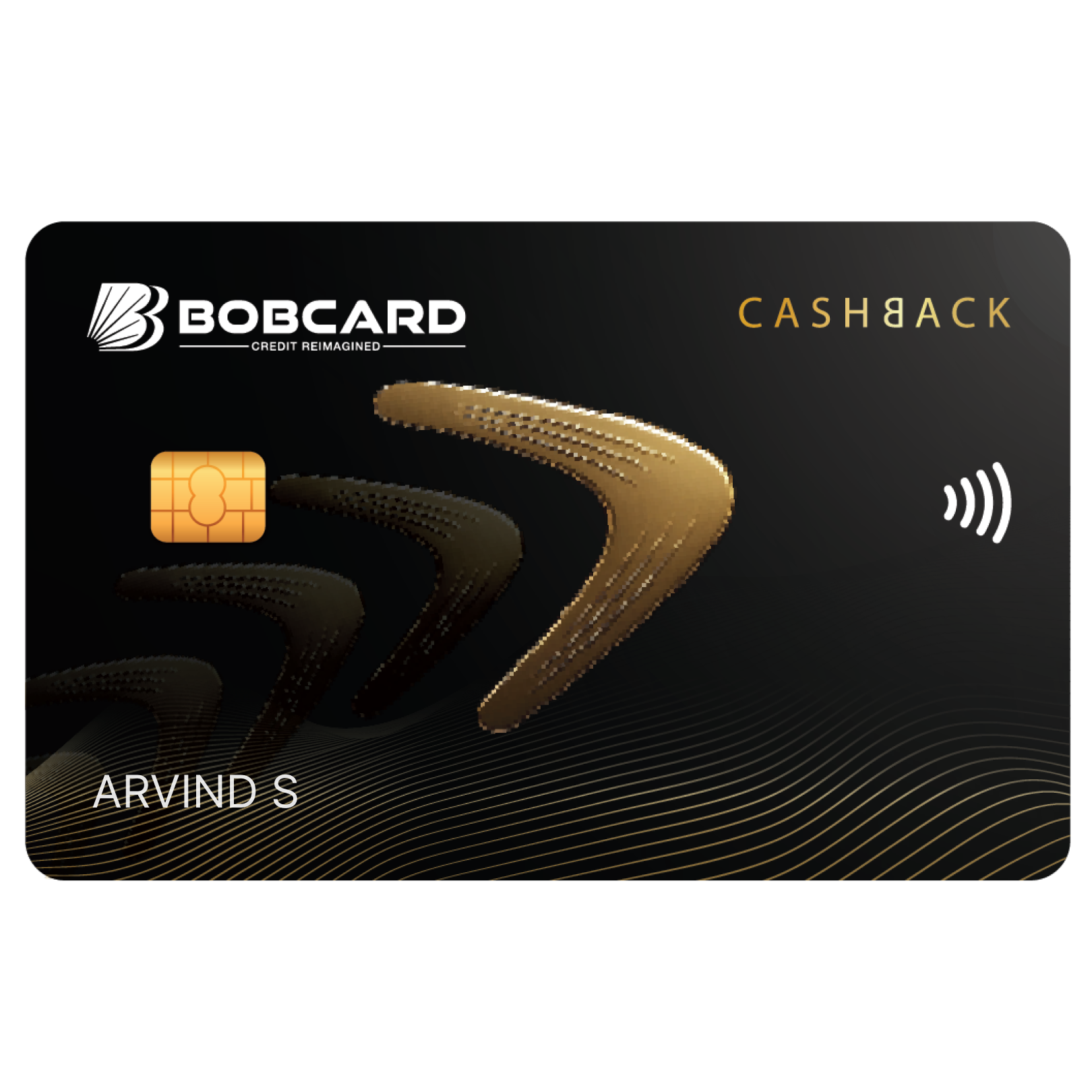
• Cashback 5% cashback on online spends, auto-credited every month
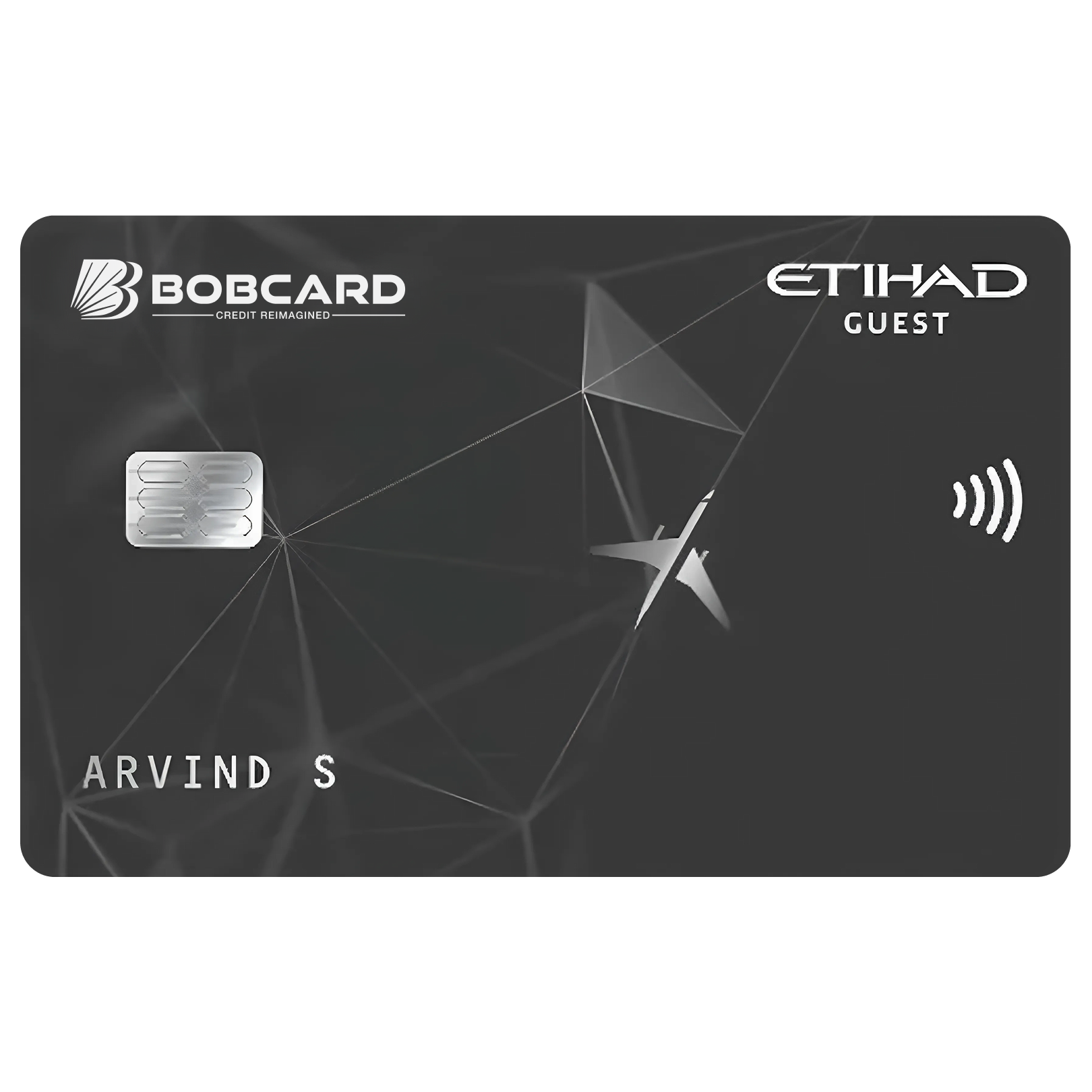
• Etihad Guest Earn Etihad miles with 1% forex markup and 12 lounge visits per year
Frequently Asked Questions
Disclaimer
General Disclaimer This article is published for general informational and educational purposes only. It does not constitute financial advice, investment advice, or any regulated financial service. All figures are based on publicly available data as of March 2026 and are subject to change without notice. Verify current details directly with your bank, a Chartered Accountant, or a qualified financial advisor before making any financial decision.
MITC and T&C All credit card and banking products referenced in this article are subject to the respective issuer's Most Important Terms and Conditions (MITC), Key Fact Statement (KFS), and Schedule of Charges. Product features, reward rates, fee structures, and eligibility criteria are at the sole discretion of the respective bank or NBFC and may be revised at any time. T&C apply.
FEMA and RBI Note This article references FEMA regulations and RBI guidelines which are subject to change. Penalty figures cited are based on FEMA provisions as publicly available at the time of writing. Consult a FEMA-qualified Chartered Accountant before making any decisions related to NRI account conversion, fund repatriation, or tax compliance.
BOBCARD Disclosure BOBCARD Limited is a Non-Banking Financial Company (NBFC) and a wholly owned subsidiary of Bank of Baroda, regulated by the Reserve Bank of India (RBI). Credit card issuance is at the sole discretion of BOBCARD Limited, subject to applicable eligibility criteria, credit assessment, and KYC documentation. All reward rates, cashback percentages, and benefit terms are indicative and subject to the applicable card's MITC. T&C apply.