
Table of Contents
- The Value Proposition: Analyzing BOB Credit Card User Feedback on Fees and Rewards
- Service Infrastructure: The Deep Divide in Customer Experience
- Summary of Core Customer Experience Divergence
- A Quantitative Look: Sentiment Analysis of BOB Card Users
- Strategic Implications for BOBCARD and the Future Outlook
- BOBCARD Customer Support
The aggregated user feedback on Bank of Baroda (BoB) credit cards, operating under the BOBCARD brand, reveals a clear polarization in customer experience: while the product suite is recognized as highly competitive and value-driven due to industry-leading reward structures and low-cost fee waivers, these strengths are consistently undermined by severe structural deficiencies in customer service and a significantly buggy mobile application ecosystem. The prevailing sentiment analysis of bob card users suggests that BoB has successfully engineered highly lucrative financial products, particularly for savvy consumers focused solely on maximizing rewards, yet its operational infrastructure, including digital platforms and human support channels, severely lags behind the seamless, technology-forward experiences offered by major private sector competitors. The decision to opt for a BOBCARD ultimately hinges on the user’s tolerance for logistical friction versus their ability to maximize product-specific returns.
The Value Proposition: Analyzing BOB Credit Card User Feedback on Fees and Rewards
For many years, the Indian credit card market has been dominated by fierce competition centered on high annual fees paired with premium benefits. However, the bob credit card user feedback indicates a strong user appetite for high-value cards that manage to keep the entry barrier low. BOBCARD has successfully targeted this segment by decoupling premium rewards from excessive costs, generating significant positive sentiment concerning the financial viability of their offerings.
Low-Cost Structure: The Budget Appeal
One of the most frequently praised aspects of the BOBCARD portfolio is its highly competitive and attainable fee structure. Users are often drawn to cards like the BoB Select and BoB Easy because their annual maintenance charges are low and, critically, the spending thresholds required for fee waivers are easily met by average users.
- Attainable Waivers: For cards designed for the affluent segment, high spending requirements are typical. However, users appreciate that lower-tier cards like the BoB Easy, often require spending as little as ₹35,000 annually to waive the fee, making it accessible to individuals who use credit cards primarily for essential monthly utilities and small online purchases.
- Mid-Tier Value: The BoB Select card, often cited as a benchmark for mid-range value, has an annual fee waiver requirement typically around ₹70,000. Users find this achievable and consider the fee a negligible investment given the high return rates the card offers on specific spending categories.
- Transparency and Simplicity: Unlike some private bank offerings which complicate fee waivers with multiple conditions or promotional periods, users find the BOBCARD fee waiver rules straightforward, contributing to a sense of financial control and transparency.
High-Yield Reward Mechanics
The true differentiation for BOBCARD lies in the lucrative reward point accrual rates, particularly for transactional spend categories that define modern consumer habits. This focus on maximizing returns in high-frequency areas online shopping, dining, and utility payments is frequently highlighted in positive bob card customer opinions.
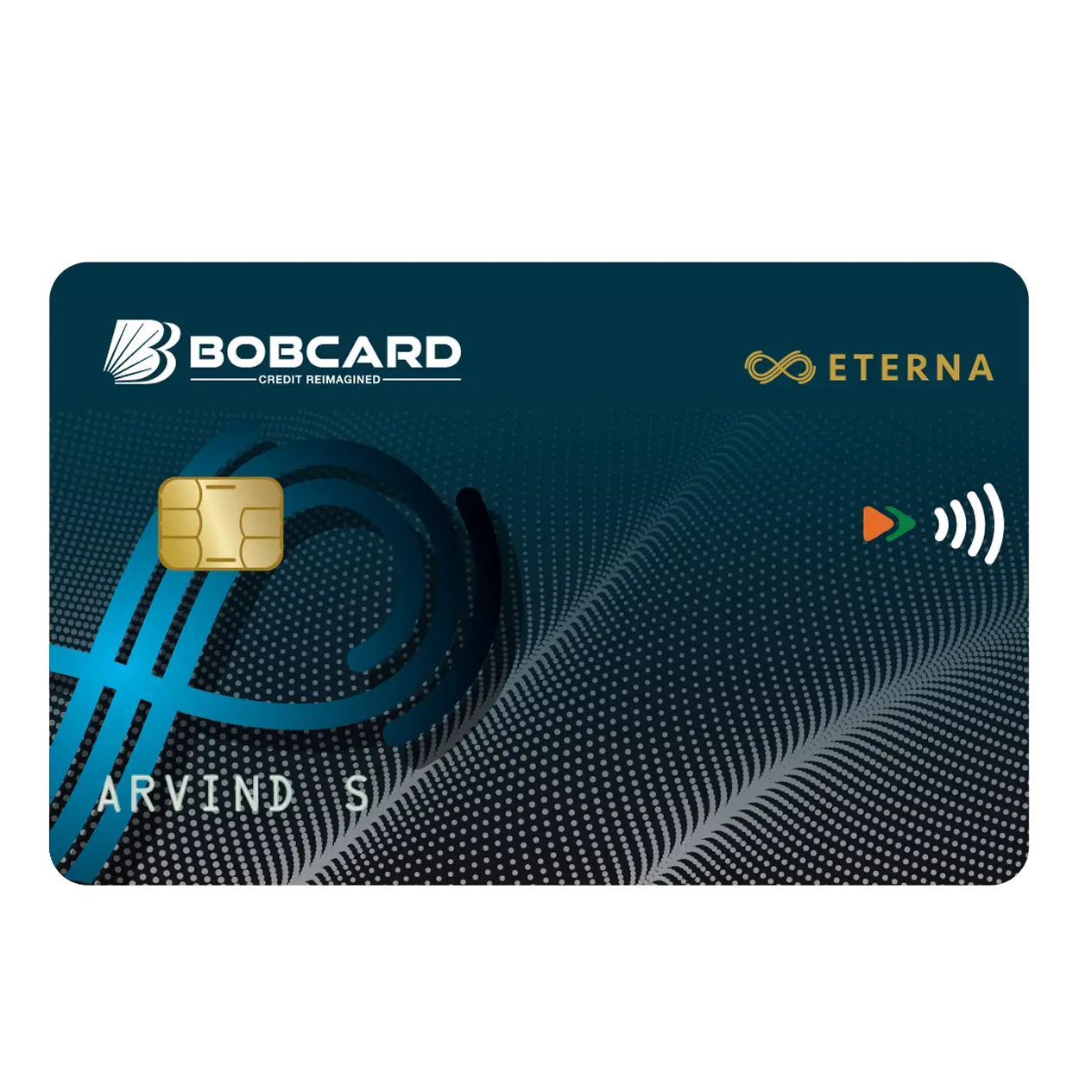
The flagship cards, such as BoB Eterna and BoB Select, often feature accelerators up to 5X (five times the base rate) on specific transactions. This means that for every ₹100 spent, the effective return rate surpasses many competitors who offer fixed, flat-rate rewards.
The key areas of praised reward amplification include:
- Dining and Online Spends: These are primary drivers of positive feedback, as the 5X accelerator effectively translates into a high percentage return on discretionary spending.
- Utility Payments: The inclusion of utilities (which are predictable, recurring expenses) in the high-reward category allows users to easily accrue points passively.
- Redemption Value: Crucially, the perceived value is maintained because the reward points are relatively easy to redeem and often translate directly into a high effective cash return rate, ranging from 3.75% to 4.2% on accelerated categories.
Cashback Credibility and Redemption Clarity
In the complex landscape of reward points, where redemption often involves inflated catalogs or highly restrictive travel bookings, the BOBCARD system’s straightforward conversion to statement credit is widely appreciated. This simplicity significantly elevates the overall user satisfaction regarding the rewards program.
The ability to directly redeem accrued reward points as statement credit means users are receiving genuine financial value, eliminating the need to search for desirable products in a rewards portal. This practical approach solidifies the belief among bob card public feedback that the cards offer real, tangible savings.
- Direct Conversion: Users prefer direct statement credit over complicated point transfers or third-party gift vouchers. This eliminates the "hoarding" mentality common with reward systems that devalue points over time.
- No Devaluation Surprises: While the point value might fluctuate slightly, the mechanism itself is clear, making it easier for consumers to calculate their effective savings rate accurately.
The Caveat: Points Not Credited as Expected
While the reward structure itself is excellent, the positive feedback is often undercut by logistical issues surrounding execution. A concerning minority of users reported difficulties in receiving the promised rewards, indicating a flaw in the system’s backend processing or categorization.
These complaints usually involve:
- Mismatched Merchant Codes: Transactions that should qualify for 5X points (e.g., specific online payments or restaurant bills) are occasionally categorized incorrectly by the bank's system, resulting in only 1X base points being credited.
- Delayed Accrual: In some cases, reward points take significantly longer than expected to reflect in the account statement, creating uncertainty and requiring manual follow-up a process that brings users face-to-face with the deficient customer service apparatus.
- Dispute Resolution Failure: Attempts to correct these point accrual errors often run into the broader issue of poor customer support, turning a minor technical glitch into a major customer satisfaction issue.
Service Infrastructure: The Deep Divide in Customer Experience
The most significant barrier to BOBCARD achieving market parity with top private issuers is its service delivery infrastructure. This is the area that generates the highest volume of negative bob credit card user feedback and fundamentally dictates the overall sentiment analysis of bob card users as mixed or negative. The issues span the entire customer lifecycle, from initial application to daily use and dispute resolution.
Technology Roadblocks: Issues with the BOBCARD Mobile App
In an era defined by seamless digital banking, the BOBCARD mobile application and associated online portals are frequent targets of negative public feedback. Users expect instant, real-time updates and stable performance, which the BOBCARD platform reportedly fails to deliver consistently.
App Performance and Stability
Users commonly describe the mobile application experience as frustrating, slow, or "buggy." This is not merely a matter of dated aesthetics; it affects core banking functionality:
- Slow Loading and Crashes: The application frequently exhibits prolonged loading times or unexpected crashes, particularly during peak hours or when attempting complex actions like generating statements or initiating payments.
- Payment Update Delays: This is a critical functional failure. Many bob card customer opinions cite instances where payments (even full statement balances) made via NEFT or UPI are not updated immediately, or sometimes not for several days. This leads to user anxiety and confusion, as they may see incorrect "due" amounts displayed long after the payment has cleared their source bank account.
- Confusing Interface: While some recent updates have reportedly improved the interface, many long-term users still find the navigation confusing compared to the highly intuitive designs prevalent in competitor apps. Essential functions can be buried, and the overall look and feel are often deemed dated.
Security and Information Accuracy
The failure to update balances accurately is perceived not just as an inconvenience, but as a risk factor, leading to mistrust in the digital platform. Seeing an overdue balance when the payment has already been made can trigger false alerts and, potentially, lead to unintended late payment charges or negative credit bureau reporting if the user is not diligent in monitoring their source bank statements.
The Critical State of Customer Support
The problems inherent in the digital interface become exponentially worse when users are forced to rely on the human support channels. A significant portion of the negative bob card public feedback centers on the incompetence and unavailability of the customer care team.
Availability and Response Times
The primary complaints revolve around accessibility:
- Excessive Wait Times: Users report being held in long queues, often exceeding 15–20 minutes, only to have the call dropped or transferred repeatedly.
- Ineffective Email Support: Responses to email queries are reported to be slow, often taking several days, and frequently fail to address the core issue raised in the initial communication, resulting in prolonged follow-up chains.
- Language Constraints: A notable complaint, particularly from users outside of Northern or Western India, is the difficulty in receiving high-quality support in languages other than Hindi or English, highlighting a potential service accessibility gap in a multilingual nation.
Dispute Resolution and Professionalism
When users contact support for critical issues such as fraudulent transactions, incorrect charges, or the aforementioned points non-crediting the service quality declines sharply:
- Lack of Empowerment: Customer care representatives are often perceived as lacking the authority or knowledge to resolve non-standard issues, defaulting to protocol that requires escalating the query, which restarts the cycle of delays.
- Unprofessional Conduct: Instances of unprofessional behavior, miscommunication, and a general lack of follow-up professionalism contribute heavily to the negative sentiment. Dealing with disputes becomes a protracted, frustrating exercise that often leaves users feeling abandoned by the institution.
Friction in the Onboarding Process
Even before becoming active cardholders, prospective users frequently encounter significant hurdles during the application and approval process, further impacting the initial bob card customer opinions.
The application journey is often described as slow and cumbersome, especially when compared to private banks which have streamlined digital underwriting processes that can approve cards within minutes or hours.
- Protracted Delays: Approval timelines can stretch beyond a month, leading to applicant frustration and often prompting them to cancel the application and switch to a competitor.
- Repetitive Document Requests: Applicants frequently report being asked to resubmit the same Know Your Customer (KYC) documents multiple times, suggesting a lack of integration or efficiency in the internal verification systems. This signals organizational inefficiency that immediately erodes confidence in the institution’s operational capabilities.
Summary of Core Customer Experience Divergence
The following table synthesizes the fundamental dichotomy observed in the bob credit card user feedback, highlighting the divergence between product design (Value) and service execution (Delivery).
| Feature Category | Positive User Feedback (Value Strength) | Negative User Feedback (Delivery Weakness) | Implication for User Experience |
|---|---|---|---|
| Fees & Charges | Low annual fees, easily waived spending targets. Competitive interest rates. | Reported imposition of fees despite meeting waiver criteria; slow refund processing. | Excellent for budget-conscious users, but friction exists in exception handling. |
| Rewards Program | High 5X accelerators on key categories (online, dining). Reliable statement credit redemption option. | Points fail to credit accurately (mis-categorization). Delays in reward point posting. | Excellent high-yield product; execution flaws require constant manual monitoring. |
| Mobile App (BOBCARD) | Recent aesthetic improvements noted by some users. | Slow loading, frequent crashes, critical failure to update payment status in real-time. | Cripples daily usability; promotes anxiety over due dates and potential penalties. |
| Customer Support | No significant positive feedback, generally viewed as necessary evil. | Long wait times, lack of agent expertise, failure to resolve disputes promptly, language constraints. | Turns any operational issue (small or large) into a major customer ordeal. |
| Application Process | (N/A) | Slow approval process (weeks to months). Repetitive documentation requests. | High barrier to entry; discourages applicants seeking swift onboarding. |
A Quantitative Look: Sentiment Analysis of BOB Card Users
Performing a comprehensive sentiment analysis of bob card users reveals a crucial pattern: the overall sentiment is highly dependent on how frequently a user needs to interact with the service infrastructure.
The Segmented Satisfaction Curve
High Satisfaction Users (The Reward Maximizers): This group primarily consists of financially savvy users who are meticulous in tracking their transactions, are comfortable calculating their ROI, and rarely require customer service intervention (i.e., they have few disputes or application issues). For them, the sheer financial benefit of the high reward rates outweighs the risk of encountering a service glitch. These users categorize BOBCARD as "excellent value" and "generous with points."
Low Satisfaction Users (The Service Reliant): This group, which forms a vocal majority in public feedback forums, is typically those who have encountered a technical glitch, a disputed charge, or were forced to navigate the prolonged application process. For this segment, the failure of the service apparatus retroactively negates the financial benefits. Their feedback frequently uses strong terms like "horrible experience," "incompetent customer care," and "regrettable decision."
Conclusion on Suitability
The bob card public feedback ultimately suggests that BOBCARD products are ideally suited for a very specific type of consumer: the experienced, detail-oriented individual who values maximizing high, statement-credit-based rewards and is entirely prepared to overlook or self-manage potential service delays, app glitches, and bureaucratic application processes. However, for those seeking the seamless, responsive, and technologically advanced experience characteristic of modern banking, or for those who anticipate needing assistance with disputes or complex queries, the current infrastructure poses a significant deterrent.
Strategic Implications for BOBCARD and the Future Outlook
The synthesized bob card user feedback provides a clear roadmap for strategic improvement. BOBCARD possesses a fundamentally sound and competitive product lineup, but its current trajectory is unsustainable if it wishes to challenge the market leaders whose primary differentiator is the customer journey.
The Imperative of Digital Transformation
The most immediate area requiring investment is digital platform modernization. The complaints about the BOBCARD app are not superficial; they point to core operational failures, especially regarding real-time payment reconciliation.
- Real-Time API Integration: Prioritizing seamless, real-time integration between payment gateways and the card statement system is critical to addressing user anxiety about incorrect due amounts.
- App UX/UI Overhaul: A comprehensive redesign focused on ease of navigation, stability, and speed will bring the digital offering up to industry standards.
Investing in Operational Capacity
Beyond technology, the persistent negative bob card customer opinions regarding support require a fundamental restructuring of the customer service ethos:
- Training and Empowerment: Agents must be trained more thoroughly on product specifics (especially reward category coding) and empowered to resolve common issues and disputes during the first call, reducing escalation friction.
- Multilingual Support Expansion: Expanding support channels to reliably offer high-quality service in major regional languages is essential for serving a pan-Indian customer base and improving accessibility and trust.
- Streamlining Onboarding: Utilizing advanced digital verification tools to reduce application time frames from weeks to days will dramatically improve the initial customer experience and capture market share currently lost to swifter private sector competitors.
If BOBCARD successfully addresses these service and technology gaps, it has the potential to leverage its excellent value proposition and low-cost structure to become a dominant player. However, until the service infrastructure matches the quality of the product design, the brand will continue to operate under the shadow of mixed sentiment, frustrating those who seek both high rewards and high-quality service.
BOBCARD Customer Support
For any queries related to billing, payments, or card usage:
- 24x7 Toll-Free: 1800 2665 100 / 1800 2667 100
- Email: crm@bobfinancial.com
- SMS Services: Send keywords to 9223172141 (BAL for balance, STAT for statement, BLOCK to block card)
- Website: www.bobcard.co.in
- Change Billing Cycle: Contact crm@bobfinancial.com or call toll-free (one-time change allowed)
Disclaimer
The contents of this article are meant solely for informational and educational purposes and do not constitute financial advice or an offer to buy/sell any financial product. Bank of Baroda and/or BOBCARD Limited make no representation as to the accuracy, completeness, or reliability of any information contained herein.
Interest rates, fees, billing cycles, reward point structures, and other features mentioned are indicative and subject to change. For the most current terms, conditions, and charges, please visit www.bobcard.co.in or contact BOBCARD customer care.
BOBCARD Limited/Bank of Baroda shall not be responsible for any direct or indirect loss or liability incurred by the reader for taking any financial decisions based on the contents and information mentioned herein. Please consult your financial advisor before making any financial decision.
*Terms and Conditions Apply.