
Table of Contents
- I. The Definite Shifts: What Changes When You Transition Your BOB Card
- II. What Stays Constant: The Unchanged Aspects of Your BOB Card Account
- III. The Pitfalls: Potential Pitfalls and Considerations
- IV. Making the Right Choice: Upgrade or Downgrade? A Decision Framework
- V. Case Studies: Real-World Scenarios of Card Transitions
- VI. Step-by-Step Guide: How to Initiate Your BOBCARD Transition
- VII. Comparative Analysis: BOBCARD Tiers
- VIII. Conclusion: Making an Informed Decision for Your Financial Well-being
Deciding to change your Bank of Baroda (BOB) credit card tier is a pivotal financial move that recalibrates your spending power and benefits. Whether you're eyeing the premium perks of the Eterna card or aiming for the simplicity of a lifetime-free (LTF) option like the Easy card, understanding the implications is critical. This guide provides a comprehensive overview of what changes, what remains the same, and the potential pitfalls when navigating BOB card variant change. Let's dive into the critical details of how a bob credit card upgrade downgrade reshapes your wallet.
I. The Definite Shifts: What Changes When You Transition Your BOB Card
When you initiate a bob credit card upgrade downgrade, several key aspects of your card undergo a transformation. These changes impact everything from your card number to your rewards structure.
A. New Card, New Identity: Card Number and CVV
- The Change: Upon upgrading or downgrading, you'll receive a brand-new physical card. This new card comes with a completely different 16-digit card number and a new CVV (Card Verification Value).
- The Implication: This is perhaps the most immediate and crucial change. You must update your card details on all platforms where you've saved your BOB card for recurring payments or subscriptions.
- Action Items:
- Netflix, Amazon Prime, Hotstar: Update your payment methods immediately to avoid service interruptions.
- Bill Payments (Electricity, Phone, Internet): Ensure your auto-pay settings reflect the new card details.
- E-commerce Platforms (Flipkart, Amazon): Revise your saved card information for seamless transactions.
B. The Cost of Convenience: Fee Structure Adjustments
- The Change: Upgrading your card typically involves transitioning to a higher annual fee, commensurate with the enhanced benefits offered. Conversely, downgrading often leads to a Life-Time Free (LTF) card or a variant with a significantly lower annual fee.
- The Implication: Your cost of holding the card changes, impacting your overall financial planning.
- Examples:
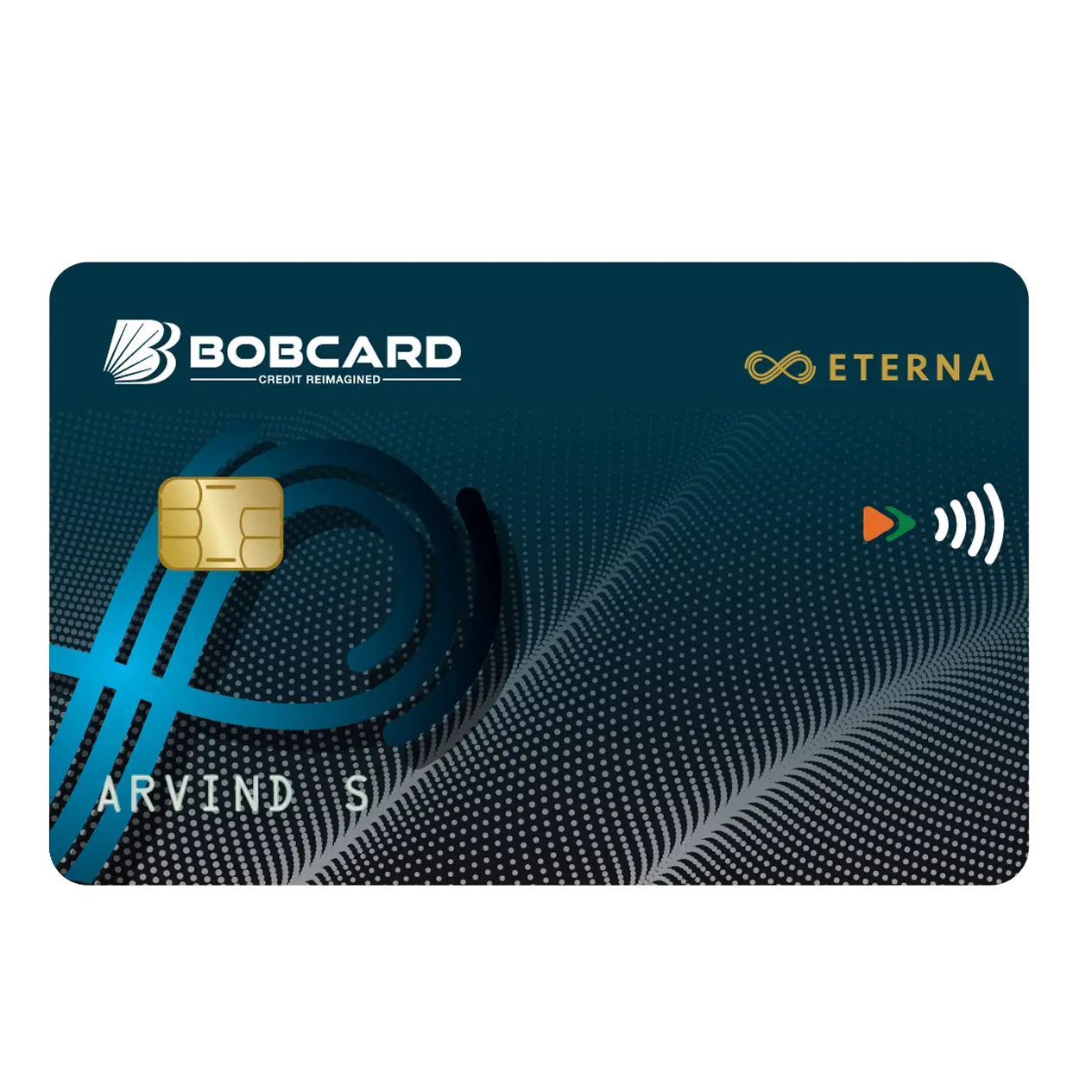
- Upgrade to Eterna: Expect a substantial annual fee, but weigh it against benefits like accelerated rewards, lounge access, and concierge services.
- Downgrade to Easy: Enjoy zero annual fees, but be prepared for a reduction in reward rates and premium perks.
C. Earning Power: Reward Rate Modifications
- The Change: The rate at which you accumulate reward points per ₹100 spent will fluctuate based on the card tier.
- The Implication: Your "earning power" shifts, affecting how quickly you can accumulate points for redemption.
- Examples:
- Upgrading to Premier: You might see a significant boost in reward points earned on travel and dining expenses compared to a basic card.
- Downgrading from Eterna: Be prepared for a reduction in the reward rate across all spending categories.
D. Insurance and Exclusive Perks: The Premium Advantage
- The Change: Premium BOB cards often come bundled with valuable insurance coverage (e.g., Air Accident Insurance, Purchase Protection) and exclusive perks (e.g., complimentary golf sessions, gym memberships). These benefits are usually scaled down or eliminated when you downgrade.
- The Implication: You'll need to re-evaluate your insurance needs and be aware of the perks you'll lose or gain.
- Considerations:
- Air Accident Insurance: Higher-tier cards offer substantial coverage, providing financial security in case of unforeseen events.
- Lounge Access: Premium cards grant access to airport lounges, enhancing your travel experience.
- Concierge Services: Some cards offer concierge services for travel bookings, event planning, and other assistance.
II. What Stays Constant: The Unchanged Aspects of Your BOB Card Account
While upgrading or downgrading brings about several changes, certain fundamental aspects of your BOB credit card account remain untouched. These continuities offer stability and peace of mind during the transition.
A. Preserving Your Credit History: Credit Age Retention
- The Constant: Your credit history age, as reflected in your CIBIL report, remains unaffected. This is because the underlying account remains open; you're simply transitioning to a different card variant.
- The Advantage: Maintaining a long credit history is crucial for a healthy credit score. Closing and reopening a credit card can negatively impact your credit age.
- Why it Matters: A strong credit score is essential for loan approvals, favorable interest rates, and other financial opportunities.
B. Seamless Transition: Outstanding Balance Transfer
- The Constant: Any outstanding balance on your existing BOB card, including debt or Smart EMIs, will seamlessly transfer to your new card statement.
- The Convenience: You don't need to worry about settling the balance separately or disrupting your EMI payments.
- Important Note: While the balance transfers, keep an eye on the interest rate applicable to the new card, as it might differ from your previous card.
C. Maintaining Spending Power: Credit Limit Continuity
- The Constant: In most cases, your total credit limit remains the same unless you specifically requested a credit limit enhancement during the upgrade process.
- The Stability: You retain your existing spending power, ensuring continuity in your financial flexibility.
- Exception: If you requested a credit limit increase along with the upgrade, your limit will be adjusted accordingly, subject to BOB's approval.
III. The Pitfalls: Potential Pitfalls and Considerations
Navigating a bob credit card upgrade downgrade isn't always straightforward. Here are some potential pitfalls and considerations to keep in mind:
A. Reward Point Redemption: Maximizing Value Before Transition
- The Issue: While reward points typically transfer to your new card, the redemption value might change.
- The Strategy: It's often financially prudent to redeem your existing reward points before initiating a downgrade. This ensures you maximize their value under the current card's redemption structure.
- Example: If your current card offers a higher redemption value for travel bookings, redeem your points for flights or hotels before downgrading to a card with a lower travel redemption rate.
B. The Eligibility Factor: Meeting BOB's Requirements
- The Issue: Upgrades are not guaranteed. BOB evaluates your recent repayment history, credit score, and current income levels to determine your eligibility.
- The Preparation: Ensure you have a consistent repayment history and a healthy credit score before applying for an upgrade.
- Factors Considered:
- Credit Score: A strong CIBIL score significantly increases your chances of approval.
- Repayment History: Consistent on-time payments demonstrate responsible credit management.
- Income Levels: BOB assesses your income to ensure you can comfortably manage the higher credit limit and potential fees associated with the upgraded card.
C. The Waiting Game: The 6-Month Rule for BOBCARD transition options
- The Rule: BOBCARD usually requires you to hold your current card for a minimum period (typically 6 to 12 months) before approving an upgrade or downgrade request.
- The Planning: Factor this waiting period into your decision-making process. You can't switch cards immediately after acquiring one.
- Exception Some customers have reported being able to upgrade after 3 months, but this is on a case by case basis.
D. First Year Free: Negotiating Upgrade Perks
- The Pro-Tip: When upgrading, proactively ask BOBCARD support if they can offer the new card "First Year Free." They often extend this offer to loyal customers with high spending patterns.
- The Negotiation: Don't hesitate to negotiate for a waiver of the first-year annual fee. It's a common practice to incentivize upgrades.
- How to Ask: "I've been a loyal BOBCARD customer for [X years] with consistent spending. Would it be possible to waive the first-year annual fee on the [New Card Name] as a gesture of appreciation?"
IV. Making the Right Choice: Upgrade or Downgrade? A Decision Framework
Choosing between upgrading and downgrading your BOB credit card requires a careful assessment of your spending habits, financial goals, and lifestyle.
A. When to Upgrade:
- Increased Spending: If your spending has significantly increased, an upgrade can provide higher reward rates and better perks to match your lifestyle.
- Lifestyle Changes: If you're traveling more frequently or dining out often, a premium card with travel and dining rewards can be highly beneficial.
- Desire for Premium Perks: If you value benefits like lounge access, concierge services, and comprehensive insurance coverage, upgrading is a worthwhile consideration.
B. When to Downgrade:
- Reduced Spending: If your spending has decreased, and you're not fully utilizing the benefits of your current card, downgrading to a lower-fee or LTF option can save you money.
- Change in Financial Goals: If you're prioritizing debt repayment or simplifying your finances, downgrading to a basic card can help you reduce unnecessary expenses.
- Underutilized Perks: If you're not using the premium perks of your current card (e.g., lounge access, golf sessions), downgrading to a card without these benefits can be a more cost-effective choice.
V. Case Studies: Real-World Scenarios of Card Transitions
Let's examine a couple of hypothetical scenarios to illustrate the decision-making process:
A. Case Study 1: The Aspiring Traveler (Upgrade Scenario)
- Situation: Sarah is a young professional who has recently started traveling frequently for work and leisure. She currently holds a basic BOB credit card with limited travel benefits.
- Analysis: Sarah would benefit significantly from upgrading to a premium BOB card with travel-centric rewards, such as accelerated miles on flight and hotel bookings, complimentary lounge access, and travel insurance.
- Recommendation: Upgrade to the BOB Eterna card or a similar travel-focused variant.
B. Case Study 2: The Frugal Saver (Downgrade Scenario)
- Situation: John is a retiree who has significantly reduced his spending after retirement. He currently holds a premium BOB card with a high annual fee and several perks he no longer uses.
- Analysis: John can save money by downgrading to a Life-Time Free (LTF) BOB card with no annual fees. While he'll lose the premium perks, he'll eliminate an unnecessary expense.
- Recommendation: Downgrade to the BOB Easy card or another LTF option.
VI. Step-by-Step Guide: How to Initiate Your BOBCARD Transition
- Assess Your Needs: Evaluate your spending habits, financial goals, and lifestyle to determine whether an upgrade or downgrade is the right choice.
- Check Eligibility: Contact BOBCARD customer support or visit the official website to check your eligibility for an upgrade or downgrade.
- Review Card Options: Research the available BOB credit card variants and compare their features, fees, and benefits.
- Apply for Transition: Submit your upgrade or downgrade request through the official BOBCARD channels (online portal, customer service, or branch visit).
- Await Approval: BOB will review your application and notify you of their decision.
- Activate New Card: Upon approval, you'll receive your new card. Activate it immediately and update your payment information on all relevant platforms.
- Redeem Rewards (If Downgrading): Redeem your existing reward points before the transition to maximize their value.
VII. Comparative Analysis: BOBCARD Tiers
Here's a comparison table outlining the key features of different BOB credit card tiers:
| Feature | Basic Card (e.g., Easy) | Mid-Tier Card (e.g., Select) | Premium Card (e.g., Eterna) |
|---|---|---|---|
| Annual Fee | ₹0 - ₹500 | ₹500 - ₹2000 | ₹2000+ |
| Reward Rate | Low | Moderate | High |
| Lounge Access | No | Limited | Unlimited |
| Insurance Coverage | Basic | Enhanced | Comprehensive |
| Concierge Services | No | No | Yes |
| Best For | Budget-conscious users | Moderate spenders | High spenders, travelers |
| Credit Score Required | 650+ | 700+ | 750+ |
VIII. Conclusion: Making an Informed Decision for Your Financial Well-being
Upgrading or downgrading your BOB credit card is a significant financial decision that should be approached with careful consideration. By understanding the changes, continuities, and potential pitfalls involved, you can make an informed choice that aligns with your financial goals and lifestyle. Remember to assess your needs, review card options, and negotiate for the best possible terms. This comprehensive guide provides you with the knowledge and tools necessary to navigate the BOB card transition process with confidence. Always refer to the official BOBCARD website (bobcard.co.in) for the most up-to-date information and terms.
Disclaimer
The contents of this article are meant solely for informational and educational purposes and do not constitute financial advice. The explanations provided are simplified for general understanding and may not cover all terms and conditions applicable to specific BOBCARD variants.
Interest rates, fees, reward structures, and other features mentioned are indicative and subject to change. For complete and current terms, please refer to the official MITC document for your specific card at www.bobcard.co.in.
BOBCARD Limited/Bank of Baroda shall not be responsible for any decisions made based on this article. Please consult the official documents and, if needed, a financial advisor before making any credit decisions.
*Terms and Conditions Apply.