
Table of Contents
- Foundational Pillars: Age, Residency, and Credit Score Requirements
- Decoding Income Requirements: Mapping Eligibility to Card Variants
- The Documentation Checklist: What BOBCARD Needs to See
- Qualification Requirements for BOB Cards Through Secured Options
- Factors Influencing Final Approval
- Navigating Common Pitfalls and Application Tips
Securing a BOBCARD requires meeting specific demographic, financial, and creditworthiness benchmarks set by Bank of Baroda. The fundamental requirements mandate the applicant be an Indian resident, aged between 21 (salaried) and 24 (self-employed) up to 60/65 years, and crucially, possess a strong CIBIL score, typically 700 or higher. Furthermore, the necessary minimum annual income scales dramatically based on the chosen card variant, ranging from ₹3.6 Lakhs for entry-level cards up to ₹12 Lakhs for premium offerings like the Eterna. Understanding these precise bob card eligibility rules is the crucial first step toward a successful application, ensuring that applicants select a product aligned with their current financial profile and streamline the documentation process.
Foundational Pillars: Age, Residency, and Credit Score Requirements
The assessment process for any BOBCARD application begins with three non-negotiable qualifying standards: legal residency, age bracket conformance, and credit history validation. These criteria determine whether an applicant can proceed to the financial review stage and are consistent across nearly all BOB credit card products, forming the base bob credit card criteria.
Age Demographics and Add-on Cards
Bank of Baroda maintains strict age mandates, differentiating between salaried and self-employed individuals to mitigate risk based on perceived income stability and career stage.
- Salaried Applicants: The primary applicant must be at least 21 years old to apply. The maximum age for card issuance and continued usage is typically capped at 60 years. This aligns with standard retirement age expectations, ensuring the cardholder maintains a verifiable income source throughout the card’s lifetime.
- Self-Employed Applicants: Given the inherent volatility of business income, the minimum age requirement is slightly higher, starting at 24 years. The maximum age extends to 65 years, acknowledging that self-employed professionals often work longer than their salaried counterparts.
- Add-on Cards: These are essential for extending credit convenience to family members. Add-on cards can be applied for individuals who are 18 years of age and above, provided they are immediate family members (spouse, parents, siblings, or children) of the primary cardholder. Crucially, the liability for all transactions remains solely with the primary cardholder.
The Critical Role of CIBIL Score Validation
In the highly competitive Indian credit market, the CIBIL (Credit Information Bureau of India Limited) score is the single most important metric for determining creditworthiness and the ultimate sanctioning of any financial product.
A strong CIBIL score proves that the applicant has handled past credit obligations loans, previous credit cards, and EMIs responsibly. For smooth and quick approval of bob credit card eligibility, the following benchmarks are generally applied:
- Preferred Score Range (Excellent Eligibility): A score between 750 and 900 significantly increases the chances of approval, often leading to better credit limits and faster processing. Applicants in this range meet the highest qualification requirements for bob cards.
- Acceptable Score Range (Good Eligibility): A score of 700 to 749 is often considered the minimum acceptable benchmark for most mainstream BOBCARD variants (like the Select or Easy Card). Applicants in this range may still receive favorable limits but might undergo more rigorous scrutiny of their income documents.
- Below Threshold: Scores below 650 generally result in immediate rejection for unsecured credit cards. In such cases, the only viable option is often the secured card route (BOBCARD Prime), which requires a Fixed Deposit collateral.
Underwriters specifically look at the applicant's credit utilization ratio (ideally below 30%), payment history (zero delinquencies), and the frequency of new credit inquiries (not too many recent applications).
Decoding Income Requirements: Mapping Eligibility to Card Variants
The most variable component of bob credit card criteria is the minimum income requirement, which is tiered based on the specific benefits, reward structure, and credit limit associated with each card variant. Higher-tier cards, offering premium features like airport lounge access or high reward rates, necessitate substantially higher demonstrated Net Annual Income (NAI).
Understanding Net Annual Income (NAI)
Net Annual Income refers to the income an applicant receives after all standard statutory deductions (like taxes, PF contributions, etc.) have been accounted for. It represents the disposable income available to meet credit obligations.
BOBCARD maintains separate NAI thresholds for salaried professionals (who provide consistent salary slips) and self-employed professionals (who typically provide ITRs and bank statements reflecting business turnover).
Comprehensive Income Requirements by Card Variant
The table below outlines the specific minimum NAI needed for the most popular BOBCARD offerings. Note that these are base criteria; meeting them does not guarantee approval, as the CIBIL score and DTI ratio are also factored in.
| BOBCARD Variant | Target Applicant Profile | Minimum Net Annual Income (Salaried) | Minimum Net Annual Income (Self-Employed) | Key Feature Profile |
|---|---|---|---|---|
| Easy Card | Entry-level, basic rewards, limited experience. | ₹3.6 Lakhs | ₹4.8 Lakhs | Fuel, Groceries, Low Annual Fee. |
| Select Card | Mid-level, balanced lifestyle, moderate spending. | ₹4.8 Lakhs | ₹4.8 Lakhs | Enhanced rewards, movie benefits. |
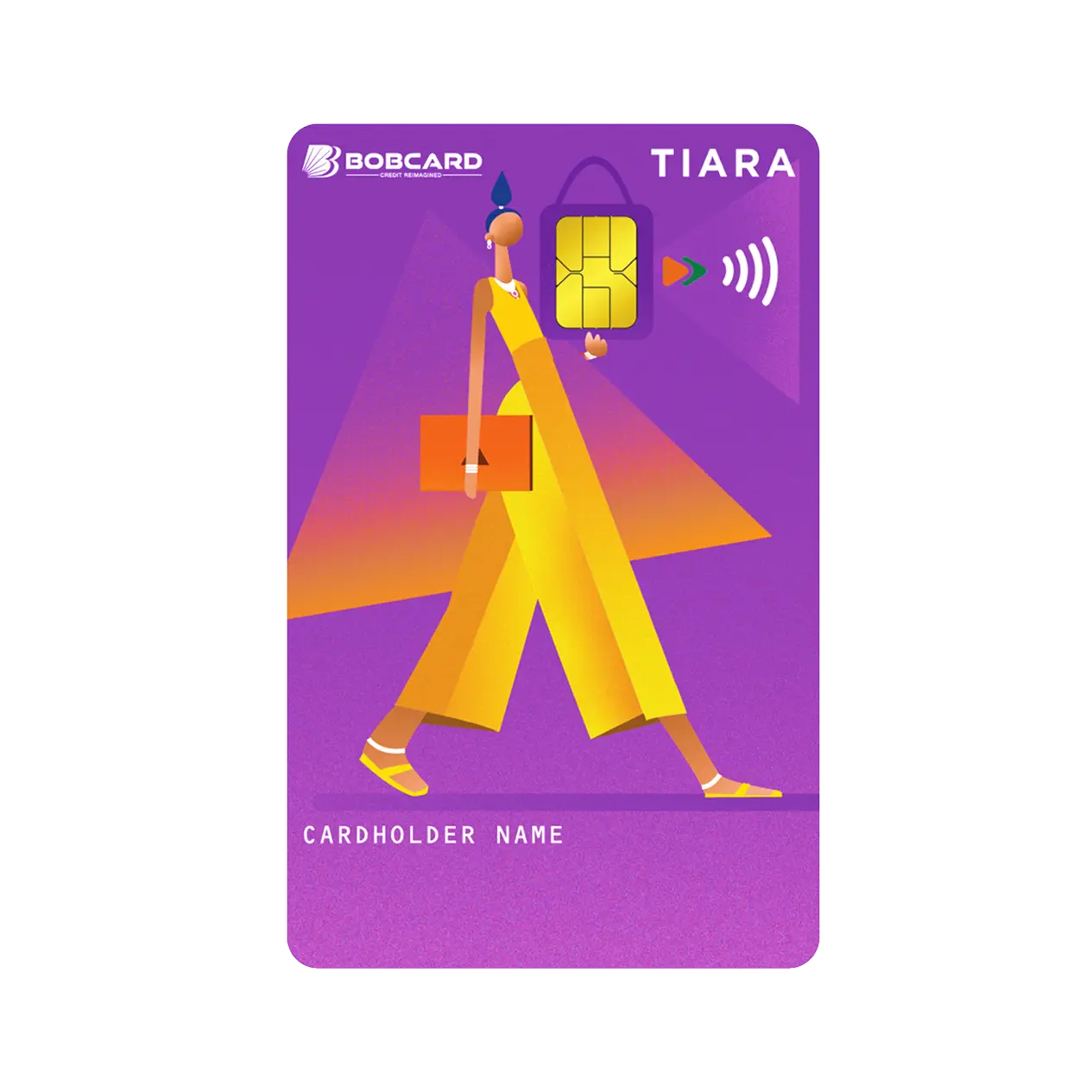
| Premier / Tiara | High-end benefits, travel, and luxury focus. | ₹7.2 Lakhs | ₹7.2 Lakhs | Airport lounge access, premium customer service. |
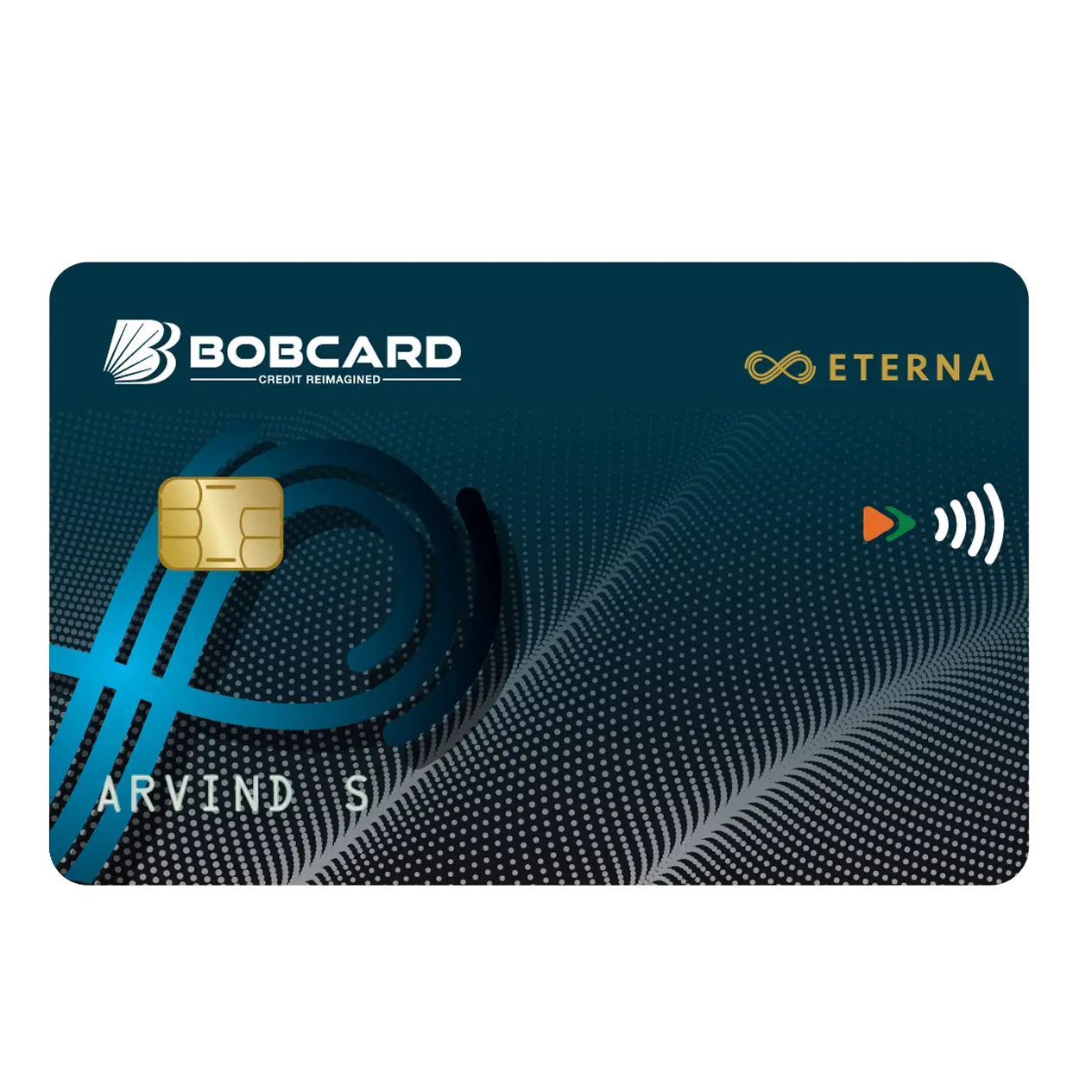
| Eterna | Super-premium tier, high spenders, exclusive lifestyle. | ₹12 Lakhs | ₹12 Lakhs | High reward rate, extensive travel perks, zero foreign mark-up. |
| Prime | Secured option, for low score or no income proof. | Issued against FD (min ₹15,000) | Issued against FD (min ₹15,000) | Guaranteed approval, credit building. |
Salaried vs. Self-Employed Income Calculation
While the NAI targets are sometimes similar for higher-tier cards, the verification process differs significantly:
- Salaried Income: Underwriters primarily use the average of the last 2-3 months’ salary slips, correlating this figure with the corresponding bank statement credits. Stability is key; frequent job changes or irregular payment dates may lead to scrutiny, even if the annual threshold is met.
- Self-Employed Income: For self-employed individuals, the focus shifts to documented business performance. This usually requires the latest 2 to 3 years of Income Tax Return (ITR) acknowledgments and audited financials (if applicable). The bank calculates the NAI based on net profits reflected in the ITR, not gross turnover. This rigorous assessment ensures the applicant truly meets the bob card eligibility rules based on sustainable business profitability.
The Documentation Checklist: What BOBCARD Needs to See
The approval process is highly dependent on providing comprehensive, accurate, and easily verifiable documents. Failure to submit required paperwork promptly is one of the most common reasons applications stall or are rejected, regardless of the applicant meeting the underlying bob credit card criteria.
The BOBCARD application portal typically requires digitized copies for immediate review.
Proof of Identity and Residency (KYC Mandates)
Know Your Customer (KYC) compliance is mandatory for all financial institutions.
- Identity Proof (Mandatory):
- PAN Card (This is mandatory for all credit card applications in India as per regulatory guidelines).
- Identity/Address Proof (Any one of the following):
- Aadhaar Card (most common and fastest verification method).
- Valid Passport.
- Voter ID Card.
- Driving License.
- Photograph:
- A recent, passport-size color photograph with a clear or white background.
Specialized Income Proof for Different Employment Types
The supporting documents required to satisfy the income requirements vary critically based on employment status:
A. Salaried Applicants
These documents must clearly demonstrate consistent monthly remuneration exceeding the calculated minimum annual threshold for the specific card being applied for:
- Income Statement: Salary slips for the last 2 or 3 months.
- Banking Activity: Bank statements showing salary credits for the past 3 months (ensuring the credited amount matches the slip amount).
- Employment Verification: Letter from the employer or recent Form 16 (optional, but helpful if salary slips are unclear).
B. Self-Employed Applicants and Business Owners
Proving stable income for self-employed professionals requires comprehensive tax filings that validate the figures used to calculate NAI.
- Tax Records: ITR acknowledgment and financial statements (P&L and Balance Sheet) for the last 2 to 3 Assessment Years.
- Business Banking: Bank statements reflecting business transactions for the last 3 to 6 months.
- Business Proof (if requested): Proof of business existence, such as shop establishment license, partnership deed, or GST registration certificate.
Qualification Requirements for BOB Cards Through Secured Options
Bank of Baroda recognizes that not all potential customers meet the strict income or CIBIL benchmarks for unsecured credit. Young professionals, students, those new to the country, or individuals actively rebuilding their credit profile often lack the necessary score or stable income proof. For these applicants, the BOBCARD Prime provides a crucial alternative.
Analyzing the BOBCARD Prime (FD-Backed)
The BOBCARD Prime is a secured credit card, meaning it is guaranteed by collateral specifically, a Fixed Deposit (FD) held with the bank. This mechanism bypasses the traditional stringent income and CIBIL checks.
- No Income Proof Required: This is the most significant advantage. Applicants do not need to provide salary slips or ITRs.
- Minimum FD Requirement: The applicant must open a Fixed Deposit of at least ₹15,000 with Bank of Baroda.
- Credit Limit: The credit limit assigned to the Prime card is typically 80% to 90% of the FD value. For instance, an FD of ₹1,00,000 would typically secure a credit limit of ₹80,000 to ₹90,000.
- Eligibility Eased: Since the card is secured by the FD, the age and residency requirements remain, but the high income and bob card eligibility rules based on CIBIL score are effectively waived.
Benefits of the Secured Route for Credit Building
The BOBCARD Prime is not merely a fallback option; it is a strategic tool for establishing or repairing a financial profile.
- Credit History Establishment: Regular, timely payments on the BOBCARD Prime are reported directly to CIBIL and other credit bureaus, rapidly building a strong credit history where none existed before.
- Credit Score Improvement: For those with poor scores, consistent use and full repayment help raise the score significantly, paving the way for eventual application for unsecured cards (like the Select or Eterna) that require higher qualification requirements for bob cards.
- Low Risk to Bank: Because the bank holds collateral, the interest rates are often more competitive, and the risk of application rejection is negligible, provided the minimum FD requirement is met.
Factors Influencing Final Approval
While meeting the age, income, and CIBIL benchmarks satisfies the basic bob credit card criteria, the final decision hinges on a sophisticated underwriting process that assesses the overall financial health and potential risk posed by the applicant.
Debt-to-Income (DTI) Ratio Analysis
The DTI ratio is arguably the most critical variable after the CIBIL score. It measures the percentage of an applicant’s monthly gross income that goes toward servicing existing monthly debt obligations (EMIs for home loans, car loans, personal loans, etc.).
- Calculation: Total Monthly Debt Payments / Gross Monthly Income.
- BOBCARD Standard: While BOBCARD does not publish a specific hard limit, most banks prefer a DTI ratio of 40% or less. If an applicant earns ₹1,00,000 per month but pays ₹60,000 in EMIs, their DTI is 60%. Even if they meet the minimum annual income requirement, their low disposable income means a high risk of default, resulting in rejection. A low DTI ratio is a strong indicator of excellent bob credit card eligibility.
Employment and Job Stability
For salaried individuals, underwriters look at the tenure in the current organization. Frequent job hopping (e.g., three jobs in the last year) signals instability, regardless of high salary, and can negatively impact the assessment of bob card eligibility rules. A minimum tenure of 6 months to 1 year in the current job is generally preferred.
Geographic Restrictions and Branch Verification
While BOBCARD offers extensive digital application capabilities, certain premium cards might only be offered in specific Tier-1 and Tier-2 cities where the banking network support infrastructure is strongest. Occasionally, especially for high-limit applications, the bank might initiate a physical verification of the residential or business address, confirming the details provided in the application.
Navigating Common Pitfalls and Application Tips
Understanding the rejection triggers can help applicants avoid common mistakes and maximize their chances of success when applying for a BOBCARD.
1. Discrepancies in Documents
The information provided in the application form (e.g., stated income) must perfectly match the supporting documents (salary slips, ITRs). Any mismatch, even minor ones, triggers immediate flags and requires substantial follow-up, delaying or halting the process.
2. High Credit Utilization
Even if an applicant has a good 750+ CIBIL score, if they are currently maxing out their existing credit cards (e.g., utilizing 80% of their existing limit), BOBCARD may view them as credit hungry and decline the new application, or offer a significantly lower limit. It is recommended to reduce existing credit utilization below 30% before applying.
3. Too Many Recent Hard Inquiries
Each time an applicant submits a formal application for credit (loan or credit card), the institution performs a "hard inquiry" on their CIBIL report. Multiple hard inquiries within a short period (e.g., 6 inquiries in 3 months) suggest desperation or potential financial distress and are a major red flag for qualification requirements for bob cards. Applicants should space out credit applications strategically.
Strategic Application Tips for Maximizing Eligibility
- Pre-Check Your CIBIL: Always obtain a copy of your credit report before applying to identify and dispute any errors that might be suppressing your score.
- Start with the Right Card: If your income is close to the threshold (e.g., ₹4 Lakhs NAI), apply for the Easy Card first, rather than instantly aiming for the Eterna. Build history with BOBCARD, then upgrade later.
- Utilize Existing BOB Relationship: Existing customers of Bank of Baroda (holding a savings account, FD, or loan) often receive pre-approved or preferential offers because the bank already possesses extensive KYC and transactional data, streamlining the bob card eligibility rules verification.
Successfully applying for a BOBCARD is a structured process that hinges on meticulous adherence to specific criteria spanning age, residency, income stability, and credit history. Whether you are a salaried professional aiming for the premium Eterna Card requiring ₹12 Lakhs NAI and a 750+ CIBIL score, or a newcomer to credit utilizing the secured BOBCARD Prime option against a minimum ₹15,000 FD, preparation is paramount.
By accurately assessing your eligibility against the detailed bob credit card eligibility benchmarks, compiling the necessary documentation (from PAN and Aadhaar to ITRs and salary slips), and ensuring your credit profile is robust, applicants can navigate the underwriting process with confidence. Always remember that the ultimate qualification requirements for bob cards prioritize demonstrated financial responsibility and stability, making a strong DTI ratio and excellent credit repayment history indispensable assets.
Disclaimer
The contents of this article are meant solely for informational and educational purposes and do not constitute financial advice. The explanations provided are simplified for general understanding and may not cover all terms and conditions applicable to specific BOBCARD variants.
Interest rates, fees, reward structures, and other features mentioned are indicative and subject to change. For complete and current terms, please refer to the official MITC document for your specific card at www.bobcard.co.in.
BOBCARD Limited/Bank of Baroda shall not be responsible for any decisions made based on this article. Please consult the official documents and, if needed, a financial advisor before making any credit decisions.
*Terms and Conditions Apply.