
Table of Contents
- The Anatomy of an Excellent CIBIL Score: Weighting the Factors
- Pillar 1: Mastering Credit Utilization Ratio (The 30% Golden Rule)
- Pillar 2: Zero Tolerance for Late Payments
- Pillar 3: Managing Credit Depth and Diversity
- Pillar 4: The Impact of Credit Inquiries and Error Management
- Conclusion: The Long-Term Credit Architecture
To secure the financial leverage afforded by an "Excellent" CIBIL score (750+), managing your BOBCARD portfolio requires a strategic, almost clinical approach. The way you handle your credit usage is directly scrutinized by credit bureaus, determining not just your eligibility for future loans, but the interest rates you will be offered.
Your credit health, and specifically the bob credit card cibil impact, is heavily influenced by how you execute these five critical credit strategies:
1. The 30% Utilization Rule: Your Credit Utilization Ratio (CUR) is the most volatile metric impacting your CIBIL score after payment history. The strategic goal is to consistently maintain utilization below 30% of your total assigned limit. If your total credit limit on a BOBCARD is ₹1,00,000, monthly spending should ideally be kept under ₹30,000. Maintaining a low CUR signals disciplined spending and reduces the risk profile assessed by lenders.
2. Zero Tolerance for Late Payments: Payment history holds the highest statistical weight in CIBIL scoring models. The foundational requirement is always to pay at least the Minimum Amount Due by the due date. The superior practice, which truly enhances your score and saves you money, is paying the Total Amount Due every billing cycle. Utilizing the bob World App to establish an auto-debit facility is a non-negotiable step to eliminate human error in the payment process.
3. Strategic Management of Hard Inquiries: Every formal application you submit for new credit whether it’s a BOBCARD upgrade, a personal loan, or a home loan results in a "Hard Inquiry" recorded on your CIBIL profile. Frequent, bundled applications within a short timeframe (e.g., six months) suggests financial distress or desperation to the bureau, leading to score reduction. Applications must be spaced out and pursued only when truly necessary.
4. Diligent Monitoring and Error Correction: CIBIL reports are not immune to administrative errors. Discrepancies such as incorrectly reported late payments, outdated balance figures, or accounts that were closed but still show as active can artificially depress your score. Regular review of your CIBIL statement and prompt dispute resolution via the BOBCARD Helpdesk or Customer Portal is essential for maintaining data integrity.
5. Preserving Account Longevity: The length and age of your credit history account for a significant portion of your score. If your first credit instrument was a BOBCARD, maintaining that account active, even if used sparingly, is crucial. Closing old, well-managed accounts shortens your average credit history, which almost always results in a temporary, but avoidable, drop in your CIBIL rating.
The Anatomy of an Excellent CIBIL Score: Weighting the Factors
Understanding the CIBIL scoring mechanism (which ranges from 300 to 900) is the first step toward optimization. A score above 750 positions you in the coveted "Excellent" bracket, granting access to premium financial products, favorable negotiation power, and lower interest rates. The bob card credit score effect is a cumulative reflection of your behavior across four key areas, weighted approximately as follows:
| CIBIL Score Component | Approximate Weight (%) | Primary Action Required with BOBCARD |
|---|---|---|
| Payment History | 35% | Pay 100% on time, every time. |
| Credit Utilization Ratio (CUR) | 30% | Maintain consumption under 30% of your credit limit. |
| Length of Credit History | 15% | Do not close old, active BOBCARD accounts. |
| Credit Mix & Inquiries | 20% | Maintain a healthy mix of credit types and avoid numerous hard inquiries. |
This breakdown reveals that 65% of your CIBIL score is dictated by two highly controllable factors: how promptly you pay (Payment History) and how much of your available credit you consume (Credit Utilization). Focusing on these two areas provides the highest return on effort for maximizing the cibil impact of bob credit card usage.
Pillar 1: Mastering Credit Utilization Ratio (The 30% Golden Rule)
The Credit Utilization Ratio (CUR) is calculated by dividing your outstanding BOBCARD balance by the total credit limit extended to you by the bank. Lenders view high utilization as a sign of over-reliance on credit, suggesting potential financial stress.
The Mechanics of Bob Credit Utilization
The 30% threshold is not arbitrary; it is the industry-recognized benchmark for signaling financial health. However, true credit masters aim for even lower utilization ideally under 10% to achieve peak scoring results.
Consider a scenario where you have a BOBCARD with a limit of ₹2,00,000.
| Utilization Level | Outstanding Balance | Signal to CIBIL | CIBIL Score Effect |
|---|---|---|---|
| Excellent (Goal) | ₹10,000 (5%) | Highly responsible, low risk | Maximum positive impact |
| Good | ₹40,000 (20%) | Responsible, within safe limits | Positive impact |
| Threshold | ₹60,000 (30%) | Acceptable, but approaching caution | Neutral/Slightly positive impact |
| High Risk | ₹1,50,000 (75%) | High reliance, potential distress | Significant negative impact |
The Psychology of High Utilization
When your outstanding balance frequently hovers above the 50% mark, CIBIL models interpret this as 'credit hunger.' Even if you clear the balance in full every month, the data reported to the bureau at the time of the statement generation reflects that high utilization. This momentary snapshot can pull down your score, as the reporting period often coincides with your highest usage.
Strategies to Optimize BOBCARD Utilization:
- Split Payments: Do not wait for the statement date. If you make a large purchase of ₹40,000 on your ₹1,00,000 limit card, immediately pay ₹20,000 before the statement is generated. This ensures that the reported balance to CIBIL is ₹20,000 (20% utilization) instead of ₹40,000 (40% utilization).
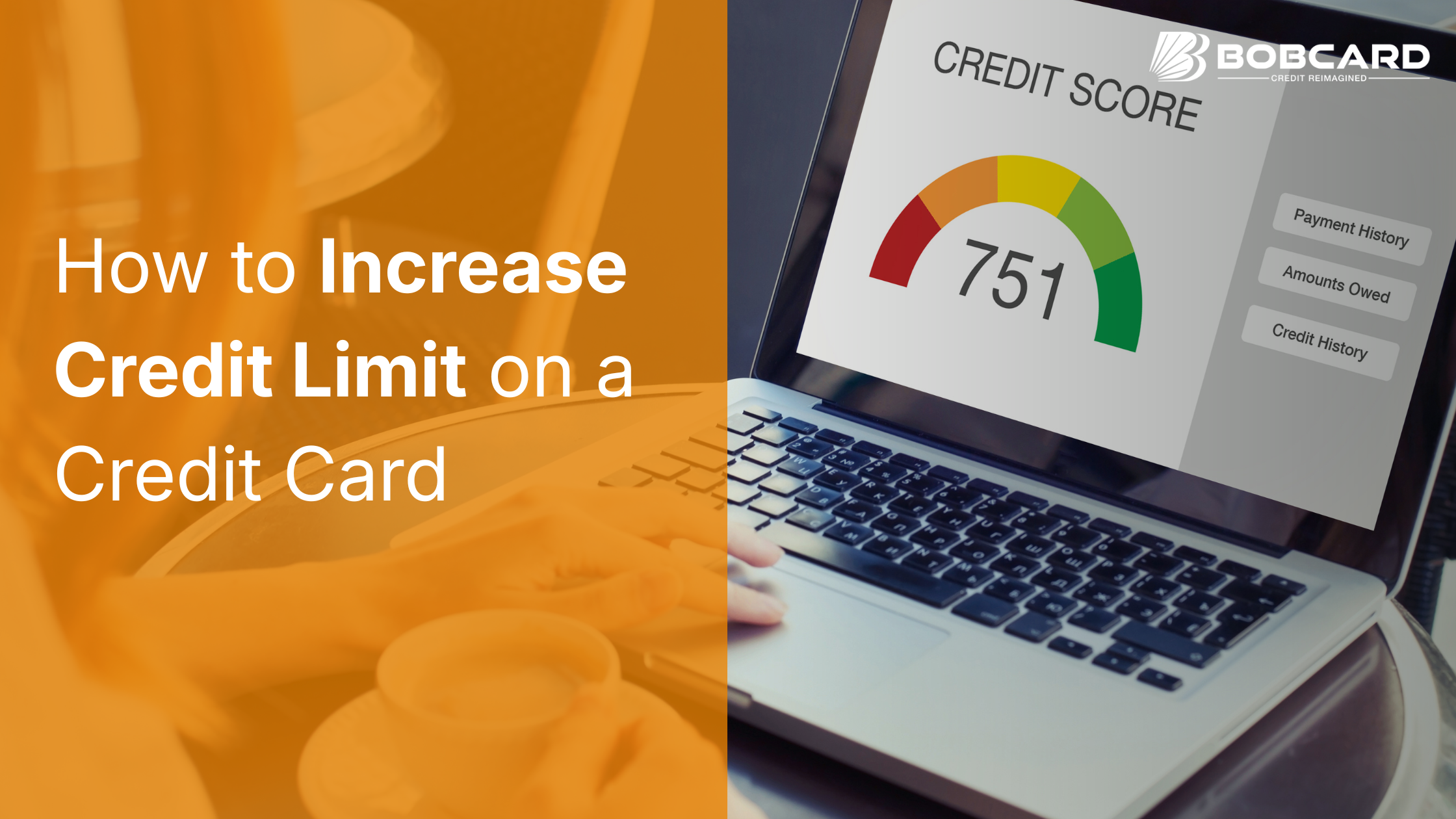
- Request Limit Enhancements: If you are a responsible user, proactively request a credit limit increase from BOBCARD. Increasing your limit from ₹1,00,000 to ₹2,00,000 instantly halves your utilization, assuming your spending remains constant. This is one of the most effective, passive ways to improve your CUR.
- Balance Transfer Caution: While BOBCARD may offer balance transfer facilities, transferring large balances from high-interest cards can temporarily inflate your utilization on the receiving BOBCARD. Ensure the total utilization remains manageable after the transfer.
Pillar 2: Zero Tolerance for Late Payments
Payment history is the backbone of your CIBIL profile. Even a single 30-day delay in payment can significantly damage the bob card credit score effect and scar your credit report for years. This impact is so severe because a late payment signal flags financial irresponsibility to every potential future lender.
Minimum vs. Total Amount Due: A Financial Analysis
While CIBIL requires you to pay only the Minimum Amount Due (MAD) to avoid a "Late Payment" flag, doing so is a poor financial strategy.
- CIBIL Perception: Paying only the MAD satisfies the basic reporting requirement, but it is not viewed as optimal behavior. More importantly, carrying a revolving balance on your BOBCARD demonstrates credit reliance, which CIBIL registers.
- Interest Costs: BOBCARD, like all credit providers, charges steep interest rates (often 36-42% annualized) on the outstanding balance if the full amount is not paid. This compounding interest quickly negates any rewards or benefits the card might offer.
- Maximum Benefit: To achieve the highest score and maximize your financial efficiency, the rule is simple: Always pay the Total Amount Due. This ensures you operate within the interest-free grace period, leveraging credit for free while simultaneously building the strongest possible payment history.
Leveraging the bob World App for Automation
Human memory is unreliable; automated systems are not. Given the profound negative consequences of a single missed payment, utilizing the digital tools provided by BOBCARD is essential for credit maintenance.
The bob World App facilitates seamless management and auto-debit setup. Key steps for securing your payment history include:
- Setting Auto-Debit: Configure the auto-debit feature within the bob World platform to ensure the Total Amount Due is automatically deducted from your linked bank account on the due date. This removes the variable of human error.
- Timely Account Funding: While auto-debit is set, ensure the linked account always holds sufficient funds several days before the due date to prevent payment failure and the resultant dishonor charges and CIBIL black mark.
- Notifications: Utilize the in-app notification settings and email alerts to receive reminders of statement generation and upcoming due dates, serving as a secondary backup.
This meticulous approach minimizes the likelihood of negative bob card repayment impact being reported to the credit bureau.
Pillar 3: Managing Credit Depth and Diversity
CIBIL assesses not just if you use credit responsibly, but how long you have done so and what types of credit you manage.
The Longevity Dividend: Keeping Old BOBCARDs Active
Credit history accounts for approximately 15% of your score. Lenders value long-standing relationships because they provide a deeper history of your financial behavior. If your first credit instrument was a BOBCARD, that card is the anchor of your credit profile.
- The Error of Closure: Closing your oldest credit card, even if you seldom use it, is detrimental. When the account is closed, your credit history calculation loses the age of that account, immediately shortening the average age of all your open accounts.
- Strategic Dormancy: If you no longer wish to use an old BOBCARD for major purchases, do not close it. Instead, use it once every six months for a very small, manageable expense (e.g., a ₹100 recharge) and immediately pay it off. This keeps the account "active" in the eyes of the bureau and preserves its age without incurring costs or risk.
The Account Mix Strategy
CIBIL prefers to see a mixture of credit types, referred to as credit diversity. This generally means managing both revolving credit (like your BOBCARD) and installment credit (like home loans or car loans).
Revolving Credit (BOBCARD): Represents continuous borrowing up to a limit. Proper management showcases discipline and control over immediate liquidity.
Installment Credit (Loans): Represents fixed payments over a set period. Responsible management demonstrates commitment to long-term debt obligations.
While it is unwise to take out loans solely to diversify your credit mix, maximizing the positive bob credit card cibil impact requires using the card consistently and responsibly. If the BOBCARD is your only form of credit, ensure your utilization and payment behavior are exemplary to compensate for the lack of diversity.
Pillar 4: The Impact of Credit Inquiries and Error Management
The final crucial aspect involves protecting your profile from unnecessary administrative actions both self-inflicted (too many applications) and external (data errors). This directly influences the perceived trustworthiness and stability of your profile.
Differentiating Hard vs. Soft Inquiries
The process of credit inquiry when a lender checks your profile is categorized into two types, with vastly different cibil impact of bob credit card usage:
| Inquiry Type | Definition | Effect on CIBIL Score | When It Occurs |
|---|---|---|---|
| Hard Inquiry | A formal request by a lender (e.g., BOBCARD) after you apply for new credit. It signals intent to borrow. | Negative impact (Score reduction of 5–10 points per inquiry). | Applying for a new BOBCARD, personal loan, or credit limit increase. |
| Soft Inquiry | Checking your own score or background checks by existing creditors. | No impact on CIBIL score. | Checking your score via the CIBIL website or using pre-approval tools. |
Application Spacing: The critical takeaway is to only submit applications (Hard Inquiries) when you are confident of approval and truly need the credit. Never apply for three different types of credit or multiple BOBCARD variants within the same 90-day window. Bundling applications is a major red flag that lowers your score and reduces your approval odds for the remaining applications.
The Critical Role of the BOBCARD Customer Portal
Even perfect financial behavior cannot guarantee a perfect CIBIL score if the data reported by the lender is incorrect. Administrative mistakes, known as "data reporting errors," are common. These might include:
- A payment incorrectly marked as "Settled" instead of "Closed" or "Paid."
- An outstanding balance reported when you have paid the amount in full.
- A "late payment" flag when you paid on time, but the payment processing was delayed.
The Dispute Process:
- Regular Review: Download and meticulously review your CIBIL report at least once a year. Cross-reference the data reported against your monthly BOBCARD statements.
- Immediate Action: If you identify a discrepancy such as incorrect bob card repayment impact data immediately initiate a dispute. You must raise the dispute both with the credit bureau (CIBIL) and directly with BOBCARD via their Customer Portal or designated Helpdesk.
- Documentation: Gather all necessary proof, such as payment receipts, bank statements, or written confirmation of account closure. BOBCARD is legally obligated to investigate and correct confirmed errors with the bureau, a process that can take up to 30 days but is essential for score accuracy.
This vigilance ensures that your stellar credit behavior is accurately reflected in your final CIBIL score.
Conclusion: The Long-Term Credit Architecture
Managing your BOBCARD effectively is not about short-term fixes; it is about establishing a long-term architecture of financial discipline. The strategies outlined maintaining low bob credit utilization, ensuring zero late payments, managing inquiry frequency, and preserving credit history form the foundational pillars of exceptional credit health.
Every swipe, every repayment, and every limit increase request carries a traceable cibil impact of bob credit card usage. By treating your BOBCARD as a powerful financial tool that requires precise management rather than simply a spending mechanism, you not only save substantial amounts in interest and fees but also open the door to superior lending opportunities, setting the stage for future financial success.
Where to Find Accurate Information
- Official MITC Documents: www.bobcard.co.in (download for your specific card)
- BOBCARD FAQ: www.bobcard.co.in/faqs
- Fee Schedule: www.bobfinancial.com/fees-charges.jsp
- Customer Care: 1800 2665 100 (ask specific questions before applying)
- RBI Guidelines: rbi.org.in for credit card regulations and consumer rights
Disclaimer
The contents of this article are meant solely for informational and educational purposes and do not constitute financial advice. The explanations provided are simplified for general understanding and may not cover all terms and conditions applicable to specific BOBCARD variants.
Interest rates, fees, reward structures, and other features mentioned are indicative and subject to change. For complete and current terms, please refer to the official MITC document for your specific card at www.bobcard.co.in.
BOBCARD Limited/Bank of Baroda shall not be responsible for any decisions made based on this article. Please consult the official documents and, if needed, a financial advisor before making any credit decisions.
*Terms and Conditions Apply.