
Table of Contents
- 1. Maximizing the Interest-Free Period: A Strategic Approach to Liquidity
- 2. Smart EMIs: A Strategic Approach to Debt Management
- 3. Reward Points as "Passive Income": Optimizing Your Spending
- 4. Credit Card as an Emergency Fund Buffer
- 5. Comprehensive Financial Planning Impact
- Conclusion: A Balanced Approach to Financial Success
- Where to Find Accurate Information
Integrating a Bank of Baroda (BOB) credit card into your financial plan demands a calculated approach. While the card offers attractive features like an interest-free period and reward points, its high-interest rates can quickly turn it into a financial liability if not managed carefully. This guide explores how to strategically leverage your BOB credit card to enhance your financial well-being, transforming it from a potential debt trap into a valuable financial tool. We'll delve into maximizing the interest-free period, utilizing Smart EMIs for debt management, optimizing reward points for passive income, and understanding its role as an emergency fund buffer. By understanding these strategies, you can optimize your bob credit card financial planning.
1. Maximizing the Interest-Free Period: A Strategic Approach to Liquidity
One of the most significant advantages of a BOB credit card is the interest-free period, which can extend up to 50 days. This period allows you to use the card for purchases without incurring interest charges, provided you pay the full outstanding balance by the due date. Strategic bob expense planning is key to making the most of this feature.
1.1. How the Interest-Free Period Works
The interest-free period typically begins on the statement generation date and lasts until the payment due date. The exact duration varies depending on your billing cycle and when you make the purchase.
- Statement Generation Date: The date when your credit card statement is generated.
- Payment Due Date: The date by which you must pay your outstanding balance to avoid interest charges.
1.2. Strategic Spending for Maximum Benefit
To maximize the interest-free period, time your large purchases strategically.
- Timing is Key: Make significant purchases shortly after your statement generation date. This gives you the longest possible interest-free period, potentially close to the full 50 days.
- Example: If your statement generates on the 1st of the month and your payment is due on the 20th, a purchase made on the 2nd will have nearly 50 days before payment is due.
1.3. Utilizing the Float for Investments
During the interest-free period, the money you would have spent on the purchase can remain in your Bank of Baroda savings account, earning interest.
- Savings Account Interest: Even a modest interest rate on your savings account can accumulate over time, effectively providing a small return on your spending.
- Opportunity Cost: Consider the opportunity cost of paying with cash immediately versus using the credit card and earning interest on the same amount.
1.4. Cautions and Best Practices
While the interest-free period is a valuable benefit, it's crucial to manage it responsibly.
- Full Payment is Mandatory: Always pay the full outstanding balance by the due date to avoid interest charges.
- Avoid Overspending: Don't use the interest-free period as an excuse to overspend beyond your means. Bob card budgeting should be followed.
- Track Your Spending: Monitor your credit card spending regularly to ensure you can comfortably repay the balance.
2. Smart EMIs: A Strategic Approach to Debt Management
While it's ideal to pay your credit card balance in full each month, unexpected expenses can sometimes make this difficult. In such cases, BOB Smart EMIs offer a more manageable way to repay your debt compared to simply paying the Minimum Amount Due (MAD).
2.1. The Dangers of Minimum Amount Due (MAD)
Paying only the Minimum Amount Due can lead to a debt trap due to the high-interest rates on credit card balances.
- High-Interest Rates: BOB credit cards typically charge interest rates of 3.25% to 3.5% per month (approximately 42% annually) on outstanding balances.
- Debt Accumulation: Paying only the MAD means a significant portion of your payment goes towards interest, leaving a small amount to reduce the principal. This leads to a slow debt repayment process and higher overall costs.
2.2. Understanding BOB Smart EMIs
BOB Smart EMIs allow you to convert large purchases into smaller, more manageable monthly installments.
- Eligibility: Purchases above ₹2,500 are typically eligible for conversion into Smart EMIs via the BOB card app.
- Lower Interest Rates: EMI interest rates (often 13-16% p.a.) are significantly lower than the standard credit card interest rates.
- Fixed Repayment Schedule: EMIs provide a fixed repayment schedule, making it easier to budget and track your progress.
2.3. Strategic Use of Smart EMIs
Use Smart EMIs strategically to manage large purchases and avoid high-interest charges.
- Convert Large Purchases: Convert significant expenses like electronics, appliances, or travel bookings into EMIs.
- Calculate Total Cost: Before converting, calculate the total cost of the EMI, including interest, to ensure it aligns with your budget.
- Choose the Right Tenure: Select an EMI tenure that balances affordability with minimizing interest costs. Shorter tenures mean higher monthly payments but lower overall interest.
2.4. Comparison: MAD vs. Smart EMI
The following table illustrates the difference between paying the Minimum Amount Due versus using Smart EMIs for a ₹20,000 purchase:
| Feature | Minimum Amount Due (MAD) | Smart EMI (12 months at 15% p.a.) |
|---|---|---|
| Monthly Payment | Variable (Typically 5%) | ₹1,805.08 |
| Interest Rate | ~42% p.a. | 15% p.a. |
| Total Interest Paid | Highly Variable | ₹1,660.96 |
| Repayment Duration | Potentially Years | 12 months |
| Financial Risk | High | Low |
Disclaimer: The MAD calculation is an estimate. Actual amounts vary based on card terms and outstanding balance.
2.5. Key Considerations
- Foreclosure Charges: Be aware of any foreclosure charges if you want to close the EMI early.
- Credit Score Impact: Ensure you can comfortably afford the monthly EMI payments to avoid missed payments, which can negatively impact your credit score.
3. Reward Points as "Passive Income": Optimizing Your Spending
BOB credit cards offer reward points on various transactions, which can be redeemed for cashback, vouchers, or other benefits. Treating these points as a form of "passive income" can enhance your financial planning with bob credit cards.
3.1. Understanding the BOBCARD Loyalty Program
Familiarize yourself with the BOBCARD Loyalty Program to understand how to earn and redeem points effectively. CHECK bobcard.co.in FOR ACCURATE INFO.
- Earning Points: Points are typically earned on every purchase made with your BOB credit card. The earning rate varies depending on the card type and the nature of the transaction.
- Redemption Options: Points can usually be redeemed for statement credit, vouchers for popular retailers like Amazon and Flipkart, travel bookings, or other merchandise.
3.2. Cashback vs. Vouchers: Choosing the Best Option
Decide whether cashback or vouchers offer the most value based on your spending habits and financial goals.
- Cashback: Redeeming points for statement credit directly reduces your credit card bill, providing immediate financial relief.
- Vouchers: Using vouchers for planned purchases, such as festive shopping or travel, can free up cash for other expenses or investments.
3.3. Value Optimization: Maximizing Reward Points
Optimize your spending to earn more reward points and maximize their value.
- Spending Categories: Identify the spending categories that offer higher reward point multipliers.
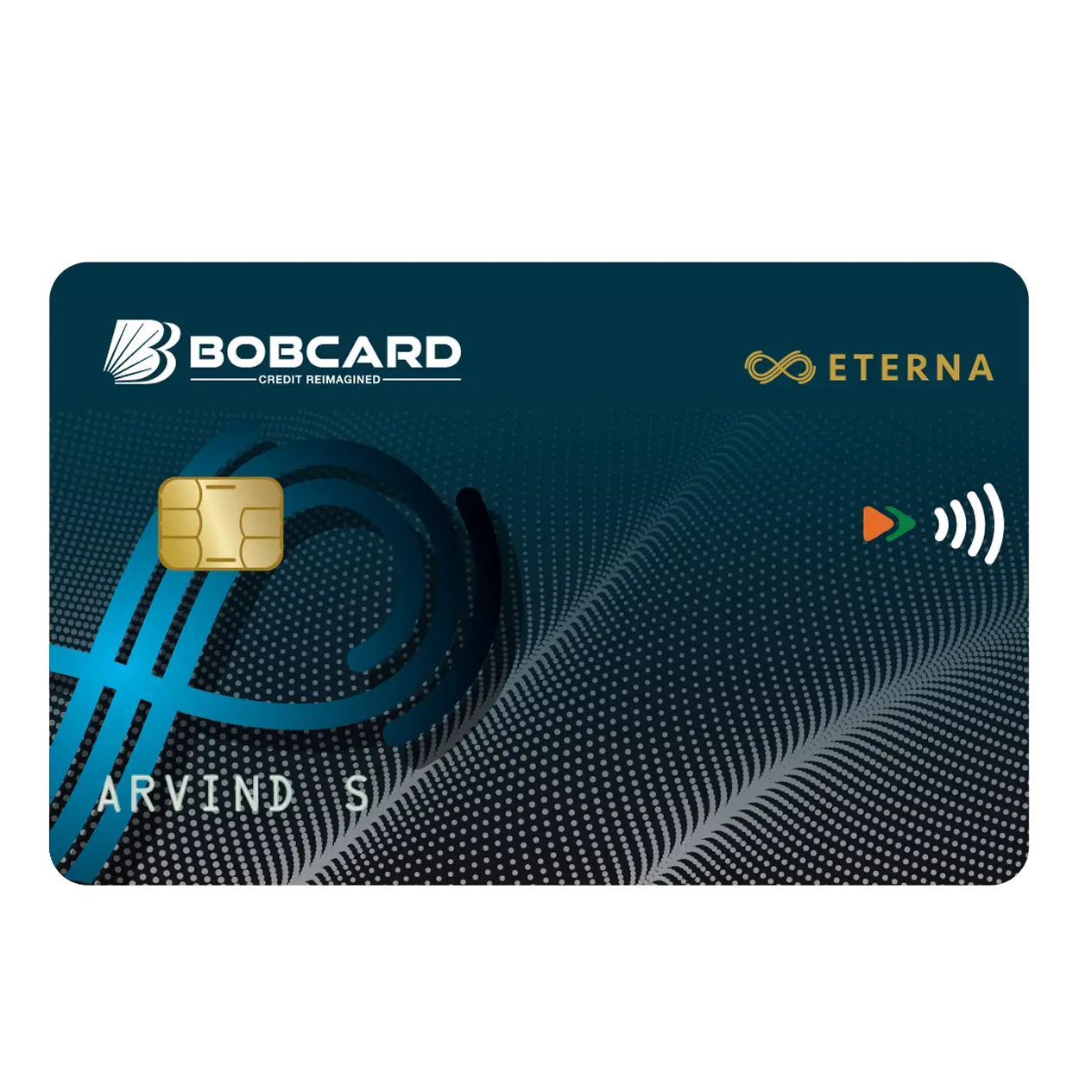
- Card-Specific Benefits: Some BOB credit cards, like the Eterna, offer 5x rewards on travel and dining. Align your spending in these categories to boost your return on spend.
- Promotional Offers: Keep an eye out for promotional offers that provide bonus reward points on specific transactions.
3.4. Example: Eterna Card Optimization
If you frequently dine out and travel, the BOB Eterna card can significantly boost your reward earnings.
- Dining: Use the Eterna card for all restaurant bills to earn 5x rewards.
- Travel: Book flights and hotels using the Eterna card to maximize your reward points.
- Redemption: Redeem the accumulated points for travel vouchers to offset future travel expenses.
4. Credit Card as an Emergency Fund Buffer
While a credit card is not a substitute for a dedicated emergency fund, it can provide immediate liquidity in unforeseen circumstances.
4.1. Immediate Liquidity
A credit card offers quick access to funds during emergencies, bridging the gap until other resources become available.
- Medical Emergencies: Cards with higher credit limits, like the Varunah, can cover immediate medical expenses while insurance claims are being processed. CHECK bobcard.co.in FOR ACCURATE INFO.
- Unexpected Repairs: Use your credit card to pay for urgent home or car repairs.
4.2. Avoiding Cash Withdrawals
Avoid using your credit card for cash withdrawals unless it's a life-or-death situation.
- Cash Advance Fees: Cash advances typically incur a Cash Advance Fee of 2.5% and attract immediate interest charges with no interest-free period.
- Alternative Options: Explore other options like personal loans or overdraft facilities before resorting to cash advances on your credit card.
4.3. Responsible Usage
Treat your credit card as a last resort for emergencies and ensure you can repay the balance promptly.
- Budgeting: Create a budget that includes a plan for repaying any emergency expenses charged to your credit card.
- Credit Utilization: Keep your credit utilization ratio (the amount of credit you use compared to your total credit limit) low to maintain a healthy credit score.
5. Comprehensive Financial Planning Impact
| Component | Strategic Use | Financial Risk |
|---|---|---|
| Liquidity | Use 50-day window for interest-free float. | Overspending beyond your repayment capacity. |
| Credit Score | Maintains low utilization (under 30%). | Missed payments leading to lower loan eligibility. |
| Big Purchases | Use Smart EMIs to preserve cash flow. | High foreclosure charges if you want to close the EMI early. |
| Reward Points | Redeem points for cashback or vouchers to offset expenses. | Forgetting to redeem points, leading to their expiration. |
| Emergency Fund | Use for immediate liquidity in unforeseen circumstances. | Relying too heavily on credit instead of building a dedicated emergency fund. |
Conclusion: A Balanced Approach to Financial Success
Integrating a BOB credit card into your financial plan requires a balanced approach. By strategically leveraging the interest-free period, utilizing Smart EMIs for debt management, optimizing reward points, and understanding its role as an emergency fund buffer, you can harness the benefits of your BOB credit card while mitigating the risks. Remember to prioritize responsible spending, track your expenses diligently, and always pay your balance on time to maintain a healthy financial profile. With careful planning and disciplined execution, your BOB credit card can become a valuable asset in your journey to financial success. Always check bobcard.co.in for the most accurate and up-to-date information.
Where to Find Accurate Information
- Official MITC Documents: www.bobcard.co.in (download for your specific card)
- BOBCARD FAQ: www.bobcard.co.in/faqs
- Fee Schedule: www.bobfinancial.com/fees-charges.jsp
- Customer Care: 1800 2665 100 (ask specific questions before applying)
- RBI Guidelines: rbi.org.in for credit card regulations and consumer rights
Disclaimer
The contents of this article are meant solely for informational and educational purposes and do not constitute financial advice. The explanations provided are simplified for general understanding and may not cover all terms and conditions applicable to specific BOBCARD variants.
Interest rates, fees, reward structures, and other features mentioned are indicative and subject to change. For complete and current terms, please refer to the official MITC document for your specific card at www.bobcard.co.in.
BOBCARD Limited/Bank of Baroda shall not be responsible for any decisions made based on this article. Please consult the official documents and, if needed, a financial advisor before making any credit decisions.
*Terms and Conditions Apply.