
Table of Contents
- BOBCARD Foreign Transaction Fee Structure
- How Currency Conversion Works
- Calculating the True Cost of Foreign Transactions
- GST on Foreign Transaction Fees: The Hidden Multiplier
- Dynamic Currency Conversion: The Trap to Avoid
- Foreign ATM Cash Withdrawals: Double Charges
- Best Practices for International Card Usage
- Online Foreign Merchant Transactions
- Business Travel and Expense Management
- Forex Charges on Refunds and Cancellations
- International Travel Insurance and Forex
- Regulatory Framework for Forex Charges
- Comparing BOBCARDs for International Use
- Future of Forex Charges: Trends and Predictions
Foreign transaction fees, also called forex charges or foreign exchange markup, are fees levied when you use your BOBCARD for purchases in currencies other than Indian Rupees. These charges apply to transactions made while traveling internationally and to online purchases from foreign merchants, even when sitting in India.
A foreign transaction occurs whenever payment is processed in any currency other than INR. This includes using your card at international merchant locations, withdrawing foreign currency from ATMs abroad, making online purchases from international websites, and paying for international services like streaming platforms, software subscriptions, or digital products priced in foreign currencies.
Foreign transaction fees compensate the card issuer and payment network for currency conversion services and for bearing foreign exchange risk. When you make a purchase in USD, EUR, or any other currency, that amount must be converted to INR to bill you. The conversion process involves exchange rate application, processing through international payment networks, and currency risk management.
The fee structure has two components. The card network (Visa, Mastercard, RuPay) applies its currency conversion rate, which includes a small markup over wholesale rates. The card issuer (BOBCARD) adds its own markup percentage on top of the network conversion. These combined markups constitute the total foreign transaction cost.
BOBCARD Foreign Transaction Fee Structure
BOBCARD forex charges vary significantly across different card variants, making card selection crucial for international travelers and foreign currency spenders.
Standard Rate Cards: Most BOBCARD variants including EASY, SELECT, PREMIER, and others charge 3.5% foreign exchange markup. This means on a USD 100 (approximately Rs.8,300) transaction, you pay an additional Rs.290 as forex markup, plus GST.
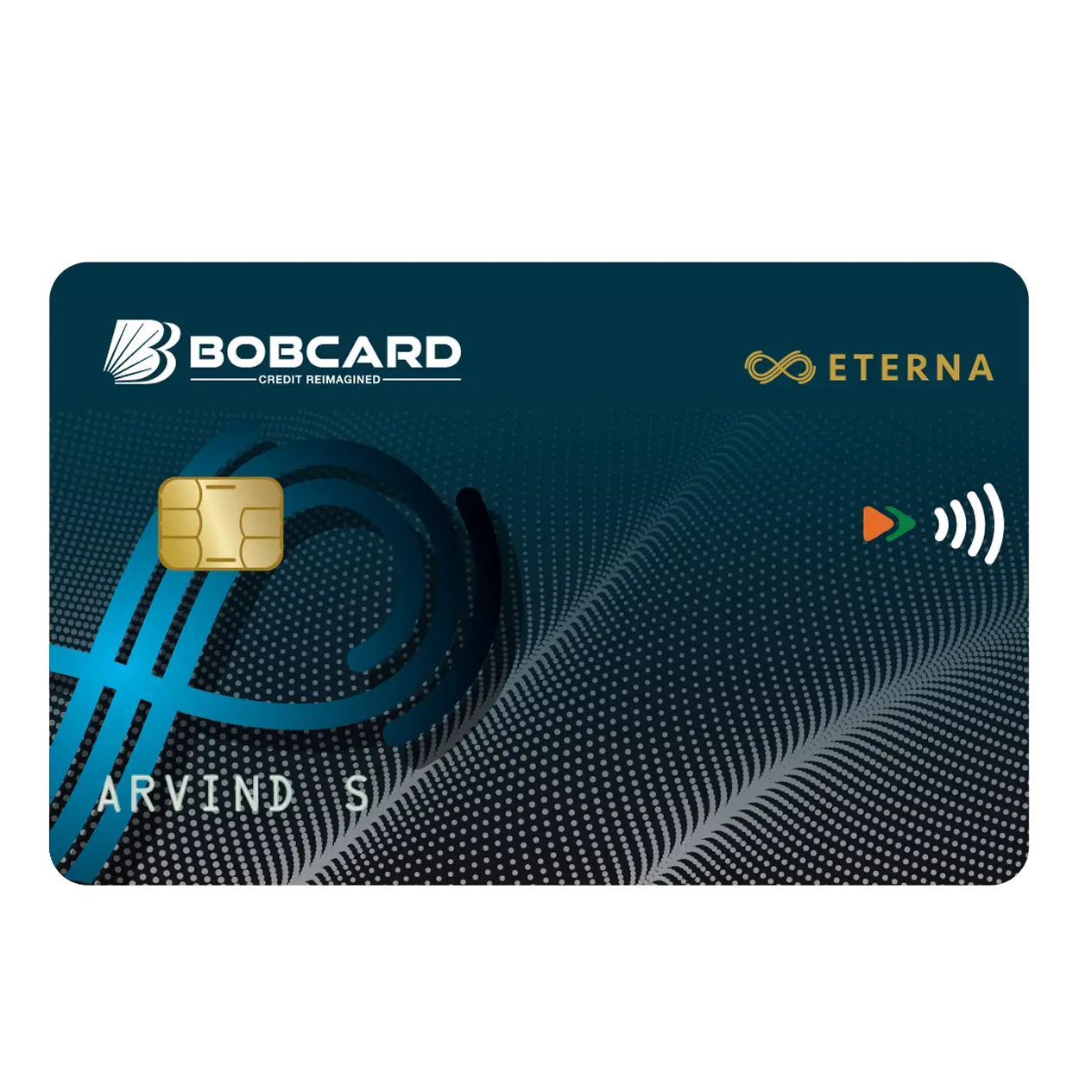
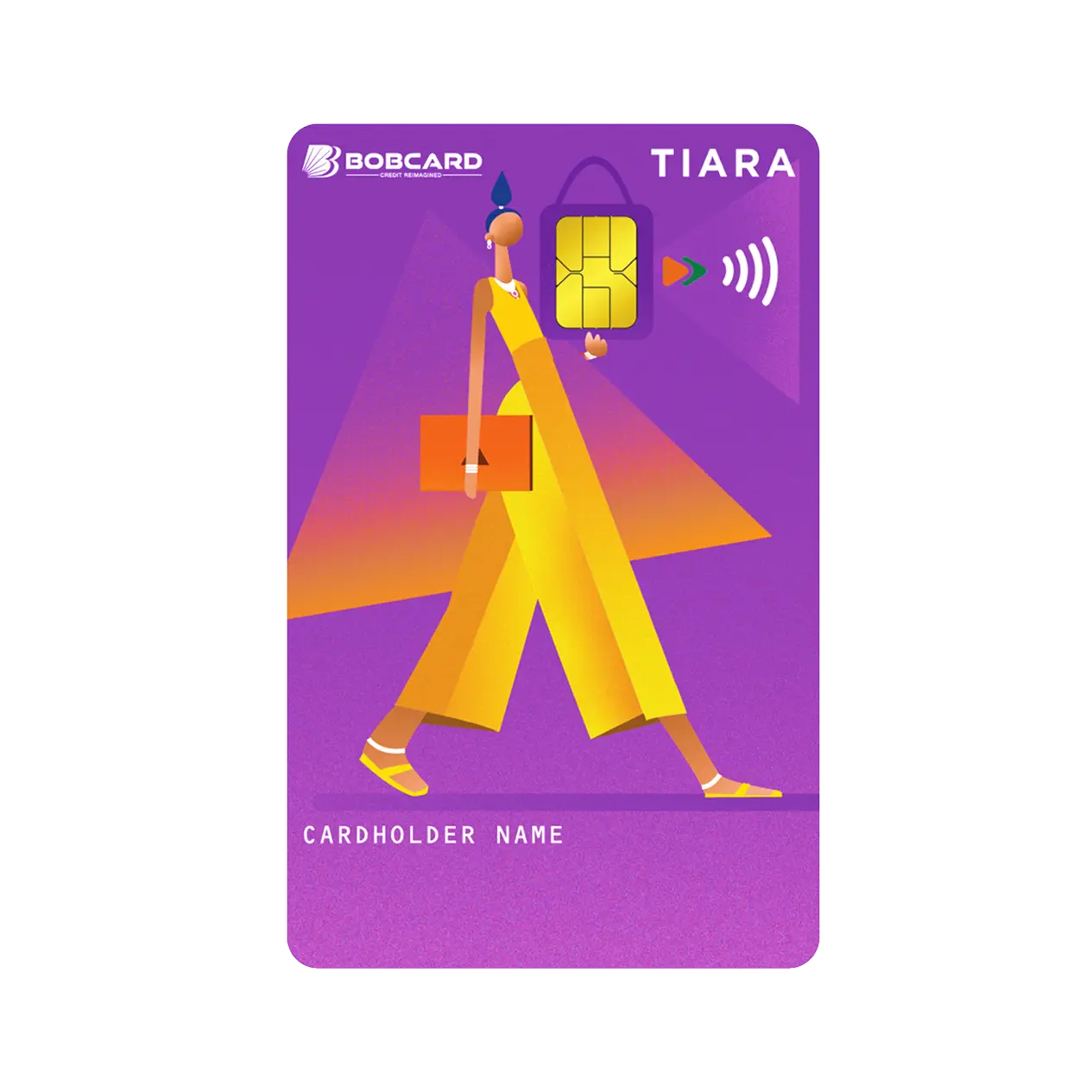
Premium Travel Cards: BOBCARD ETERNA and TIARA charge reduced forex markup of 2%, recognizing that premium cardholders often travel internationally. On the same USD 100 transaction, markup reduces to approximately Rs.166.
Zero Forex Cards: BOBCARD Etihad Guest Premium, Scapia, and Uni GoldX charge 0% forex markup, making them highly attractive for frequent international travelers and foreign currency spenders. The same USD 100 transaction incurs zero markup, though card network base conversion still applies.
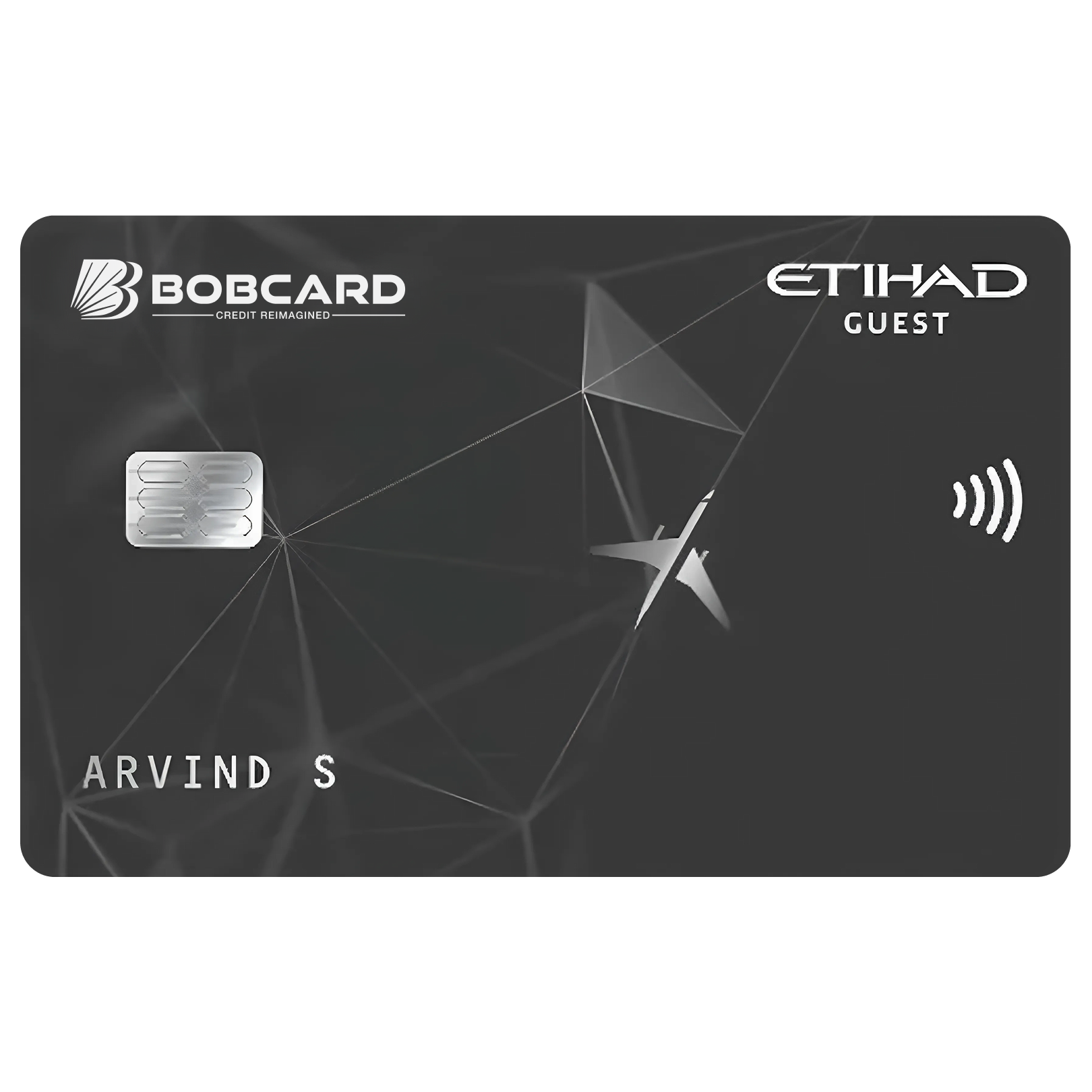
Reduced Markup Cards: BOBCARD Etihad Guest (base variant) charges 1% forex markup, positioning between standard and zero-markup cards.
| Card Variant | Forex Markup | Markup + GST | Effective Cost | Best For |
|---|---|---|---|---|
| EASY, SELECT, PREMIER | 3.5% | 4.13% | High | Domestic-focused users |
| ETERNA, TIARA | 2.0% | 2.36% | Medium | Occasional international travelers |
| Etihad Guest | 1.0% | 1.18% | Low | Regular international travelers |
| Etihad Premium, Scapia, Uni GoldX | 0% | 0% | Zero | Frequent international travelers |
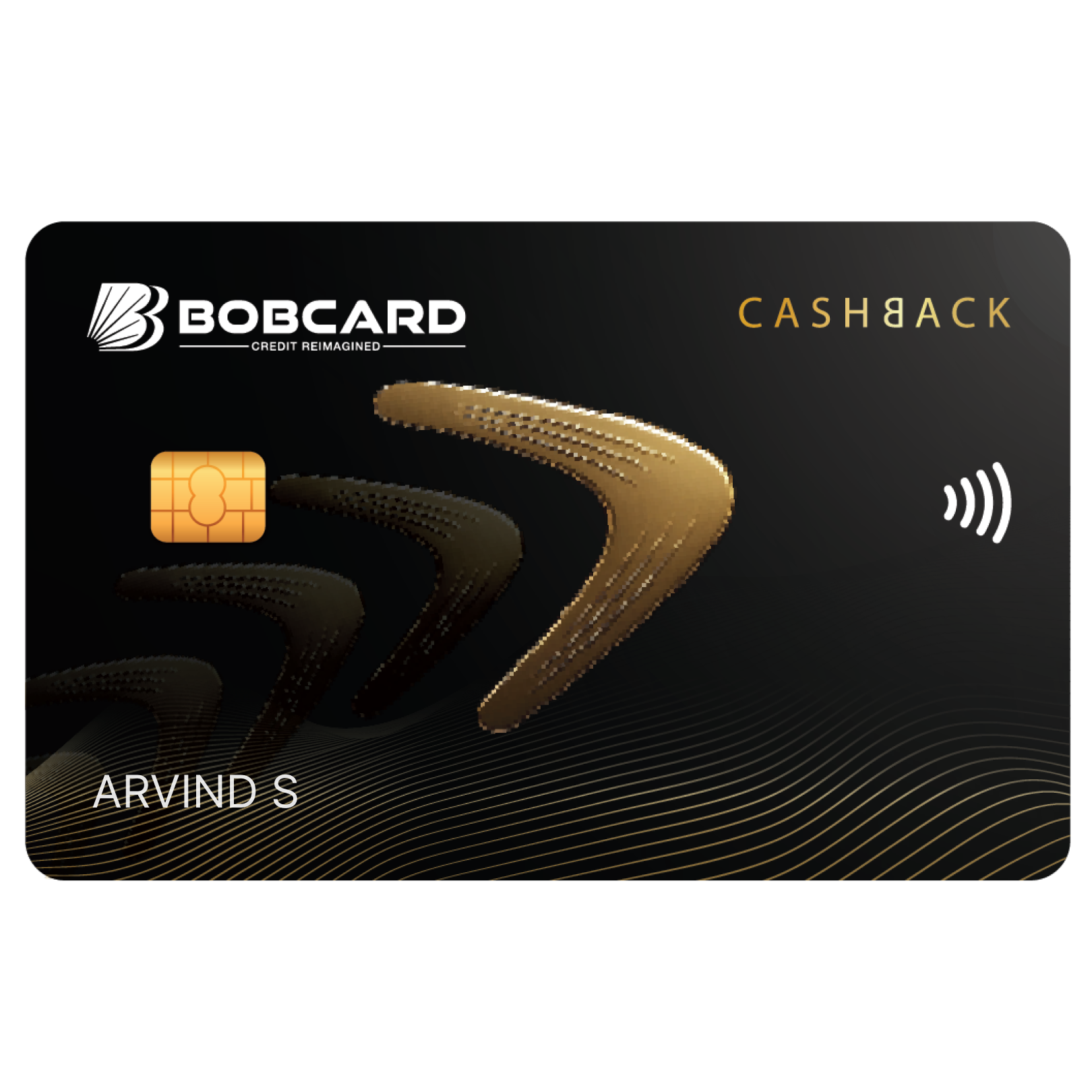
| Cashback | 3.5% | 4.13% | High | Domestic online shoppers |
How Currency Conversion Works
Understanding the currency conversion process helps you comprehend where forex charges originate and how they are calculated.
Step 1 - Transaction Authorization: When you swipe your BOBCARD at an international merchant or make an online foreign currency purchase, the transaction amount is in the merchant local currency (USD, EUR, GBP, etc.). The merchant terminal sends this amount to the payment network.
Step 2 - Network Conversion: The payment network (Visa, Mastercard) converts the foreign currency amount to INR using their daily exchange rate. This rate is typically close to wholesale interbank rates but includes a small network markup (approximately 0.5-1%).
Step 3 - Issuer Markup: BOBCARD applies its markup percentage (0% to 3.5% depending on card variant) on top of the network-converted INR amount. This is where the bulk of forex charges originates.
Step 4 - GST Application: The forex markup charged by BOBCARD attracts 18% GST. This GST is applied on the markup amount, not on the total transaction value.
Step 5 - Final Billing: The transaction appears on your statement in INR, including the base converted amount, issuer markup, and GST on markup.
Calculating the True Cost of Foreign Transactions
Let us examine the actual cost impact of forex charges through detailed examples.
Example 1: USD 500 Hotel Booking with Standard 3.5% Markup Card
Base conversion (Visa/Mastercard rate): USD 500 = Rs.41,500 (assuming Rs.83 per USD)
Network markup already in rate: Approximately Rs.207 (0.5%)
BOBCARD markup (3.5%): Rs.1,452
GST on BOBCARD markup (18%): Rs.261
Total charged: Rs.43,213
Effective total markup: 4.13%
Example 2: Same USD 500 Booking with 0% Forex Card
Base conversion: Rs.41,500
Network markup in rate: Rs.207
BOBCARD markup (0%): Rs.0
GST (0% base): Rs.0
Total charged: Rs.41,707
Savings over 3.5% card: Rs.1,506
Annual Impact: If you spend USD 5,000 (Rs.4,15,000) annually on international transactions, using a 3.5% markup card costs you Rs.17,139 extra versus a 0% markup card. This single factor can determine whether a card with higher annual fee provides net value.
GST on Foreign Transaction Fees: The Hidden Multiplier
Goods and Services Tax application on forex charges significantly increases the actual cost.
How GST Applies: The 18% GST is levied on the issuer markup portion, not on the entire transaction. If BOBCARD charges 3.5% markup on a Rs.1,00,000 foreign transaction, the markup is Rs.3,500 and GST is Rs.630 (18% of Rs.3,500), bringing total forex cost to Rs.4,130.
Effective Rate Calculation: A stated 3.5% markup becomes 4.13% effective rate after GST (3.5% × 1.18 = 4.13%). Always factor GST when comparing forex charges.
Zero Markup Advantage: With 0% markup cards, there is no issuer markup and therefore no GST, providing double benefit - no base markup and no GST.
Dynamic Currency Conversion: The Trap to Avoid
Dynamic Currency Conversion (DCC) is one of the most expensive mistakes international travelers make with credit cards.
What is DCC: When paying at international merchants, you may be offered the option to pay in Indian Rupees instead of the local currency. The merchant terminal displays the INR amount and asks if you want to proceed in INR. This is Dynamic Currency Conversion.
Why to Decline DCC: DCC conversion rates are significantly worse than card network rates. Merchants and their payment processors make profit by offering poor exchange rates. DCC markups typically range from 5% to 8% above fair rates. Even with BOBCARD 3.5% markup, paying in local currency and letting the card network convert is substantially cheaper than DCC.
How to Decline: Always choose to pay in the local merchant currency when given the option. If a terminal shows INR amounts or asks "Pay in INR?", decline and insist on local currency. You cannot recover DCC losses after the transaction completes.
Example: A EUR 100 transaction at fair rate would be Rs.9,000. With DCC, the terminal might show Rs.9,600, costing you Rs.600 extra (6.7% markup). Even adding BOBCARD 3.5% markup plus GST (total 4.13%) to the fair rate only costs Rs.9,372, saving you Rs.228.
Foreign ATM Cash Withdrawals: Double Charges
Withdrawing foreign currency from ATMs using your BOBCARD incurs multiple layers of charges.
Cash Advance Fee: As with domestic cash withdrawals, foreign ATM withdrawals attract cash advance fees of 2.5-3% of the withdrawal amount with minimum Rs.250-500.
Foreign Transaction Markup: The withdrawn amount is in foreign currency, so forex markup also applies (0-4.13% depending on card variant).
No Grace Period: Cash withdrawals start accruing interest immediately from the withdrawal date at approximately 3.5% monthly (42% annually).
ATM Operator Fees: Many foreign ATMs charge their own convenience fees ranging from USD 3-10 per withdrawal.
Total Cost Example: Withdrawing USD 200 from a foreign ATM with a standard BOBCARD costs approximately: Cash advance fee Rs.415 (2.5% of Rs.16,600), Forex markup Rs.686 (4.13% of Rs.16,600), Interest for one month Rs.580 (3.5% monthly), ATM operator fee Rs.415 (USD 5). Total cost Rs.2,096 on Rs.16,600 withdrawal = 12.6% cost. Using foreign currency cash withdrawals via credit card is one of the most expensive ways to access money abroad.
Best Practices for International Card Usage
Minimize forex charges and maximize value when using BOBCARD internationally through strategic practices.
Use Zero or Low Forex Markup Cards: If you travel internationally or make foreign currency purchases regularly, maintain a BOBCARD variant with 0% or 1% forex markup. The annual fee of such cards is easily offset by forex savings. A person spending Rs.2,00,000 annually on international transactions saves Rs.8,260 using a 0% markup card versus a 3.5% markup card.
Always Pay in Local Currency: Never accept Dynamic Currency Conversion. Always choose to pay in the merchant local currency and let the card network handle conversion.
Avoid Foreign ATM Cash Withdrawals: Plan ahead and carry sufficient foreign currency exchanged through banks or forex services before travel. Use debit cards rather than credit cards for emergency cash needs. The forex rates and fees on debit cards are generally much lower than credit card cash advance costs.
Consolidate Foreign Transactions: Rather than making multiple small international online purchases, consolidate purchases to reduce the cumulative impact of minimum fees if applicable.
Monitor Exchange Rates: For large planned international purchases, monitor exchange rate trends. If the INR is strong against your target currency, that is a good time for foreign purchases.
Online Foreign Merchant Transactions
Foreign transaction charges apply even when you never leave India if you transact with merchants processing payments in foreign currencies.
Identifying Foreign Merchants: Many online services charge in USD or other currencies even when accessed from India. International streaming services (Netflix, Amazon Prime Video if billed internationally), software subscriptions (Adobe, Microsoft, specialized tools), digital marketplaces (Steam, Apple App Store, Google Play Store for certain purchases), and international e-commerce sites (Amazon.com, eBay, AliExpress) often process in foreign currencies.
INR Billing Options: Some international merchants offer INR billing options. While convenient, compare the merchant INR price against foreign currency price converted at card network rates. Sometimes merchant INR pricing includes hidden markup.
Subscription Management: International subscriptions charged monthly or annually in foreign currency incur forex charges each billing cycle. Over time, these small charges accumulate. Consider whether INR alternatives exist at better value.
Business Travel and Expense Management
For business travelers using BOBCARD for expense reimbursement, forex charges have specific implications.
Employer Reimbursement: Check whether your employer reimburses the full transaction amount including forex charges or only the base transaction amount. If only the base amount is reimbursed, you personally absorb forex charges, making 0% markup cards essential.
Expense Reporting: Maintain clear documentation of all foreign transactions including the foreign currency amount, exchange rate applied, and total INR amount charged. Corporate expense systems may require detailed breakdowns.
Corporate Card Alternatives: Some employers provide corporate credit cards for business travel. These often have negotiated forex rates lower than retail cards. Understand your options and use the most cost-effective card for business expenses.
Forex Charges on Refunds and Cancellations
When foreign currency transactions are refunded or cancelled, forex charges handling can be complicated.
Refund Exchange Rate Risk: If you made a purchase when USD 1 equaled Rs.83 and get a refund when USD 1 equals Rs.81, you receive fewer rupees back than you paid, even though the dollar amount is the same. This exchange rate risk is borne by you.
Forex Charge Refund: Most card issuers, including BOBCARD, do not refund the original forex charges when a transaction is refunded. You pay forex markup twice - once on the original purchase and again on the refund (since the refund is also a foreign currency transaction converted back to INR).
Example: You purchase USD 100 (Rs.8,300 + Rs.343 forex markup = Rs.8,643 total). Later you get a full refund of USD 100, which converts to Rs.8,300 and gets credited to your account. You lose the Rs.343 forex markup paid originally. If you then make a new purchase, you pay forex markup again.
International Travel Insurance and Forex
Some BOBCARD variants include international travel insurance that covers certain losses during foreign travel, indirectly reducing the effective cost of foreign transactions.
Insurance Coverage: Premium BOBCARD variants like ETERNA, TIARA, and Etihad Guest Premium include international travel insurance covering flight delays, lost baggage, medical emergencies, and trip cancellations. While these benefits do not directly reduce forex charges, they provide value that offsets the cost of holding premium cards with lower forex markup.
Coverage Activation: Insurance coverage usually activates when you use the card to pay for a portion of travel expenses (typically flight tickets). Check specific activation requirements in your card benefits documentation.
Regulatory Framework for Forex Charges
Reserve Bank of India regulates foreign exchange transactions and associated charges to protect consumers.
Disclosure Requirements: BOBCARD must clearly disclose forex charges in the MITC document. The percentage markup, GST applicability, and calculation methodology must be transparent.
RBI Oversight: While RBI does not cap forex charges directly, it monitors industry practices to ensure charges remain reasonable. Market competition effectively limits excessive markups.
Dispute Resolution: If you believe forex charges were applied incorrectly or you were misled about charges, escalate to BOBCARD customer service first, then to the Banking Ombudsman if unresolved.
Comparing BOBCARDs for International Use
For users who frequently transact in foreign currencies, card selection based on forex charges is critical.
Heavy International Users: Those spending Rs.3,00,000+ annually on foreign transactions should prioritize BOBCARD Etihad Guest Premium (0% forex, Rs.5,900 annual fee waivable at Rs.5L spend), Scapia (0% forex, moderate fee), or Uni GoldX (0% forex). The annual fee is easily justified by forex savings.
Moderate International Users: Those spending Rs.50,000-Rs.2,00,000 annually internationally benefit from BOBCARD ETERNA or TIARA (2% forex, Rs.2,949 annual fee waivable at Rs.2.5L spend). The reduced 2% markup versus standard 3.5% saves Rs.825-Rs.3,300 annually.
Occasional International Users: Those making rare foreign transactions (less than Rs.25,000 annually) can use standard cards despite 3.5% markup. The absolute cost remains low and does not justify maintaining a premium card solely for forex benefits.
Future of Forex Charges: Trends and Predictions
The credit card industry is evolving toward reduced forex charges as competition intensifies.
Zero Markup Trend: More issuers are offering zero forex markup cards to attract travelers and international shoppers. This competitive pressure may eventually make 0% markup standard on premium cards.
Digital Currency Impact: The rise of digital payment systems and potential future digital currencies could disrupt traditional forex conversion models, potentially reducing costs.
Regulatory Pressure: If RBI perceives forex charges as excessive, regulatory intervention could mandate lower caps or greater transparency.
Disclaimer
The contents of this article are meant solely for informational and educational purposes and do not constitute financial advice. The explanations provided are simplified for general understanding and may not cover all terms and conditions applicable to specific BOBCARD variants.
Interest rates, fees, reward structures, and other features mentioned are indicative and subject to change. For complete and current terms, please refer to the official MITC document for your specific card at www.bobcard.co.in.
BOBCARD Limited/Bank of Baroda shall not be responsible for any decisions made based on this article. Please consult the official documents and, if needed, a financial advisor before making any credit decisions.
*Terms and Conditions Apply.